Last updated November 18, 2026






Free written scope consultation - allowances, timeline, and change-order rules on paper before a single trade is scheduled
DIY vs Professional Kitchen Remodeling: What’s Safe to Do Yourself
Painting your cabinets instead of replacing them is legitimate DIY. Installing a dishwasher on an existing circuit is legal for a homeowner in Nevada. Moving that circuit two feet to the left requires a licensed electrician, full stop, and the inspector will check. That gap between “I can handle this” and “this needs a licensed sub of record” is where most kitchen remodels get expensive, and it’s the line this guide draws clearly. We’ve walked Mesquite kitchens where a weekend electrical project turned into a permit problem at resale. You’ll learn which tasks save real money with low code exposure, which ones carry consequences, and how to split the work legally.
Quick Answer
In Mesquite, you can safely DIY finish work: painting, hardware swaps, backsplash tile on existing substrate, and open shelving. Anything touching the electrical panel, gas lines, plumbing rough-in, or structural walls needs a licensed trade and a permit. The dividing line isn’t your skill level; it’s what Nevada code requires a licensed professional to sign off on. Finish work is yours. Rough work is theirs.
Styles & brands we work with
- Kitchen remodeling
- Bathroom remodeling
- Home additions & ADU
- Roofing
- Windows & doors
- Driveway & pavers
- Fence
Table of Contents
- The Nevada Licensing Rules That Apply to Your Kitchen
- What’s Actually Safe to DIY in a Kitchen Remodel
- Tasks That Look DIY-Friendly But Aren’t
- How to Split DIY Finish Work From Hired Rough Work
- The Resale Disclosure Problem No One Warns You About
- Permits, Inspections, and What the Inspector Actually Checks
- Common Mistakes to Avoid
- When to Call a Professional
The Nevada Licensing Rules That Apply to Your Kitchen
Nevada draws a sharper line than most states between what a homeowner can self-perform and what requires a licensed contractor. The kitchen is the room where that line matters most, because it concentrates plumbing, electrical, and gas in the smallest footprint in the house. Every one of those systems has its own licensing requirement, and none of them can be legally bypassed by doing the work “under the table” and hoping no one notices.
Here’s the plain version of how Nevada handles it:
- Homeowner permits: You can pull a permit as the owner-occupant for work on your own primary residence. That doesn’t mean you can legally do everything the permit covers. Electrical, plumbing, and gas work still require a licensed trade in most jurisdictions.
- Electrical: Nevada requires a licensed electrician for panel work, new circuits, and any modification to existing wiring. Swapping a fixture on an existing switch leg is generally fine for a homeowner. Extending a circuit is not.
- Plumbing: Moving a sink, adding a dishwasher drain, or relocating a supply line requires a licensed plumber and inspection. Replacing a faucet or a supply hose does not.
- Gas: Any gas line work, including relocating a range hookup, requires a licensed professional. There is no homeowner exception for gas in Nevada.
- Structural: Removing or modifying a load-bearing wall requires an engineer’s stamp and a licensed contractor. A permit is not optional, and an inspector will not sign off on a beam you sized yourself.
If you’re planning a Mesquite kitchen that touches any of these systems, the licensed sub of record is not a formality. It’s what makes the permit valid and the inspection pass. If you’re weighing a full remodel against doing it piecemeal, our Kitchen Remodeling in Mesquite page lays out what a permitted scope looks like from start to sign-off.
What’s Actually Safe to DIY in a Kitchen Remodel
These are the tasks where a homeowner with patience and decent tools saves real money, carries minimal code exposure, and doesn’t jeopardize the permit. In our experience across Mesquite, these are also the tasks most likely to look good when done carefully and terrible when rushed. Take your time on the ones you choose.
- Cabinet painting. A proper cabinet paint job runs $900 to $2,200 in materials and rental sprayers if you do it yourself, versus $3,500 to $6,500 for a professional refinish. The savings are real. The catch is prep: degrease, sand, prime with a bonding primer, and let each coat cure. Rushing the cure is why DIY cabinet paint peels within a year.
- Hardware swap. Knobs, pulls, and hinges are a $75 to $250 project done yourself. The only skill is measuring consistently and drilling straight. This is a good place to start if you’re testing whether you enjoy the work.
- Backsplash tile on existing substrate. A 30-square-foot backsplash runs $300 to $700 in materials done yourself. Tile over sound drywall or existing tile is fine; tile over damaged substrate is not. If the wall crumbles when you press on it, stop and call someone.
- Open shelving installation. Anchoring shelves into studs is a $60 to $180 job in brackets and lumber. The trade-off is that floating shelves need solid blocking. If there are no studs where you want them, you’re opening the wall, which moves this into hired work.
- Painting walls and trim. The most forgiving DIY task in the kitchen. A full kitchen repaint in Mesquite runs $400 to $900 in materials and saves $1,200 to $2,500 versus hiring out.
- Façade-level updates. New outlet covers, switch plates, and under-cabinet LED strips that plug in (no new circuit) are homeowner-safe. Anything that requires opening the wall to run wire is not.
A quick note on Mesquite climate: the desert air is dry, and paint and tile adhesive cure faster here than homeowners expect. That sounds like a good thing until you realize your cabinet doors are skinned over before you’ve finished the second coat. Work in smaller batches and keep a spray bottle handy.
Tasks That Look DIY-Friendly But Aren’t
These are the jobs that end up on our schedule most often as repairs, not remodels. Each one looks manageable on a Saturday morning and turns into a permit problem, an insurance question, or a safety issue by Sunday night.
- Dishwasher circuit extension. The dishwasher itself is legal for a homeowner to swap on an existing dedicated circuit. Moving that circuit two feet to accommodate a new layout requires a licensed electrician. A new dedicated circuit, a GFCI upgrade, or a junction box relocation all need a permit and inspection. Doing it without one means the next owner’s inspector finds it.
- Gas line relocation. This is the one where we stop homeowners most firmly. Moving a range or adding a gas cooktop requires a licensed professional, a permit, and a pressure test. There is no safe DIY path to gas work, and a leak behind a cabinet is not something you want to discover by smell.
- Structural wall removal. The wall between a kitchen and dining room often looks like a partition and isn’t. A load-bearing wall needs an engineer’s evaluation and a permitted beam installation. Knocking out a wall that carries the second floor is the most expensive DIY mistake a homeowner can make, and it’s not reversible.
- Moving a sink or adding a dishwasher drain. Plumbing rough-in requires a licensed plumber and an inspection. Drains need proper slope and venting; getting it wrong causes slow drains and sewer gas, both of which are hard to fix after the cabinets go in.
- Soffit removal. That box above your upper cabinets often hides ductwork, wiring, or a structural beam. Removing it without knowing what’s inside is a gamble with permit consequences.
If any of these are on your list, they’re not DIY candidates. They’re the reason a licensed contractor exists. The good news is that doing finish work yourself around hired rough work is a legal, common way to save money, and we’ll show you how in the next section.
How to Split DIY Finish Work From Hired Rough Work
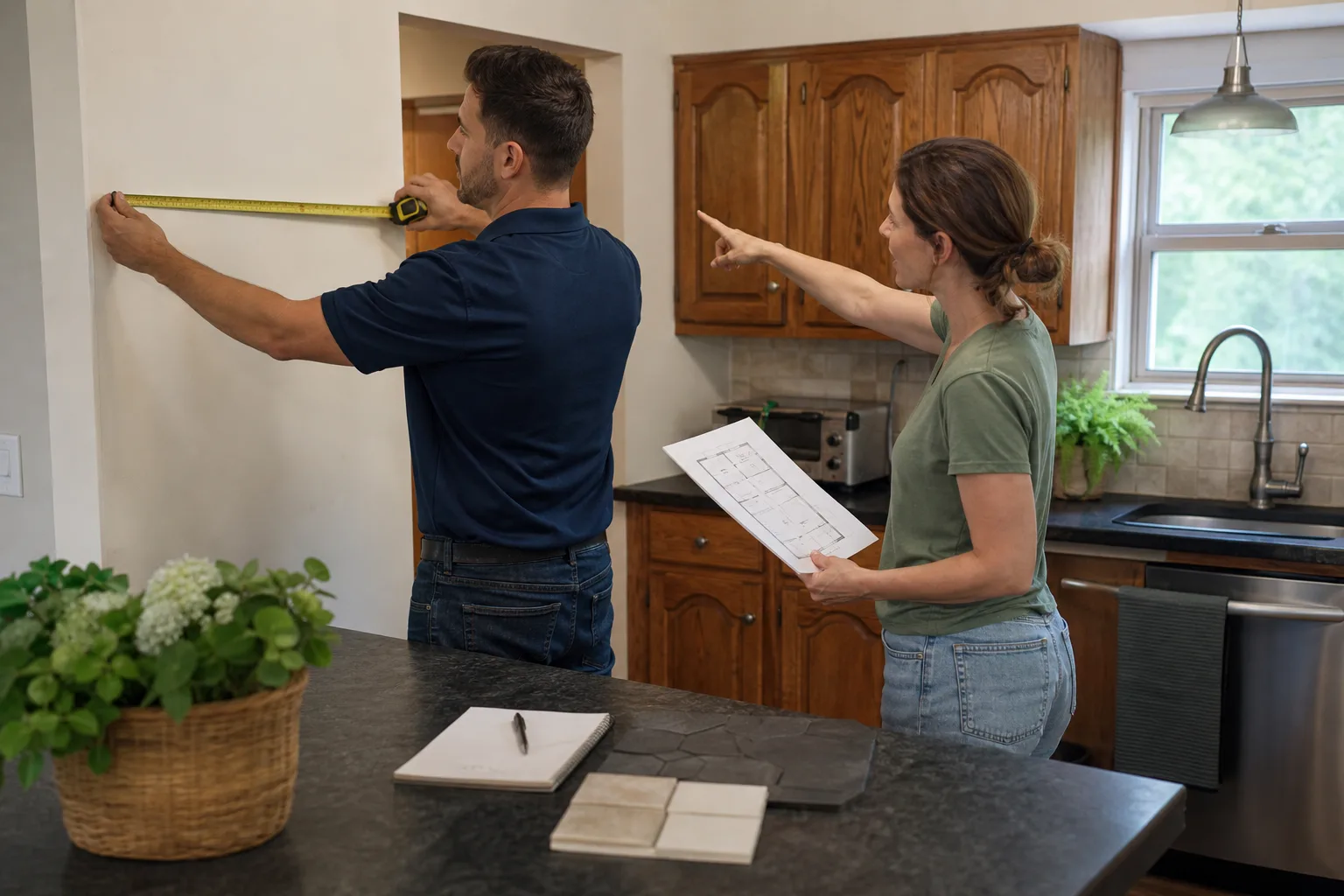
You can legally maximize your savings in a Mesquite kitchen remodel by doing every finish task yourself and hiring licensed trades for every rough task. This split is common, it’s above board, and it’s how you capture the DIY savings without creating permit problems. Here’s how the split works in practice.
- Hire out the rough work first. Bring in licensed electrical, plumbing, and gas trades to handle everything inside the walls: new circuits, relocated supply lines, gas hookups, and any structural changes. Each one pulls or is listed on the permit. They finish, the inspector signs off, and then you start.
- Confirm the permit covers your finish work. In most Nevada jurisdictions, your homeowner permit can cover tile, paint, and cabinet installation once the rough inspections pass. Ask before you start; the rules vary slightly by jurisdiction.
- Do all demo yourself. Tearing out cabinets, flooring, and old backsplash is a $1,500 to $3,000 savings in labor if you handle it. Wear a proper respirator, and test any pre-1980 material for asbestos before you touch it.
- Install your own cabinets if you’re confident. Cabinet installation on existing, level floor and straight walls is doable for a careful homeowner. If the floor slopes or the walls are out, the cabinet run will show it, and that’s when to bring in a professional.
- Finish your own tile, paint, and trim. Backsplash, wall paint, trim, and open shelving are the last steps and the easiest to do yourself. This is where most of the visible savings live.
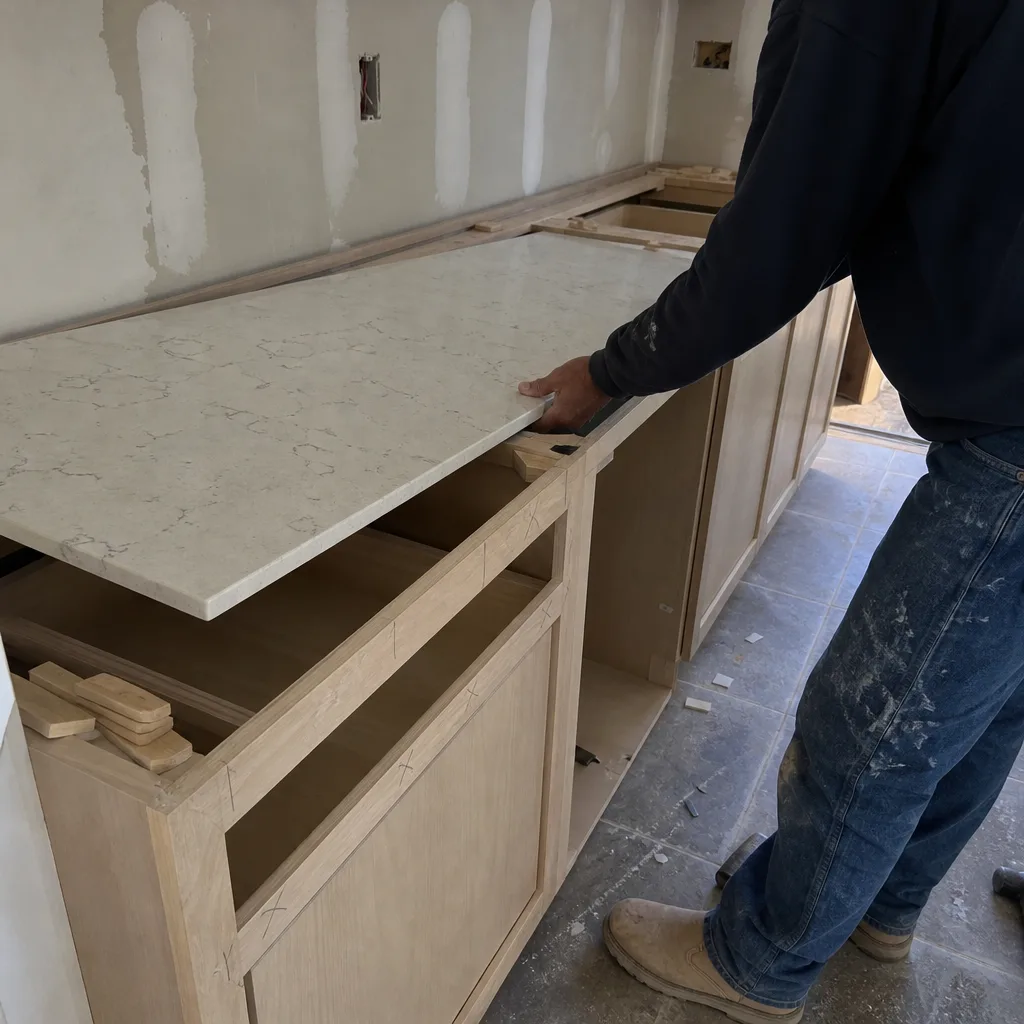
- Hire the countertop template and install. Stone counters look DIY-friendly and aren’t. Cambria or Caesarstone slabs need a templating visit and a fabricator’s install; a mis-measured slab is a four-figure scrap. Leave this to the professionals every time.
This is also where a contractor who puts everything in writing changes the math. Bradford gives you a written price before work starts, so the rough-work side of the split has a fixed number you can plan your DIY finish work around. Our General Contractor in Mesquite page explains how permits and licensed subs are documented on a project. If you’re dividing a larger project, the same logic applies to other rooms, as covered on our Bathroom Remodeling in Mesquite page.
The Resale Disclosure Problem No One Warns You About
This is the part of DIY that catches homeowners five to seven years later, when they sell. A buyer’s home inspector walks through a kitchen and reads it like a code violation report. Unpermitted electrical work, an unvented gas range, a wall removed without a beam, a dishwasher on a fabricated circuit: all of it shows up in the inspection report, and all of it affects your negotiating position.
What the inspector typically flags in a Mesquite kitchen:
- Circuit panel labels that don’t match the actual kitchen circuits, a common sign of homeowner electrical work.
- An open junction box behind a cabinet or under the sink.
- A gas range or cooktop installed without a permit or a visible pressure test record.
- A dishwasher sharing a circuit with a countertop appliance outlet when it should be dedicated.
- Structural modifications visible in the attic or basement: a missing beam, a notched joist, a header that doesn’t match the span.
- Tile over damaged substrate, which the inspector notes even though it’s not a code violation, because it signals how the rest of the work was done.
Unpermitted work that gets flagged usually requires a retroactive permit and a licensed inspection to clear before closing. That retroactive permit plus the inspection and any corrections routinely costs $1,500 to $4,500, and it can delay a sale by weeks. In a market where buyers have leverage, an unpermitted kitchen is a negotiating discount, not a neutral fact. Doing the permitted work correctly the first time is cheaper than fixing it in escrow.
Permits, Inspections, and What the Inspector Actually Checks
A kitchen permit is not one inspection; it’s several, each tied to a stage of rough work. Knowing the sequence helps you plan around it and keeps the trades off each other’s toes. Most Nevada jurisdictions run a sequence like this:
- Rough electrical inspection after wiring is run but before drywall goes up. The inspector checks circuit sizing, GFCI placement near water, and that the panel is labeled correctly.
- Rough plumbing inspection after supply and drain lines are in but before the wall closes. Drain slope, venting, and shutoff placement are the main checks.
- Rough gas inspection after gas lines are run, with a pressure test. This is the one most homeowners never see because the plumber handles it.
- Framing inspection if any structural work is being done, with the engineer’s stamped drawing on site.
- Final inspection after cabinets, counters, and fixtures are installed, covering outlets, water lines, and appliance hookups.
Each of these requires work to be exposed and accessible when the inspector arrives. A homeowner who does finish work too early, sealing up a wall or setting cabinets over un-inspected rough work, will be asked to open it back up. In our experience, that failure is the single most expensive DIY shortcut in a Mesquite kitchen. The permit sequence is designed to protect you, not slow you down.
Common Mistakes to Avoid
- Pulling a homeowner permit for work that legally requires a licensed sub. The permit doesn’t transfer the license. Electrical, gas, and plumbing still need a licensed trade, and an inspector who finds homeowner rough work will red-tag the job.
- Skipping the GFCI upgrade while the wall is open. Any new outlet within six feet of the sink needs GFCI protection. Retrofitting it later means tearing into a finished backsplash.
- Removing the soffit to gain cabinet height without checking what’s inside. Soffits in Mesquite kitchens often hide a duct run or wiring junction. Remove one without confirming and you’ve created a code problem above the cabinets.
- Doing the cabinet install before the floor is level. A cabinet run on an uneven floor shows as a visible gap under the toe kick and a misaligned countertop line. Leveling the floor is part of the rough build, not a finish detail.
- Tiling over crumbled backerboard. Backsplash tile is only as good as its substrate. If the existing wall moves or flakes when you press on it, remove it and rebuild before tiling.
- Painting cabinets without degreasing. Kitchen grease sits invisible on cabinet surfaces. Skip the degreaser and the paint will fish-eye and peel, usually within a year.
- Closing out the project without documentation. Keep your permits, inspection sign-offs, and material specs in one folder. At resale, that folder is the difference between a clean transaction and a discount.
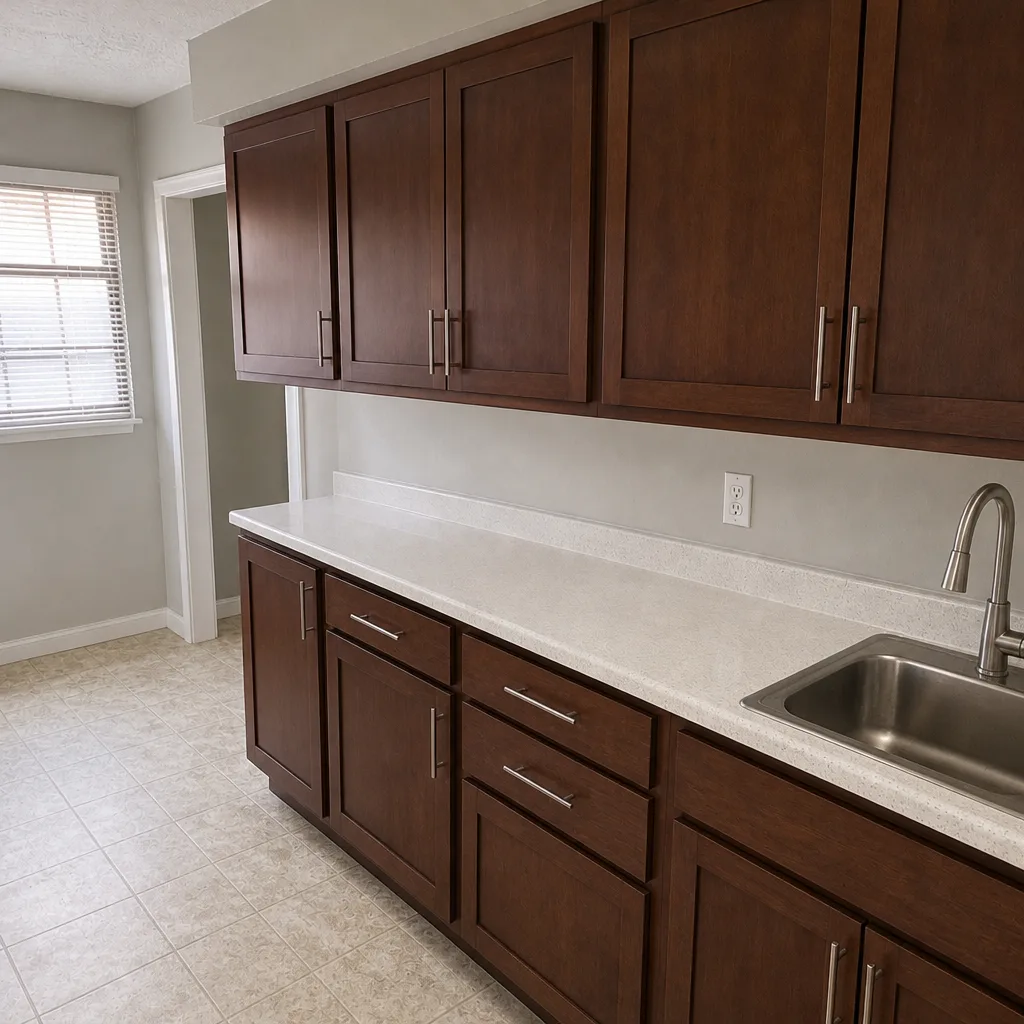
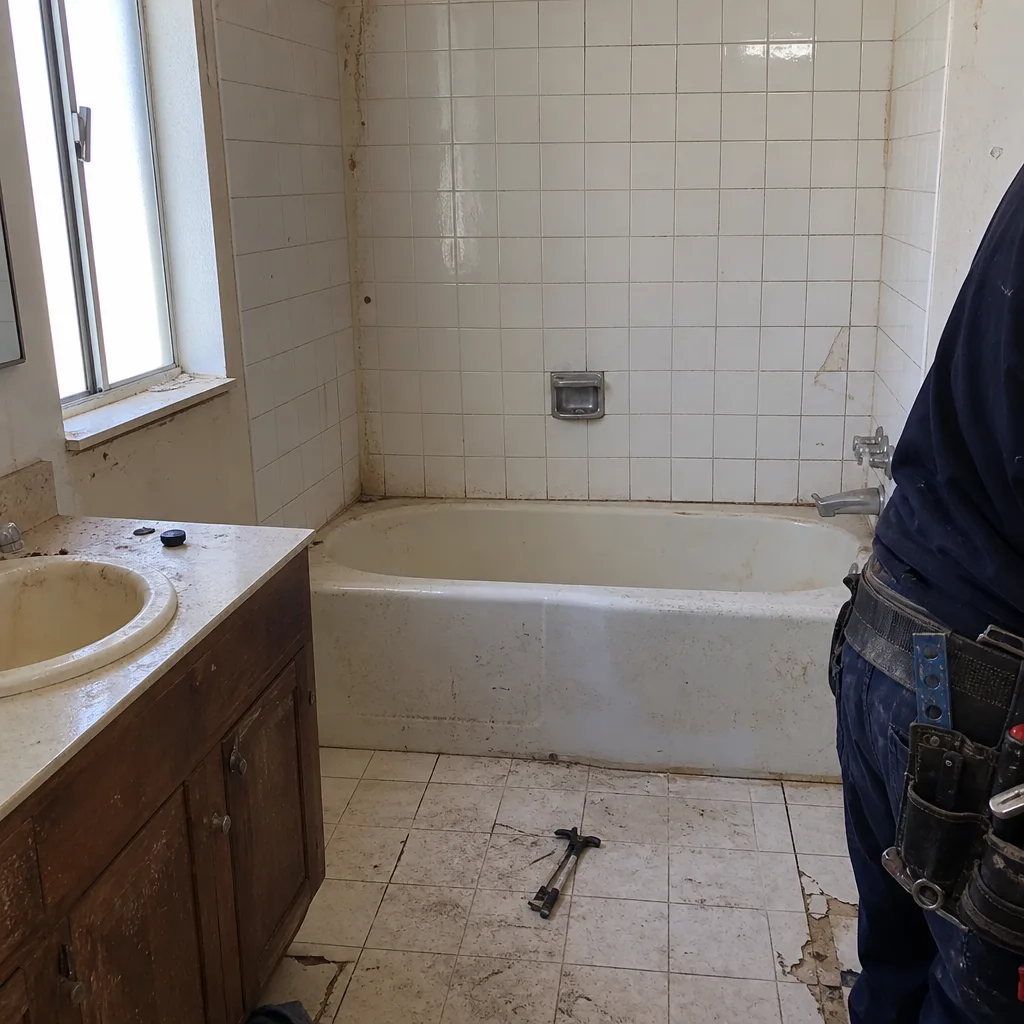
See the difference
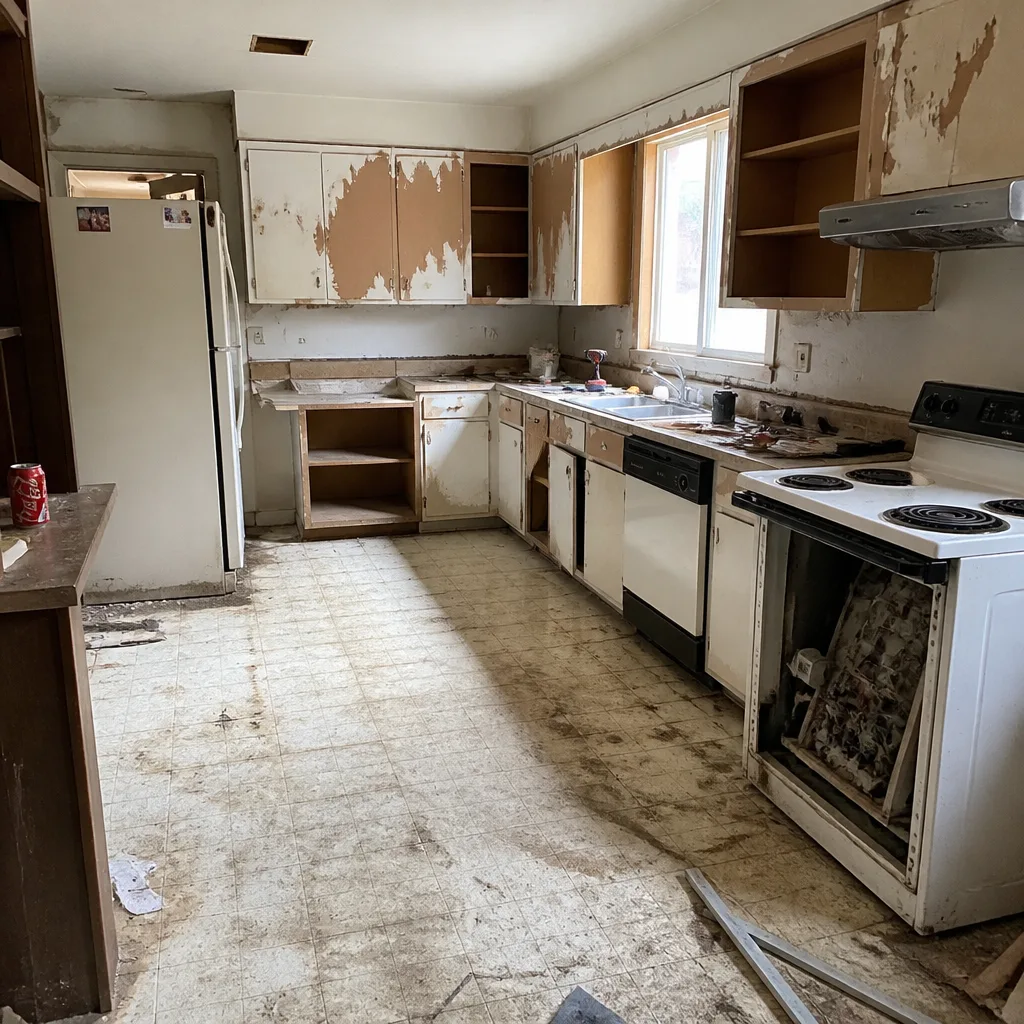 Before
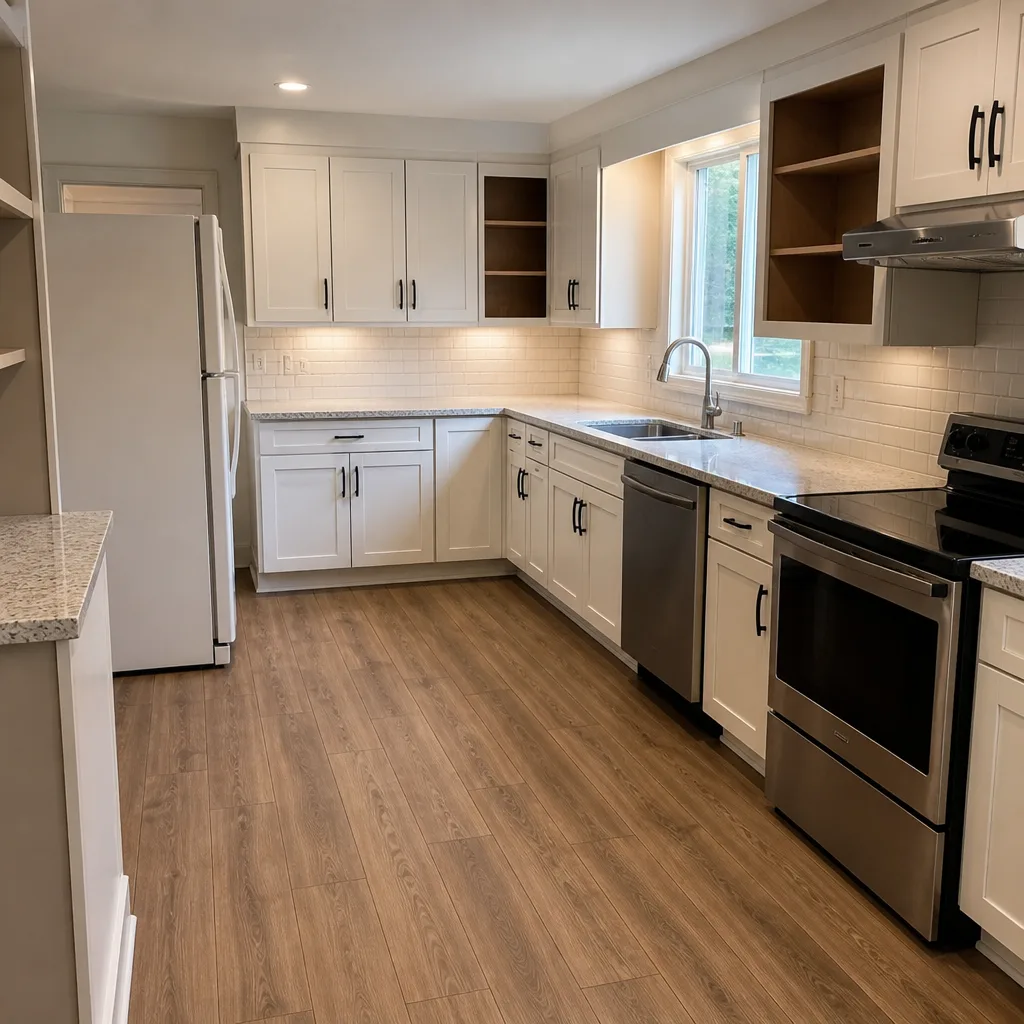 After
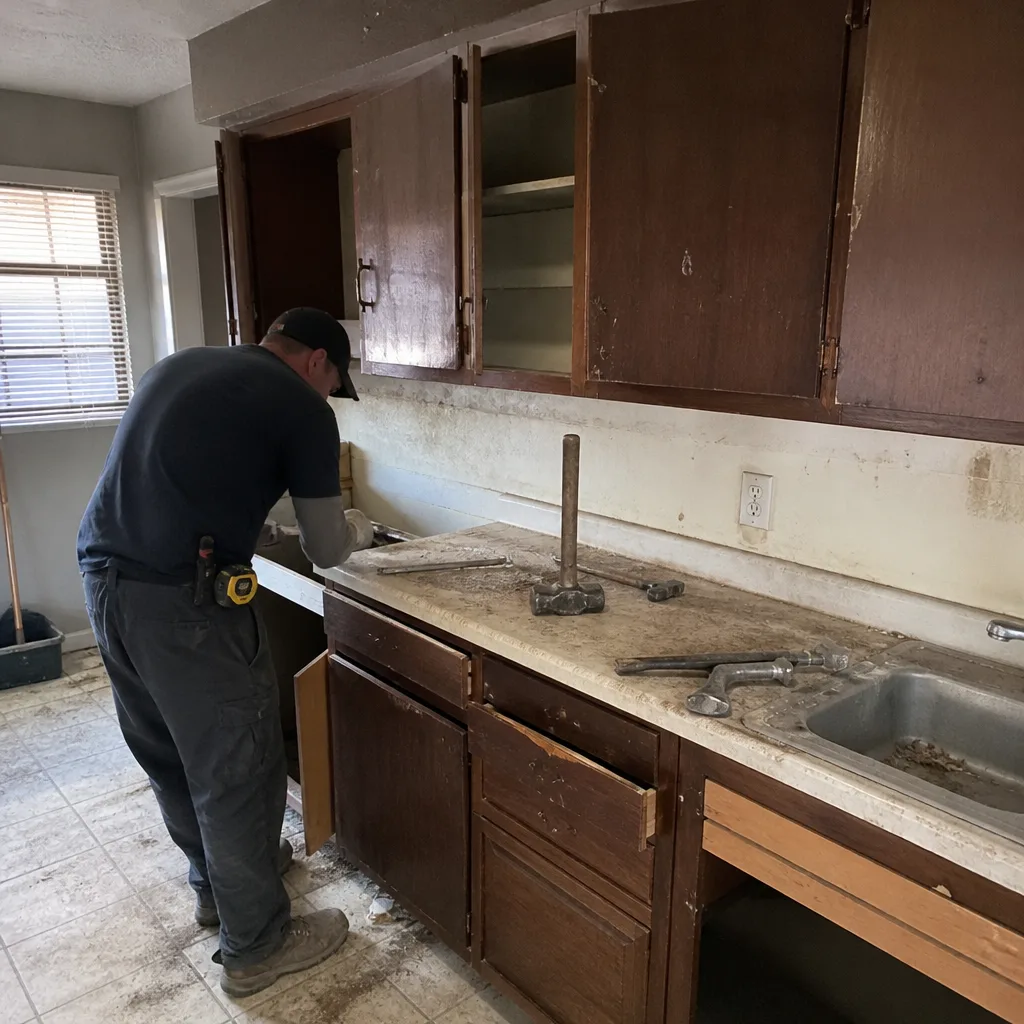 Before
 After
 Before
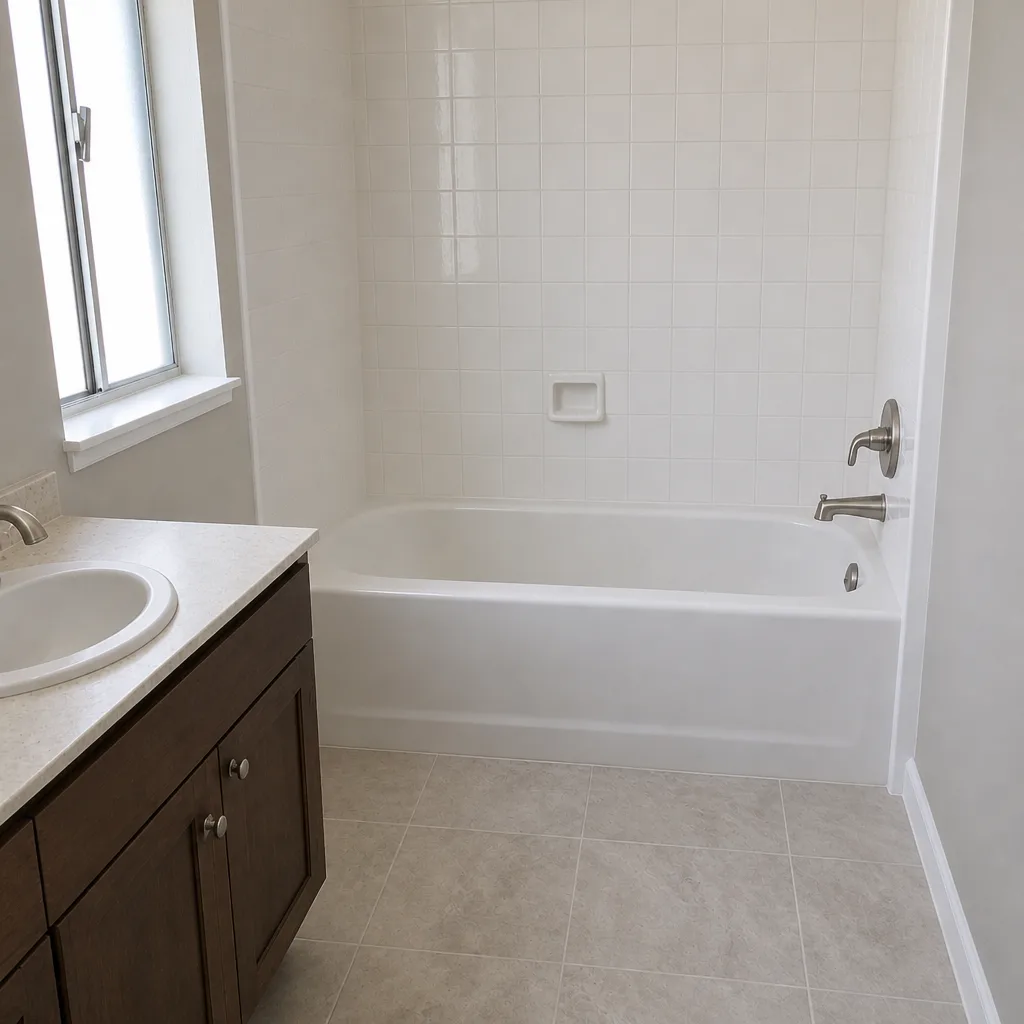 After
When to Call a Professional
Call a professional the moment your kitchen plan touches the electrical panel, a gas line, plumbing rough-in, or a load-bearing wall. These aren’t skill questions; they’re code and insurance questions, and no amount of YouTube familiarity changes what Nevada requires. Call a professional too if the layout is changing, if the floor or walls are out of level, or if your countertops are stone and need a fabricator. And call if you’ve started a project and discovered the rough work was never done to code; retroactive fixes are cheaper than a failed inspection at resale. Bradford Remodeling Mesquite offers free estimates in Mesquite. Call (844) 761-8665 and we’ll tell you which parts of your plan are yours to do and which need a licensed hand.
Frequently Asked Questions
You can legally self-perform finish work: painting, hardware replacement, backsplash tile on sound existing substrate, open shelving, and demo. You can also pull a homeowner permit as the owner-occupant. Electrical, gas, plumbing rough-in, and structural work still require a licensed trade, even on your own home. Call (844) 761-8665 if you want a professional to confirm which side of the line your plan falls on; estimates are free.
Yes, swapping a dishwasher on an existing dedicated circuit is legal for a homeowner. Moving that circuit, adding a new one, or relocating the outlet requires a licensed electrician and a permit. The physical swap is straightforward; the circuit work is not, and the next buyer’s inspector will notice.
Yes. Any wall removal needs a permit, and if the wall is load-bearing it also needs an engineer’s evaluation and a stamped drawing. In our experience, most kitchen-to-living-room walls in Mesquite homes are load-bearing. Removing one without a beam is the most expensive and least reversible DIY mistake we see.
Yes. A buyer’s inspector will flag unpermitted electrical, plumbing, gas, or structural work, and clearing it usually requires a retroactive permit and a licensed inspection. That process routinely runs $1,500 to $4,500 plus delays, and it gives the buyer leverage. Permitted work protects your sale price.
Doing your own demo, painting, backsplash tile, and trim typically saves $3,000 to $7,000 in labor on a mid-size kitchen. Hiring out all rough work and doing all finish work is the legal and common way to capture that savings while keeping the permit valid. Call (844) 761-8665 for an exact quote on the rough-work side; estimates are free.
A written price locks in the scope and cost for the rough work you hire out, so the DIY portion has a fixed number to plan around. Bradford gives you that written price before any tool comes out, and every completed project carries the 365-Day Done Right Promise: if the work fails within a year, we come back and correct it at no charge. Call (844) 761-8665 to schedule your free estimate.
The Bottom Line
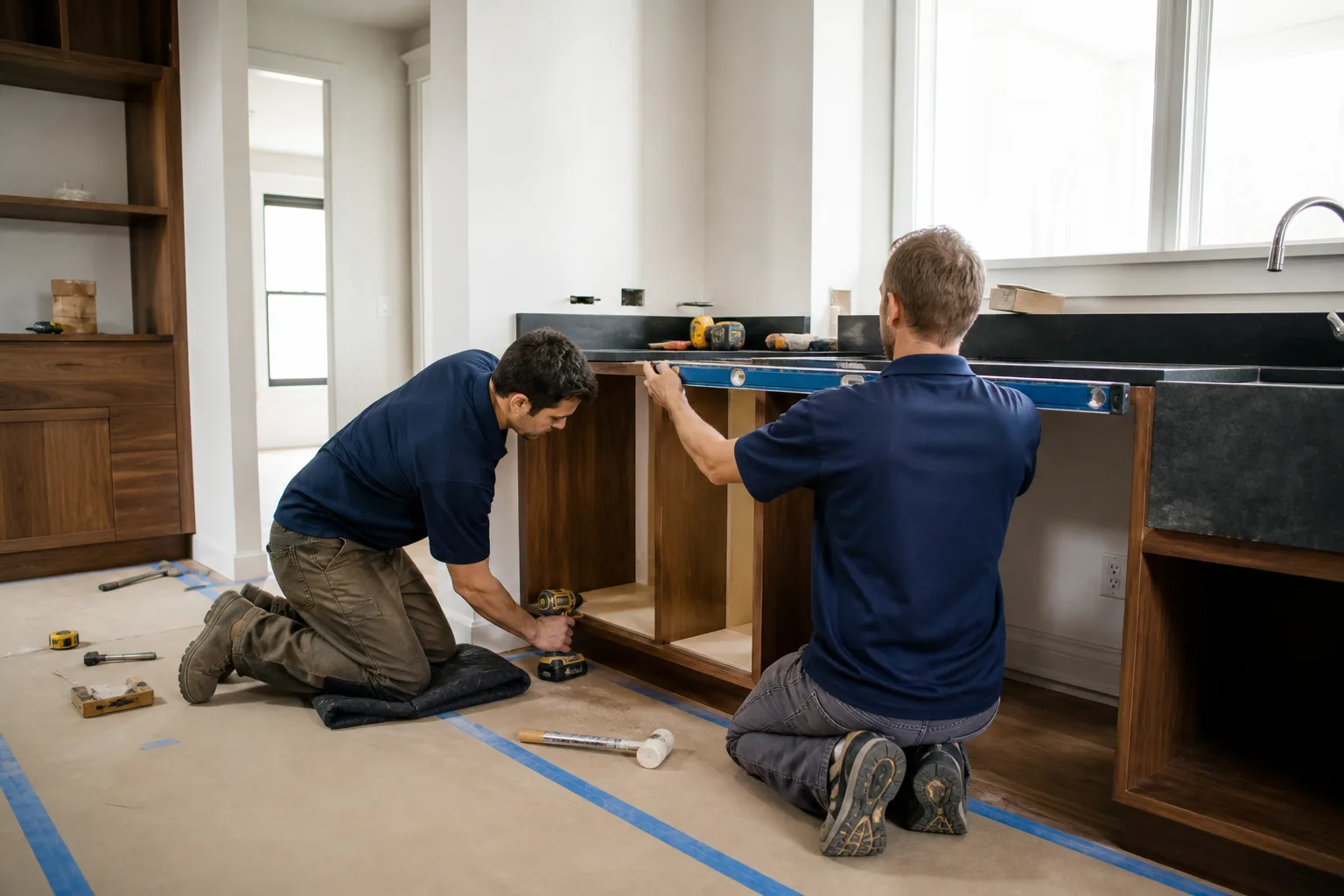
The safe DIY line in a Mesquite kitchen is drawn by code, not by skill. Finish work belongs to you: paint, hardware, backsplash on sound substrate, shelving, demo. Rough work belongs to licensed trades: electrical beyond a fixture swap, all gas, plumbing rough-in, and any structural change. Split the project at that line and you save real money without creating a permit problem. Skip it and you’ll pay for it at inspection or resale. Bradford Remodeling Mesquite gives you a written price before work starts, a full-year 365-Day Done Right Promise on completed work, and a live person on the phone around the clock. Start at our Bradford Remodeling Mesquite home page, or call (844) 761-8665 for a free estimate and a straight answer on what’s yours to do.
Written by the team at Bradford Remodeling Mesquite.