
Last updated November 18, 2026








Free written scope consultation - allowances, timeline, and change-order rules on paper before a single trade is scheduled
Seasonal Construction Care for Mesquite: Year-Round Homeowner’s Guide
Mesquite’s July and August monsoon pushes moisture into a structure that has been baked and contracted for three straight months. The expansion that follows is when unsealed stucco cracks open, improperly flashed windows start leaking, and slab control joints that were borderline in May fail outright by September. This guide maps home maintenance to the events that actually happen here, not the generic four-season checklist written for a Midwest climate. You’ll get pre-monsoon and post-monsoon priorities, winter cold-snap prep, spring wind tasks, and a seasonal log system that holds up at resale.
Quick Answer
Seasonal home maintenance in Mesquite follows a five-phase calendar: pre-monsoon sealing in May and June, post-monsoon inspection through September, winter pipe and HVAC prep in November, spring wind re-sealing in March and April, and a full condition log updated at each phase. The failures that show up in Mesquite inspections are moisture intrusion at stucco penetrations, window flashing leaks, and blocked attic ventilation – all preventable with scheduled checks.
Styles & brands we work with
- Kitchen remodeling
- Bathroom remodeling
- Home additions & ADU
- Roofing
- Windows & doors
- Driveway & pavers
- Fence
Table of Contents
- Pre-Monsoon Checklist: Sealing Stucco and Clearing Drainage
- Post-Monsoon Inspection: Where Moisture Hides in Desert Assemblies
- Winter Prep: Pipe Exposure, Window Frames, and HVAC Timing
- Spring Wind Season: Utility Penetrations and Attic Screens
- Building a Seasonal Log That Holds Up at Resale
- When to Repair and When to Replace
- Common Mistakes to Avoid
- When to Call a Professional
Pre-Monsoon Checklist: Sealing Stucco and Clearing Drainage
The monsoon window in Mesquite runs roughly July through early September, and the work that protects your home during it happens in May and June. We’ve watched enough monsoon seasons in Mesquite to know the pattern: three months of baking heat contracts stucco and wood framing, then the first significant rain triggers expansion. Every unsealed penetration – hose bibs, dryer vents, exterior outlets, AC line sets – becomes a water entry point during that expansion cycle.
Work through this list before the first monsoon rain:
- Walk every stucco penetration. Run a finger around hose bibs, dryer vents, exterior outlets, and AC line sets. Any gap wider than a credit card needs a proper sealant rated for exterior masonry, not a bead of interior caulk that will bake off by July.
- Verify roof flashing at every transition. Step flashing where the roof meets a wall, counter-flashing at the chimney, and drip edge along the eaves. Loose or lifted flashing is the number one source of monsoon leak calls in Mesquite.
- Clear the drainage path. Desert drainage is often designed as sheet flow across the lot, not gutters and downspouts. Check that swales, area drains, and patio grading still move water away from the slab. A small pile of decomposed granite in the wrong place can pond water against the foundation.
- Inspect window and door frames. Look for failed sealant at the frame-to-stucco joint and check weatherstripping at doors. This is also when you’d catch a Therma-Tru door with a worn sweep before it lets water in.
- Test the attic for ventilation. Blocked soffit vents in a Mesquite summer trap heat and humidity. Clear screens and check that ridge vents are unobstructed.
If your inspection surfaces more than sealant and flashings can fix – cracked stucco over a large area, roof deck softness, or windows that have already leaked – that’s the point to call a General Contractor in Mesquite for a proper assessment rather than patching it yourself.
Post-Monsoon Inspection: Where Moisture Hides in Desert Assemblies
Post-monsoon damage in Mesquite doesn’t look like storm damage elsewhere. It’s quieter. Desert construction assemblies – stucco over lath, concrete block, tile roofs on batten systems – can hold moisture internally for weeks before anything shows on the surface. By the time a stain appears on drywall, the moisture has typically been present for 30 to 60 days.
September and early October are the window for inspection, and these are the places moisture hides:
- Behind stucco at penetrations. Feel for softness around hose bibs, outlets, and vents. A moisture meter reads hidden saturation the eye can’t see.
- Window rough openings. Check interior drywall at the bottom corners of every window. Staining or bubbling here points to flashing failure above.
- Attic sheathing. Look for dark streaks on roof sheathing and rust on truss plates. Small leaks at flashing show up here first.
- Slab perimeter. Look for efflorescence (white chalky deposits) where the slab meets stucco, which signals water tracking under the wall.
- Patio and hardscape joints. Settled joints in Belgard or Unilock pavers hold water against the house.
If you find evidence of intrusion, don’t wait for the next rain. Moisture that stays in a wall for a full season turns minor flashing work into framing replacement.
Winter Prep: Pipe Exposure, Window Frames, and HVAC Timing
Mesquite winters are mild by national standards but cold enough to trigger real damage, especially for homeowners who moved here from milder climates and assume exposure risk doesn’t exist. Hard freezes in the low 20s do happen, and exposed plumbing on exterior walls, in unheated garages, and at hose bibs is the first failure point.
Winter prep tasks:
- Disconnect and drain all exterior hoses. A hose left connected traps water in the bib, and a cold snap cracks the pipe inside the wall – not the bib itself.
- Insulate exposed pipe runs. Any supply line in the attic, garage, or along an exterior wall needs foam insulation. A plumber can identify lines that need heat tape too, and a Bathroom Remodeling in Mesquite project is the right time to fix exposed runs behind a wall.
- Check window frames for thermal movement. Vinyl and aluminum frames expand and contract with temperature swings. Look for gaps at the interior trim and any draftiness that wasn’t there in summer.
- Time the HVAC switchover. Have the furnace serviced before first cold night, typically late October in Mesquite. A furnace that hasn’t run since spring can have a cracked heat exchanger or a failed ignitor that won’t be discovered until you need it.
- Seal the garage door threshold. A cold snap with wind finds every gap. Weatherstripping at the door bottom and sides matters more in winter than any other season.
Cold snaps in Mesquite often last 24 to 72 hours, which means the risk isn’t prolonged cold but the sudden drop. The prep is one afternoon’s work in November.
Spring Wind Season: Utility Penetrations and Attic Screens
Mesquite’s spring wind season runs roughly March through May and drives fine particulate – sand, dust, debris from nearby construction – into every unsealed penetration on the envelope. This isn’t cosmetic dust. That grit accumulates in weatherstripping, blocks attic ventilation screens, and works into the weep screed at the stucco base.
Spring tasks:
- Re-seal utility penetrations. The same spots you sealed before monsoon need a spring check. Wind-driven particulate wears sealant and loosens it faster than you’d expect.
- Inspect weatherstripping. Every exterior door sweep, threshold, and jamb. A worn sweep lets in sand and raises cooling costs all summer.
- Clear attic ventilation screens. Look for particulate buildup at soffit vents and ridge screens. A blocked soffit vent in a Mesquite summer drives attic temperatures well above ambient.
- Wash the exterior walls. A gentle wash on stucco removes embedded dust and lets you spot new cracks while they’re still hairline.
- Check fencing and gates. Wind loads fence panels and gate hardware. Ameristar and Jerith metal panels hold up well to Mesquite wind if their posts and hinges are sound.
Spring wind work done well reduces air infiltration all summer and catches small cracks before monsoon expansion turns them into leaks.
Building a Seasonal Log That Holds Up at Resale
The most valuable maintenance document in a Mesquite home isn’t the receipt file – it’s a dated condition log. A simple seasonal record of what you inspected, what was found, and what was repaired becomes credible evidence for a warranty claim and, at resale, a disclosure tool that supports the asking price.
Build the log with these fields:
- Date and season phase (pre-monsoon, post-monsoon, winter prep, spring wind).
- Area inspected – roof, stucco penetrations, windows, attic, HVAC, plumbing, drainage.
- Condition found – photo plus a one-line description. “Hairline crack at southwest hose bib, sealed” is better than “sealed crack.”
- Action taken – material, method, who did it.
- Follow-up flag – anything borderline that needs recheck next season.
Keep the log digital with dated photos. A buyer’s inspector who sees four years of seasonal records has a fundamentally different conversation than one reading a house with no paper trail. For anything that required a contractor, keep the written scope and the guarantee alongside the log. That’s how the Bradford Remodeling Mesquite home approach to documentation works: written price before work, guarantee in hand at close, and a record that holds up.
When to Repair and When to Replace
The single question we get most from Mesquite homeowners after a post-monsoon inspection is whether a failed component gets repaired or replaced. The honest answer depends on age, extent, and whether the failure is localized or systemic.
Repair is usually right when:
- The leak is isolated to one flashing point or one window.
- Stucco cracking is hairline and hasn’t propagated into a pattern.
- A pipe freeze damaged a single run, not the whole wall assembly.
- A door sweep or threshold is worn but the frame and slab are sound.
Replacement is usually right when:
- Moisture has compromised framing, sheathing, or truss plates behind a wall.
- A window or door assembly has failed flashing at multiple points and the unit is out of warranty.
- The stucco has widespread cracking tied to substrate failure, not surface movement.
- Systems are near end-of-life and two seasonal cycles have produced the same failure twice.
If it’s a kitchen or bath, replacement almost always comes up during a broader remodel rather than as a standalone decision. For that scope, the conversation belongs with a Kitchen Remodeling in Mesquite contractor who can coordinate trades and pull the permits – nobody should be sequencing stucco, plumbing, and electrical on their own.
Common Mistakes to Avoid
- Sealing with interior caulk. Interior caulk cracks and peels off exterior stucco within one Mesquite summer. Use an exterior-rated masonry sealant every time.
- Waiting until a stain appears before inspecting. By the time interior drywall stains, moisture has been in the wall 30 to 60 days. Inspect on schedule, not on symptom.
- Ignoring the slab perimeter. Efflorescence at the base of the stucco is the earliest warning of water tracking under the wall, and it’s the cheapest thing to fix.
- Skipping the November furnace service. A furnace that failed in the off-season won’t announce it until the first cold night. Service it in October.
- Clearing drainage by pushing debris downhill. That pile of decomposed granite still holds water. Remove it, don’t relocate it.
- Patching a re-failing window without addressing the flashing. The same flash failure will reappear next monsoon. Address the cause, not the symptom.
- Keeping no log. Without dated records, a warranty claim is your word against the calendar. A log makes the case.
See the difference
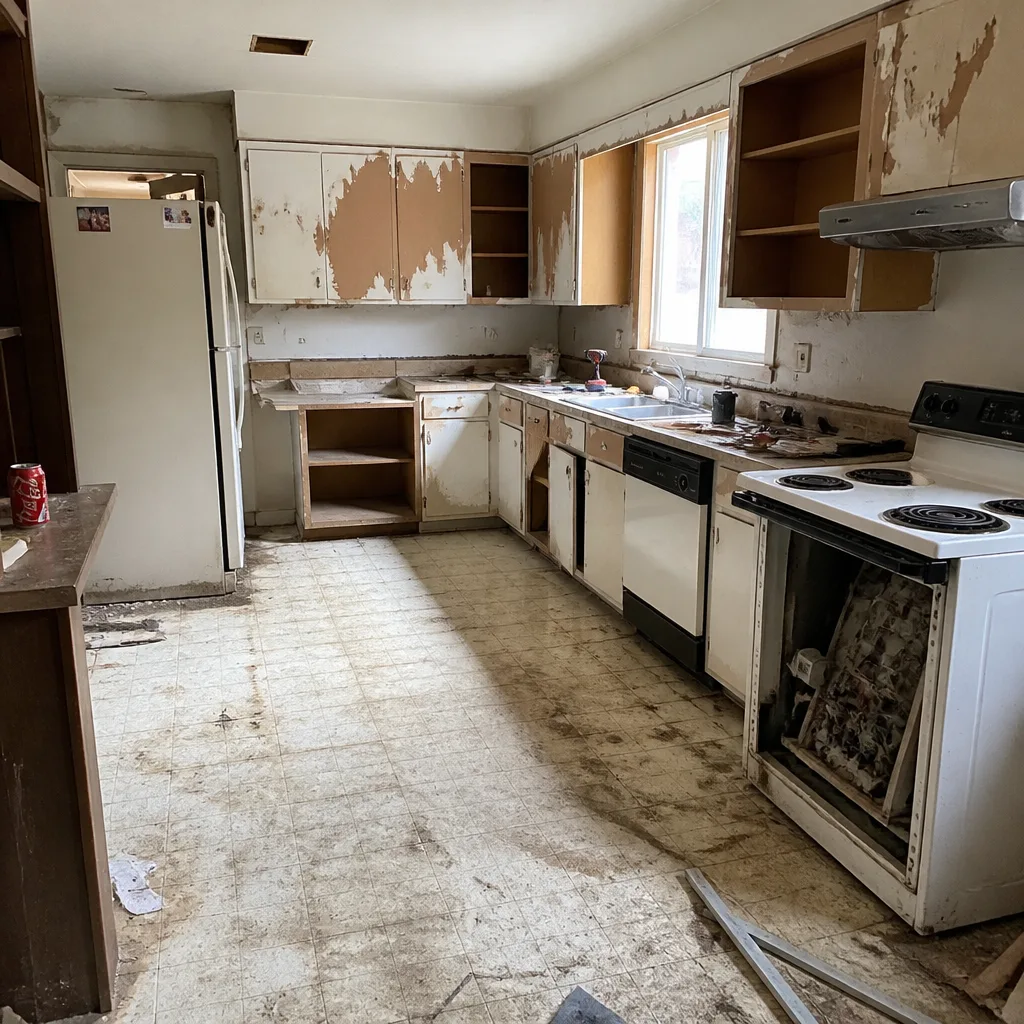 Before
 After
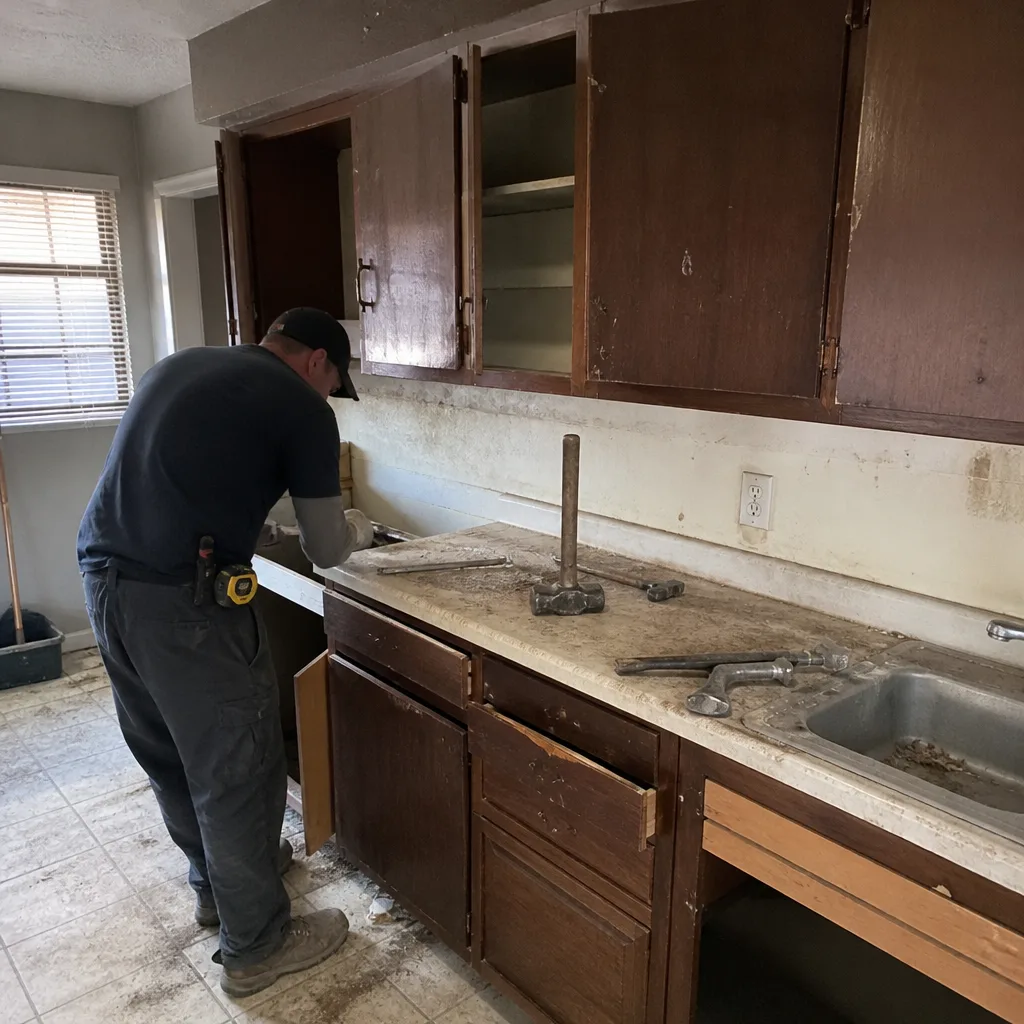 Before
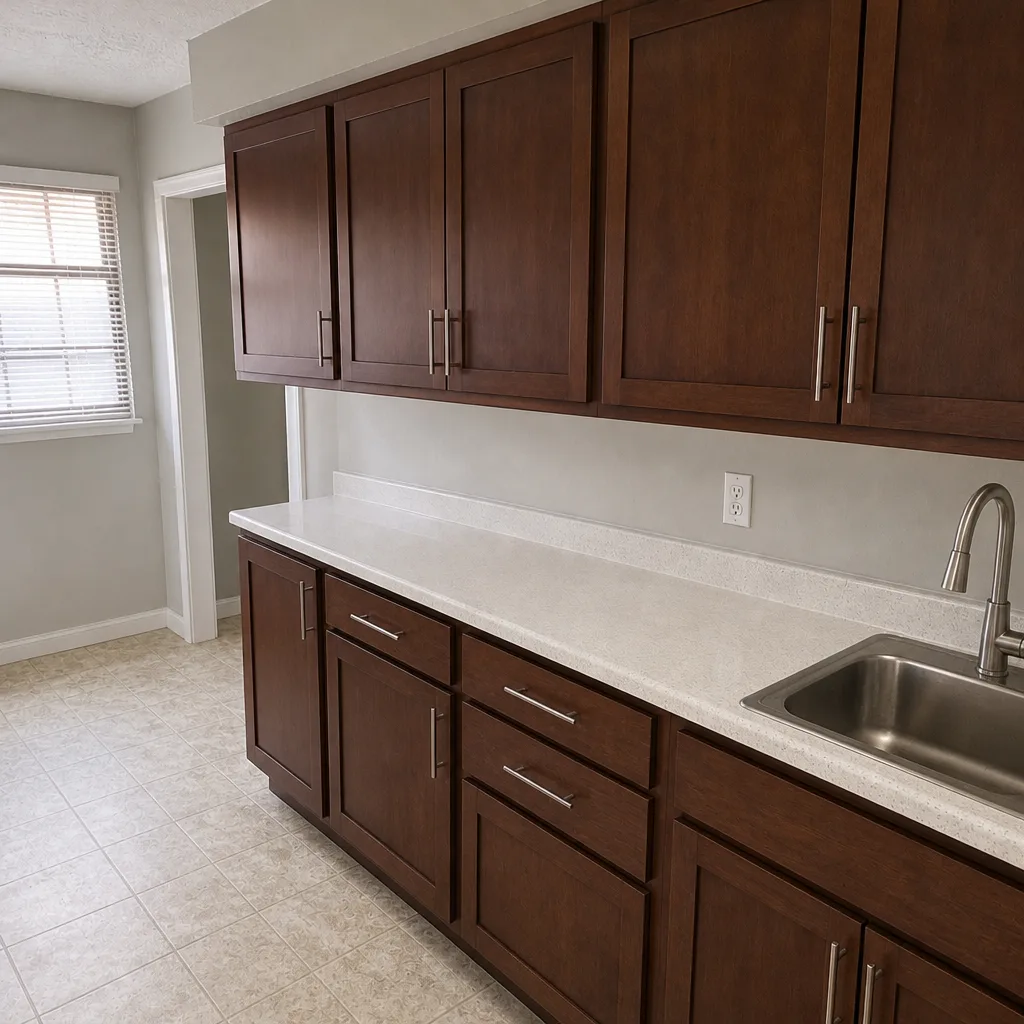 After
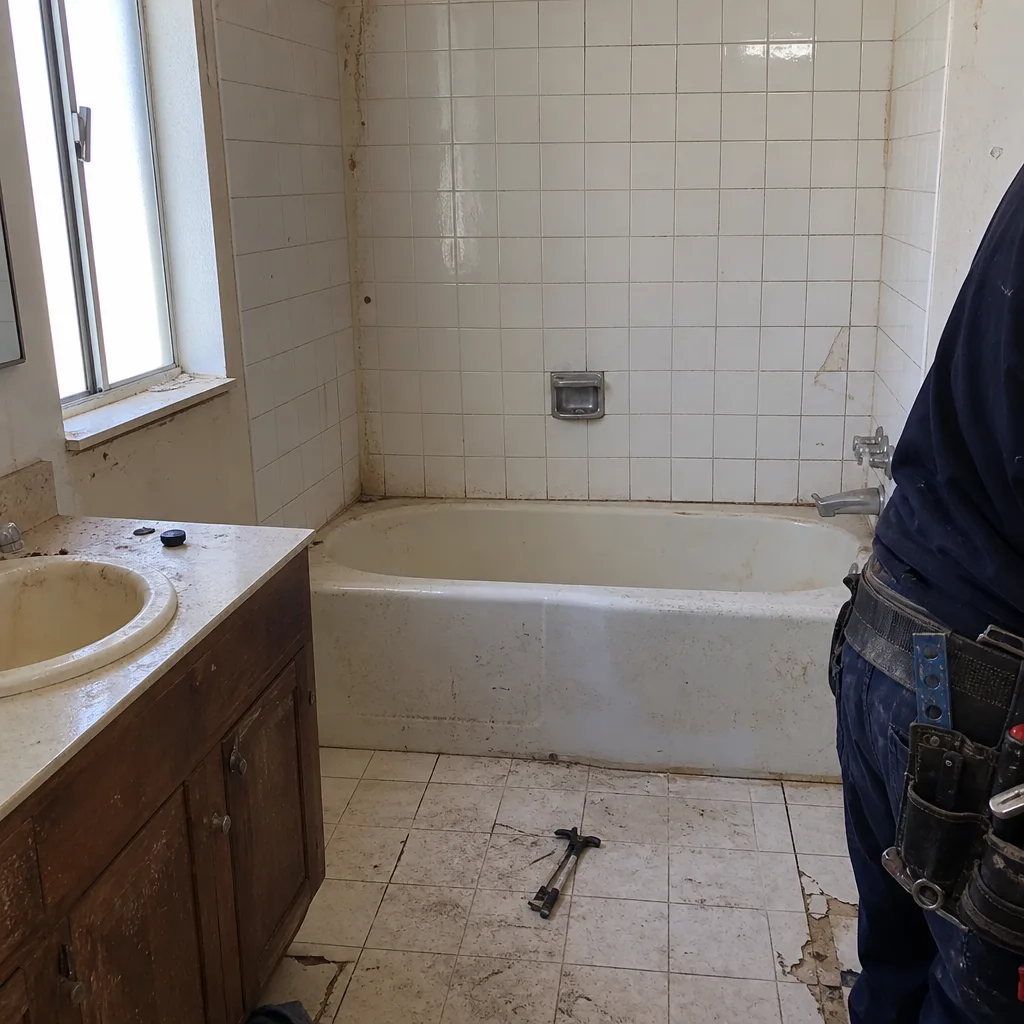 Before
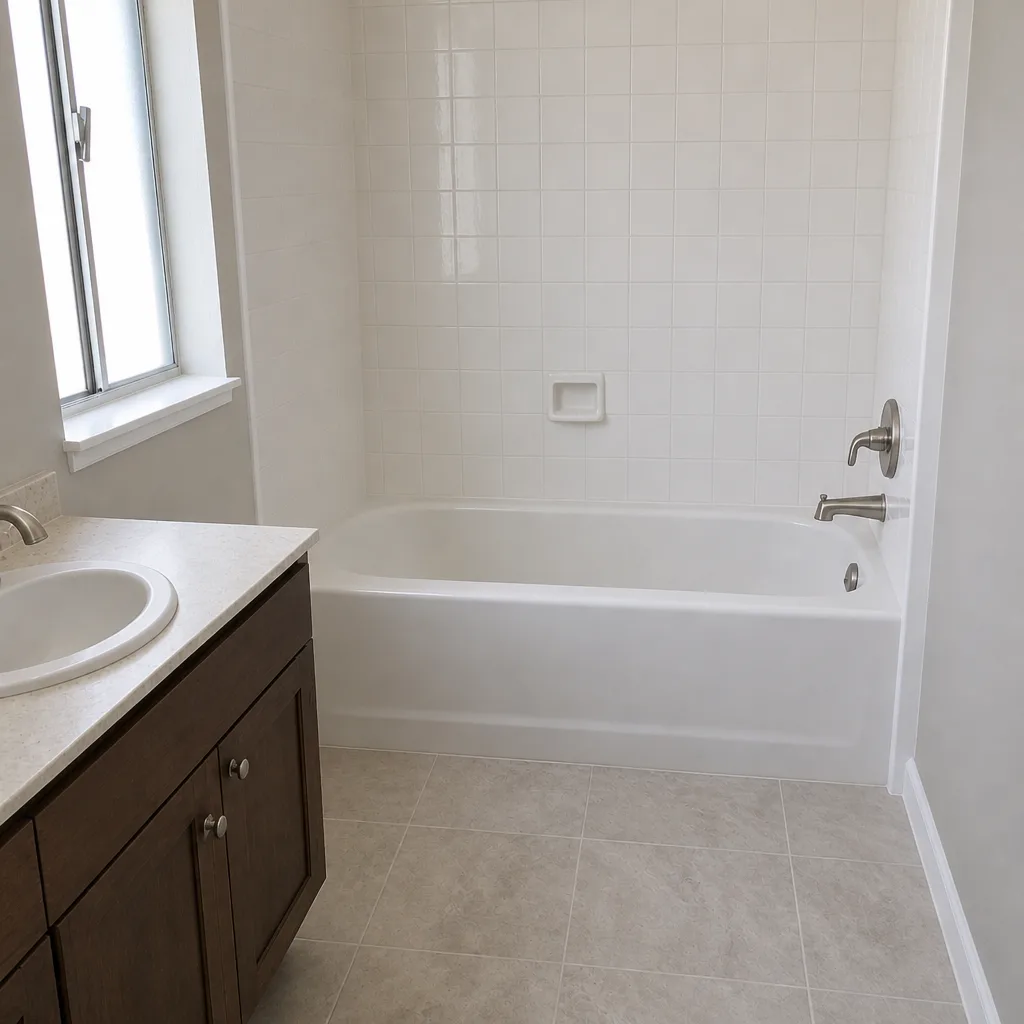 After
When to Call a Professional

Call a professional when the failure goes beyond a tube of sealant – a leaking window at the rough opening, stucco cracking that follows a pattern rather than sitting isolated, a furnace that won’t ignite, or any sign of moisture inside a wall cavity. Those are the cases where a homeowner patch delays a repair that grows in cost each season. Also call a pro if your inspection turns up a repair that will need a permit to close out, since permits pulled and inspections passed are what protect you at resale.
Bradford Remodeling Mesquite offers free estimates in Mesquite – call (844) 761-8665. You’ll get a written price before any work starts, background-checked uniformed technicians on the job, and the 365-Day Done Right Promise on the work: if it’s not done right, we return and correct it at no charge within the full year. A live person answers the phone 24 hours a day, seven days a week.
Frequently Asked Questions
Seal every exterior stucco penetration, verify roof flashing at all transitions, clear drainage pathways, and inspect window and door frames for failed sealant. The pre-monsoon window in Mesquite is May and June, before the July-August rains arrive. Call (844) 761-8665 for a free estimate on any repair your inspection surfaces.
Typically 30 to 60 days before it shows on interior drywall. Desert assemblies – stucco over lath, concrete block – hold moisture internally, and the surface signs lag the actual intrusion. That’s why post-monsoon inspection in September matters more than waiting for a stain in December. Call (844) 761-8665 if you find evidence of intrusion.
Yes, at least the exposed runs. Hard freezes in the low 20s do happen in Mesquite, and exterior hose bibs, unheated garage lines, and any supply pipe along an exterior wall are at risk. Disconnect hoses, drain exterior bibs, insulate exposed runs, and have the furnace serviced before the first cold night. Estimates on any plumbing or HVAC-adjacent remodel are free – call (844) 761-8665.
Wind-driven sand and dust work into every unsealed penetration, weatherstripping, and attic ventilation screen between March and May. That particulate wears sealant, blocks vents, and increases cooling load all summer. Re-seal utility penetrations, replace worn sweeps, and clear soffit and ridge screens each spring. Call (844) 761-8665 for a free estimate on sealant or door repairs.
Repair if the leak is isolated to a single flashing point and the assembly is otherwise sound; replace if the unit has failed at multiple points and is out of warranty. Flashing failures that come back a second season are a signal to replace rather than patch. Call (844) 761-8665 for a free assessment and a written price before any work starts.
Yes. A dated log with photos supports warranty claims and becomes credible disclosure material at resale. Buyers’ inspectors respond differently to four years of daily records than to an undocumented house. Keep the log digital with the written scope and guarantee from every contractor repair attached. Call (844) 761-8665 for a free estimate on any repair your log flags.
The Bottom Line

Mesquite’s seasons demand a maintenance calendar built for this climate: pre-monsoon sealing in May-June, post-monsoon inspection through September, winter prep in November, and spring wind re-sealing in March-April. Every failure that shows up in Mesquite inspections – moisture in walls, failed flashing, frozen pipes, blocked ventilation – starts as an unsealed penetration or a skipped inspection. Seal the envelope, inspect on schedule, log the results with dates and photos, and repair at the first sign rather than waiting for a stain. That discipline is what keeps a Mesquite home squared away through every season, year over year.
When a repair needs a permit, a pro, or a written guarantee behind it, call Bradford Remodeling Mesquite at (844) 761-8665 for a free estimate. Written price before work starts, no change orders at the door, background-checked technicians, and the 365-Day Done Right Promise on every completed job.
Written by the team at Bradford Remodeling Mesquite.