Last updated November 18, 2026





Free written scope consultation - allowances, timeline, and change-order rules on paper before a single trade is scheduled
Bathroom Remodeling Warning Signs Every Homeowner Should Know
The most dangerous line in a bathroom remodeling proposal isn’t a suspicious number. It’s the absence of a waterproofing specification. If a tile proposal doesn’t name the membrane system and the installation standard behind it, you have no basis to inspect the work, and no basis to warranty it. That single missing line tells you more about how a project will go than any review or sales pitch. In our experience working Mesquite bathrooms from the older slab homes near the Virgin River corridor to newer builds out toward Bunkerville Road, the warning signs are almost always visible in writing before a single tile comes off the wall. This guide shows you what to look for at the contract and proposal stage, where your leverage is highest and the pattern is clearest.
Quick Answer
Bathroom remodeling warning signs show up in writing, not on the job site: a proposal with no named waterproofing membrane, no substrate spec, no tile-setting method, and a lump-sum price with no material sheet. Any one of those gaps lets a contractor substitute cheaper materials after you sign. Three documents before work starts – a signed contract with material specs, a permit copy, and a written warranty with named exclusions – separate a disciplined contractor from one you’ll be chasing for a year.
Styles & brands we work with
- Kitchen remodeling
- Bathroom remodeling
- Home additions & ADU
- Roofing
- Windows & doors
- Driveway & pavers
- Fence
Table of Contents
- Why the Missing Waterproofing Spec Is the Biggest Warning Sign
- Substrate, Setting Method, and Grout: What the Proposal Must Name
- The Lump-Sum Price Problem: Why No Spec Sheet Is a Structural Risk
- The Permit-Avoidance Pattern (and Who Carries the Risk)
- Mid-Project Warning Signs Specific to Bathroom Work
- The Three Documents You Must Have Before Work Starts
- Red Flags in How the Contractor Communicates
- Questions That Expose a Weak Proposal in Five Minutes
Why the Missing Waterproofing Spec Is the Biggest Warning Sign
A shower or tub surround is a wet assembly, and the tile is not what keeps water out of your walls. The waterproofing membrane behind the tile does that. When a proposal says “tile shower” and nothing else, it has told you nothing about the one component that determines whether the assembly survives ten years or fails in three. In a dry climate like Mesquite’s, where summer highs regularly push past 110°F and indoor humidity swings hard between an air-conditioned house and a steamy shower, that membrane is doing real work every single day.
Here’s what a tile proposal must name, in writing, before you sign anything:
- The membrane system and its brand. A surface-applied liquid membrane, a bonded sheet membrane, or a foam board system with a factory waterproof face – each is a different product with a different installation standard. The proposal should name the system and the manufacturer’s spec it’s being installed to.
- Where the membrane goes. Floors, walls, curb, niches, and the transition to the drain flange. A membrane that stops short of the drain or skips the curb is a leak waiting on its first real test.
- The flood test. A proper pan gets filled with water and held for a set period before tile goes down. If the proposal doesn’t mention a flood test, ask why.
This is not a technicality. It’s the difference between a bathroom you can inspect and one you have to trust blindly. When we quote Bathroom Remodeling in Mesquite, the membrane system gets its own line in the proposal with the brand named. That’s not paperwork for its own sake – it’s the thing we point to when the 365-Day Done Right Promise gets invoked, because you can only guarantee what you can specify.
Substrate, Setting Method, and Grout: What the Proposal Must Name
The waterproofing spec is the headline, but four more items belong in every bathroom proposal. When any of them is missing, the contractor has left themselves room to change the build after you’ve signed – and you’ll never know it happened until something fails.
- Substrate type. What’s behind the tile? Cement backer board, a foam tile backer board, or a mortar bed over a framed wall are all legitimate. “Greenboard” drywall in a wet area is not, in most modern standards. The proposal should name the substrate and the thickness.
- Tile setting method. Thinset (a cement-based adhesive applied with a notched trowel) versus a full mortar bed (a thick bed of mortar that lets the installer establish slope and level). Each has a place. The proposal should tell you which you’re getting, because they’re priced differently and behave differently.
- Grout type. Cementitious grout versus epoxy grout versus a single-component urethane. Epoxy resists staining and moisture far better, and it costs more. If the proposal just says “grout,” you’re getting the cheapest option that survives the walkthrough.
- Drain and slope. For a shower, how the drain is set and how the slope to it is established. This matters more than most homeowners realize, and it’s covered further down.
When a proposal names all four, it reads longer and looks more expensive. That’s the point. A contractor who has priced the real assembly has priced the real job. A contractor who has left those lines blank has left themselves a margin to protect by cutting materials once the deposit clears.
The Lump-Sum Price Problem: Why No Spec Sheet Is a Structural Risk
A single number with no materials list feels clean. It’s actually a substitution risk built into the contract. Here’s the mechanic: if the contract says “bathroom remodel, $18,000” and never names the tile, the membrane, the fixtures, or the cabinetry line, the contractor can install whatever keeps the job profitable and still be technically in compliance. You signed for a bathroom. You didn’t sign for the bathroom you thought you were getting.
This is where the documented-brand approach earns its keep. Bradford’s roster is traceable on purpose: KraftMaid and Wellborn cabinetry, Cambria and Caesarstone surfaces, Kohler and Moen fixtures, with manufacturer specs and warranties that back our own. When a proposal names the brand and the model line, substitution has to be renegotiated, not slipped in. That’s the difference between a price you can hold someone to and a price that means nothing after the ink dries.
What this looks like on a real Mesquite proposal:
- A line-item price, not a lump sum. Materials separated from labor.
- Named fixture brands and model numbers, not “builder-grade faucet.”
- A clear scope of what’s included and what’s excluded – demo, haul-away, drywall repair, paint.
- Written change-order language: how changes are priced and approved before the work happens.
The written price before any work starts is not a formality at Bradford. It’s the Garrison Standard, and it’s non-negotiable, no exceptions. A number that can move at the door is the number you should most distrust.
The Permit-Avoidance Pattern (and Who Carries the Risk)
Contractors who frame permit-skipping as “saving you money” are transferring legal and financial risk to you, the homeowner. This pattern shows up in bathroom work constantly because a bathroom remodel touches plumbing, electrical, and often structural framing – all permitted work in most jurisdictions. When the contractor skips the permit, the inspection that would have caught a bad rough-in never happens, and the risk lands on you at resale, at insurance time, or at the first leak.
What the pattern looks like:
- “We don’t need a permit for a bathroom.” Almost never true when plumbing or electrical is being moved or added.
- “The permit will add weeks and thousands.” Something like that story is usually a way to avoid the inspection, not the paperwork.
- “You can pull the permit yourself as the homeowner.” Some jurisdictions allow it. It also puts you on the hook as the responsible party, and many contractors won’t warrant work they didn’t permit.
- No permit copy in your hand before demo day. If the permit exists, you should have a copy. If it doesn’t, you should know why.
Ask pointed questions. Who pulls the permit? What inspections are scheduled, and at what stages? Will the rough-in be inspected before the walls close up? A contractor who welcomes those questions is a contractor who runs on a process. One who deflects is telling you something. When we quote a General Contractor in Mesquite scope that includes permits, the number is in the written price and the permit copy is in your hands before demolition begins. That’s the honest version of “saving you money” – passed inspections and a clean resale record.
Mid-Project Warning Signs Specific to Bathroom Work
The proposal stage is where the pattern is clearest, but a few bathroom-specific warning signs show up mid-project. Knowing them lets you catch a problem while it’s still cheap to fix.
- Tile being set before the waterproofing is inspected. Once tile is on the wall, the membrane is invisible and the inspection problem is permanent. Waterproofing should be finished and flood-tested before a single tile goes up.
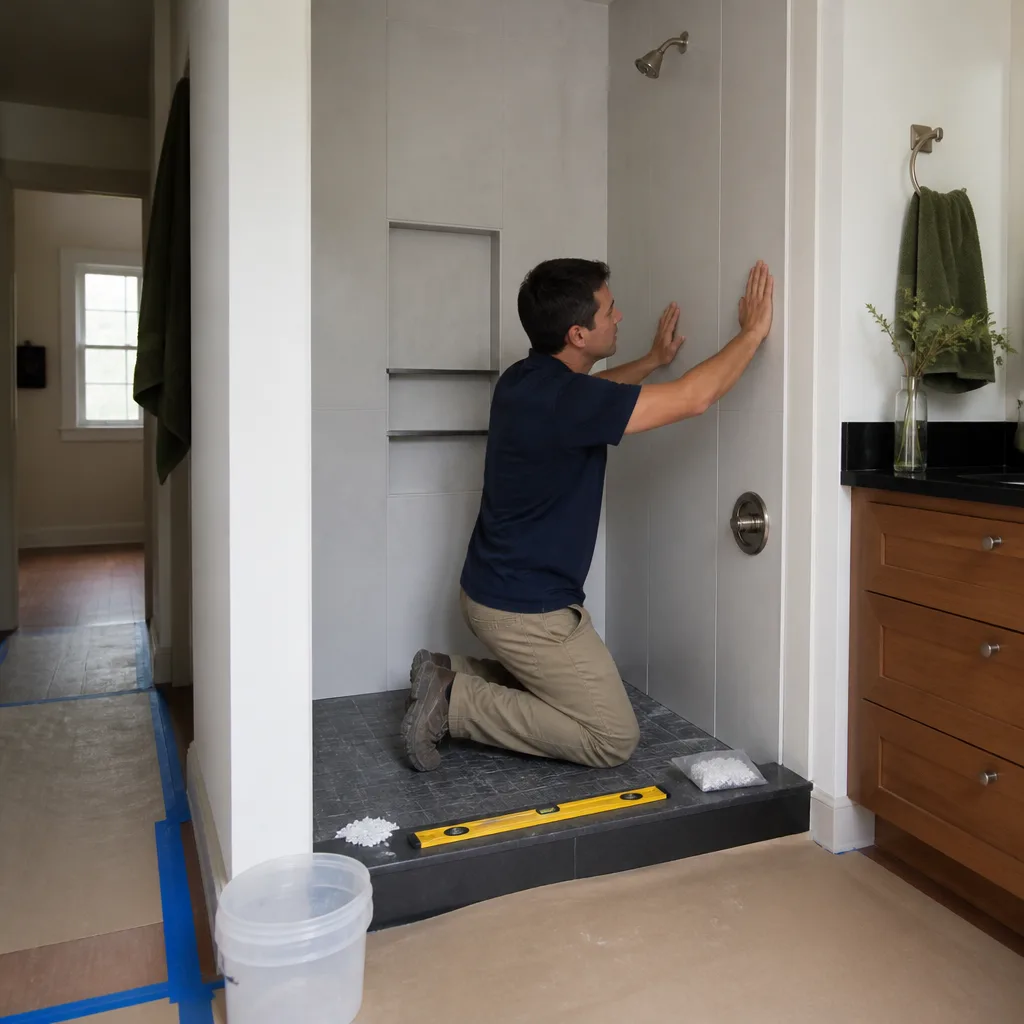
- The drain set before the slope is confirmed. A shower pan needs a consistent slope toward the drain. If the pan is poured and the drain is set and nobody checked the slope, you’re looking at a puddle that never drains – a problem you’ll find out about on the first shower, not the walkthrough.
- Grout applied before tiles are fully cured. Grout too early traps moisture in the assembly and can cause haze, cracking, or efflorescence. The setting material has a cure window; skipping it is a scheduling shortcut, not a technique.
- No dust control or site protection. Bathrooms sit next to bedrooms and hallways. A crew that doesn’t hang plastic and protect the adjacent floors is telling you how they treat the whole job.
We’ve watched all four happen on other contractors’ jobs in Mesquite. The pattern is consistent: the shortcut is always justified as saving time or money, and the cost lands months later on the homeowner. The fix is discipline at the schedule, not heroics at the end.
The Three Documents You Must Have Before Work Starts
Before demolition day, you should be holding three documents. If any is missing, delay the job until it isn’t. This is the lowest-leverage moment to walk away and the highest-leverage moment to insist.
- A signed contract with material specs. Named brands, model lines, membrane system, substrate, tile setting method, grout type, and a line-item price. Also: payment schedule tied to milestones, not to dates. Start-date and completion-date language. Change-order process.
- The permit copy. The actual permit, in your name or the contractor’s, with the inspection schedule attached. If a permit isn’t required for your scope, ask for confirmation in writing and understand the reason.
- A written warranty with named exclusions. What’s covered, what’s excluded, and for how long. At Bradford, every completed project carries the 365-Day Done Right Promise: a full year, and if the work fails inside the window, we come back and correct it at no charge. Exclusions should be spelled out, not implied – and if there are none, the warranty should say so.
Three documents, in your hand. If a contractor resists or rushes any of them, that’s a warning sign too. A disciplined operation hands them over without being asked. You can read more about how we run a whole-home scope in the Bradford Remodeling Mesquite home page, where the same document set applies.
Red Flags in How the Contractor Communicates
Communication is a preview of the job. Contractors who run on discipline answer the phone, show up when they say, and write things down. Contractors who don’t, share a set of habits that surface before the first crew rolls up.
- Voicemail during business hours. If you can’t reach a person before you’ve paid, you won’t reach one after. Our line is answered by a live person 24/7, not an automated system and not a callback queue.
- No-shows for the estimate, or arriving hours late. A missed estimate appointment is the least expensive test you’ll ever run on a contractor.
- Verbal numbers. A price quoted on the phone and never sent in writing is a price with no teeth. The written price before any work starts is the line we won’t cross, and it should be the line you won’t cross either.
- No named crew. Background-checked, uniformed technicians mean you know exactly who’s coming through the door – and identity and conduct standards are set at a company level, not left to individual job sites. If a contractor can’t tell you who their crew is, they can’t tell you how your house will be treated.
- Pressure to sign today. Countdowns and scarcity language are the opposite of how a disciplined operation behaves. A good proposal is good tomorrow too.
When we quote a Kitchen Remodeling in Mesquite scope, homeowners often tell us the reason they called was a contractor who went quiet for two weeks. The pattern is the same one they’ll hit on a bathroom. Communication is not a customer-service nicety; it’s evidence of how the operations are run.
Questions That Expose a Weak Proposal in Five Minutes
A few direct questions cut through a polished proposal. Ask them at the table and watch how the contractor answers.
- “What waterproofing membrane system are you using, and to whose installation standard?” A real answer names the system and the spec. A vague answer means the spec doesn’t exist.
- “Will I get a permit copy before demo day, and what inspections are scheduled?” A disciplined contractor answers without hesitation. A stalled answer is a permit problem in disguise.
- “Which fixture and cabinetry lines are named in my contract?” If they’re not in the contract, they’re not in your job. Substitution is a contractor’s right when the materials aren’t specified.
- “What does your warranty cover and exclude, in writing?” If the answer is verbal, ask for the page. Our 365-Day Done Right Promise is written, and the exclusions are named.
- “Are your crew background-checked, and who exactly will be on site?” A contractor who can’t answer this hasn’t set standards for their crews.
Five questions, five minutes. The answers tell you whether you’re dealing with a by-the-book operation or one that’s making it up as it goes. When we sit down with a homeowner in Mesquite to walk through a proposal, the answers are all on the page before the meeting starts – because a written price and a written guarantee are the terms, not the sales pitch.
Common Mistakes to Avoid
- Signing a lump-sum contract with no materials list. A price without a spec sheet lets the contractor substitute cheaper materials after you sign, and you’ll have no basis for recourse.
- Accepting “we’ll do a permit later.” On bathroom plumbing and electrical work, later is usually never. You carry the risk at resale and insurance time.
- Paying a large deposit before you have the three documents. Payment should be tied to milestones, and the documents should come first.
- Skipping the warranty review. A warranty with unnamed exclusions is a warranty that can be narrowed after the fact. Read the exclusions before you sign.
- Letting tile go up before the waterproofing is flood-tested. Once the tile is set, the membrane is invisible and the inspection problem is permanent.
- Trusting a verbal price over a written one. The number at the door is the number that moves; the number in the contract is the one that holds.
- Hiring on price alone in a hot Mesquite market. When demand is high, the cheapest bid is often the one with the most blanks in the contract. Price matters, but specification matters more.
See the difference
 Before
 After
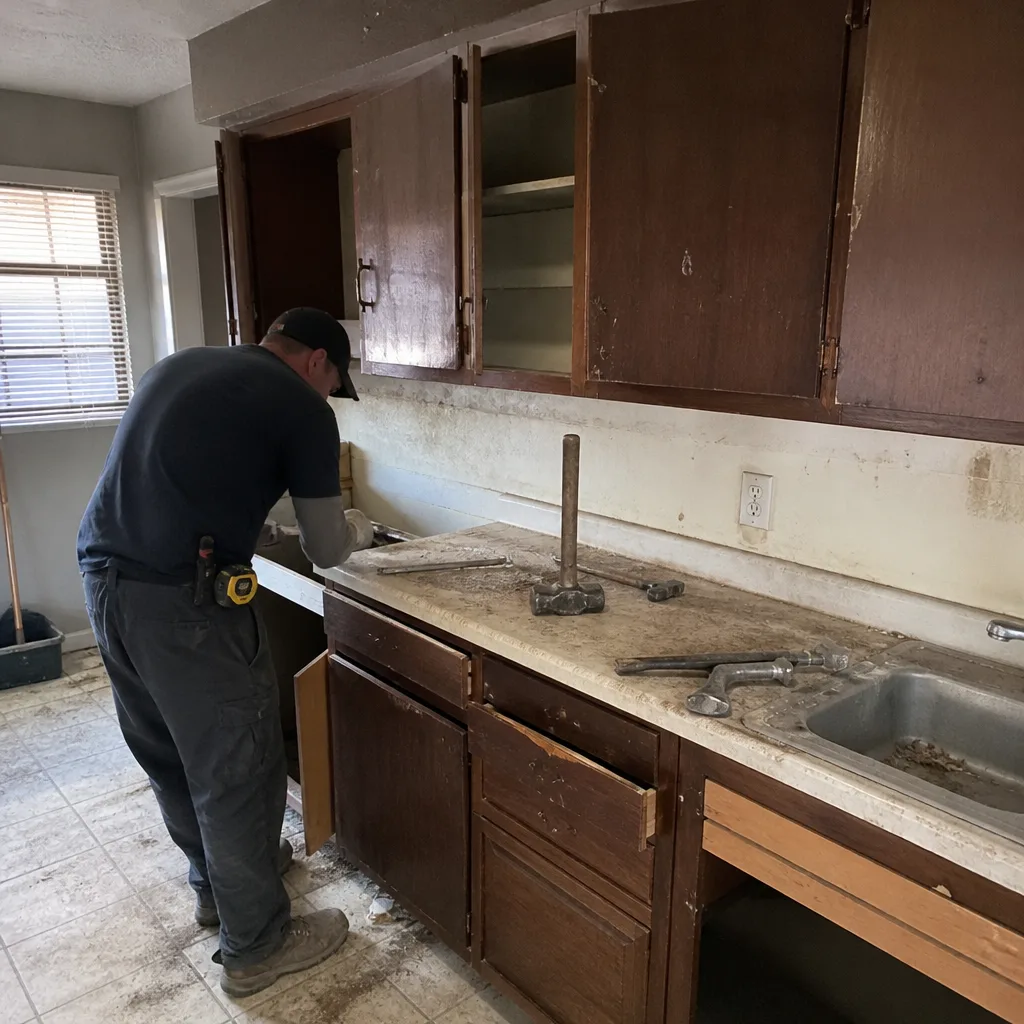 Before
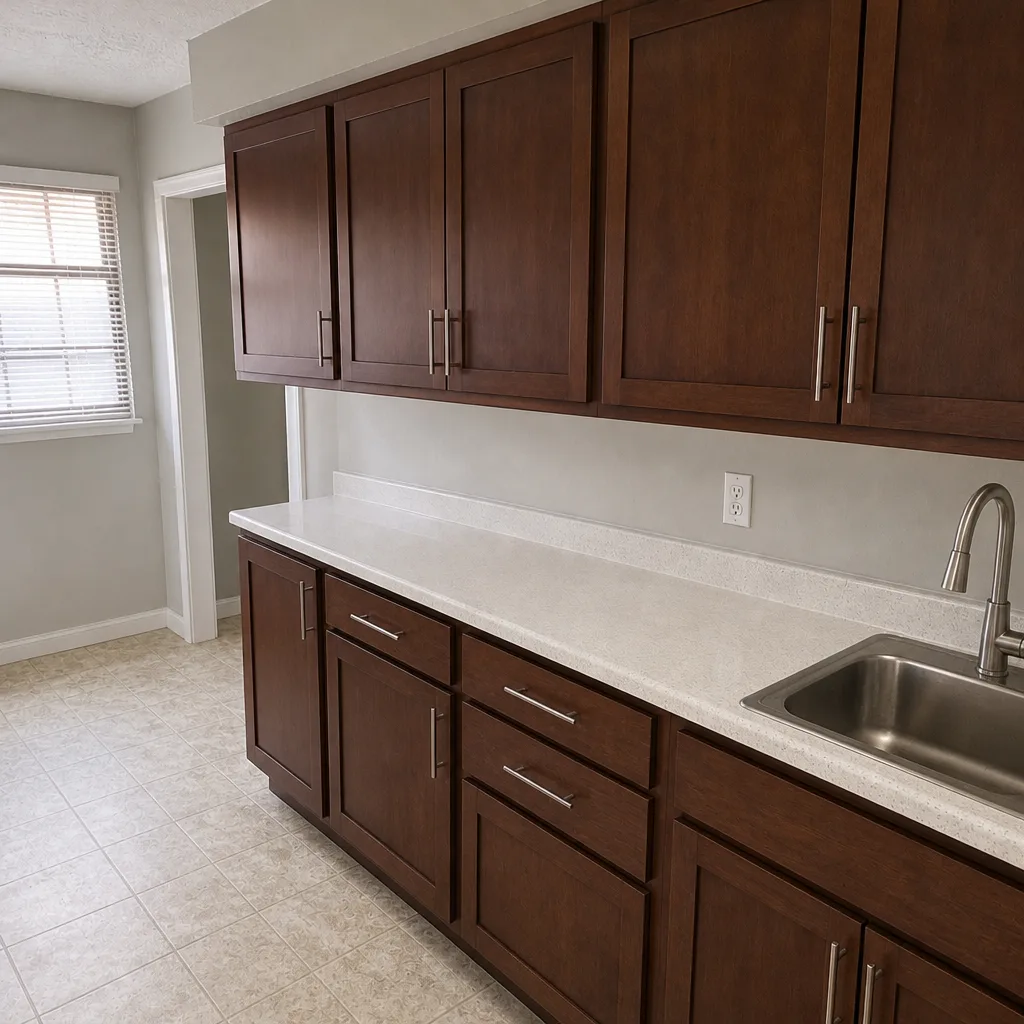 After
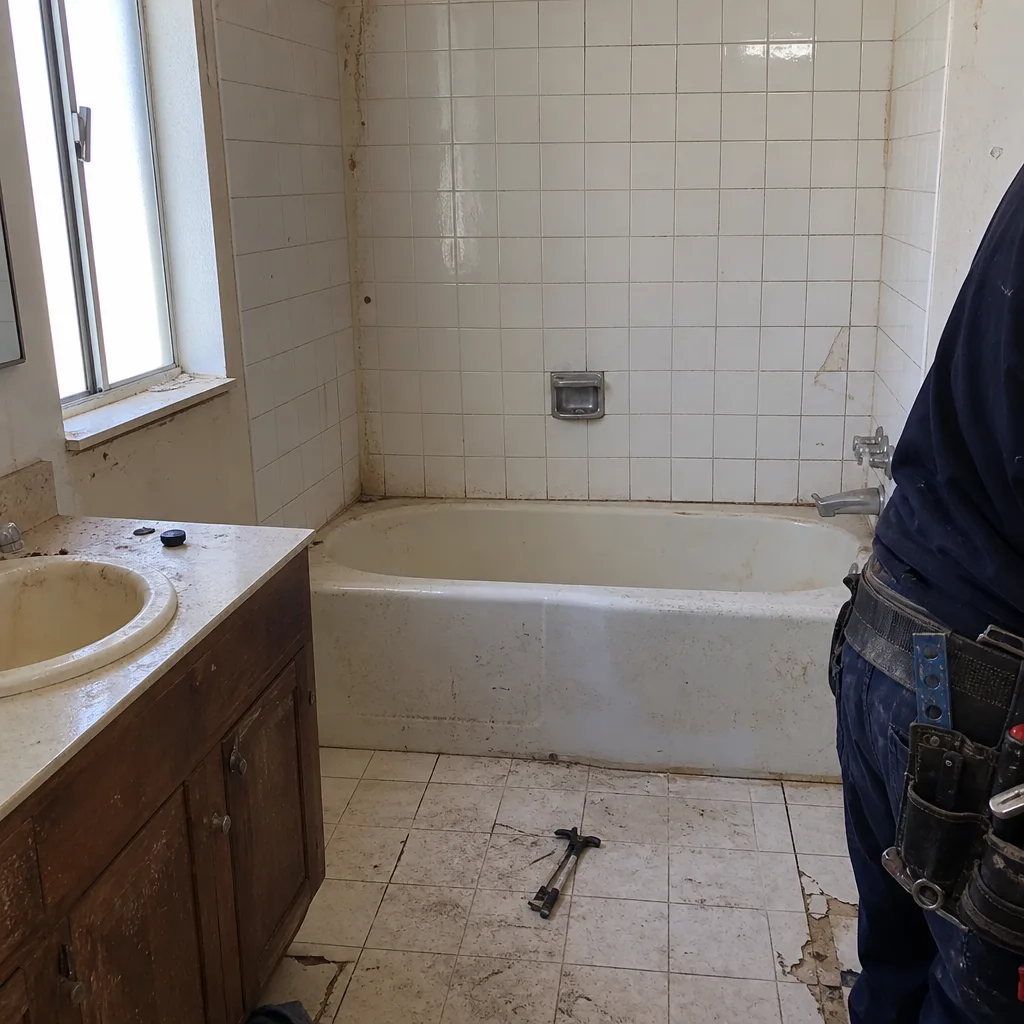 Before
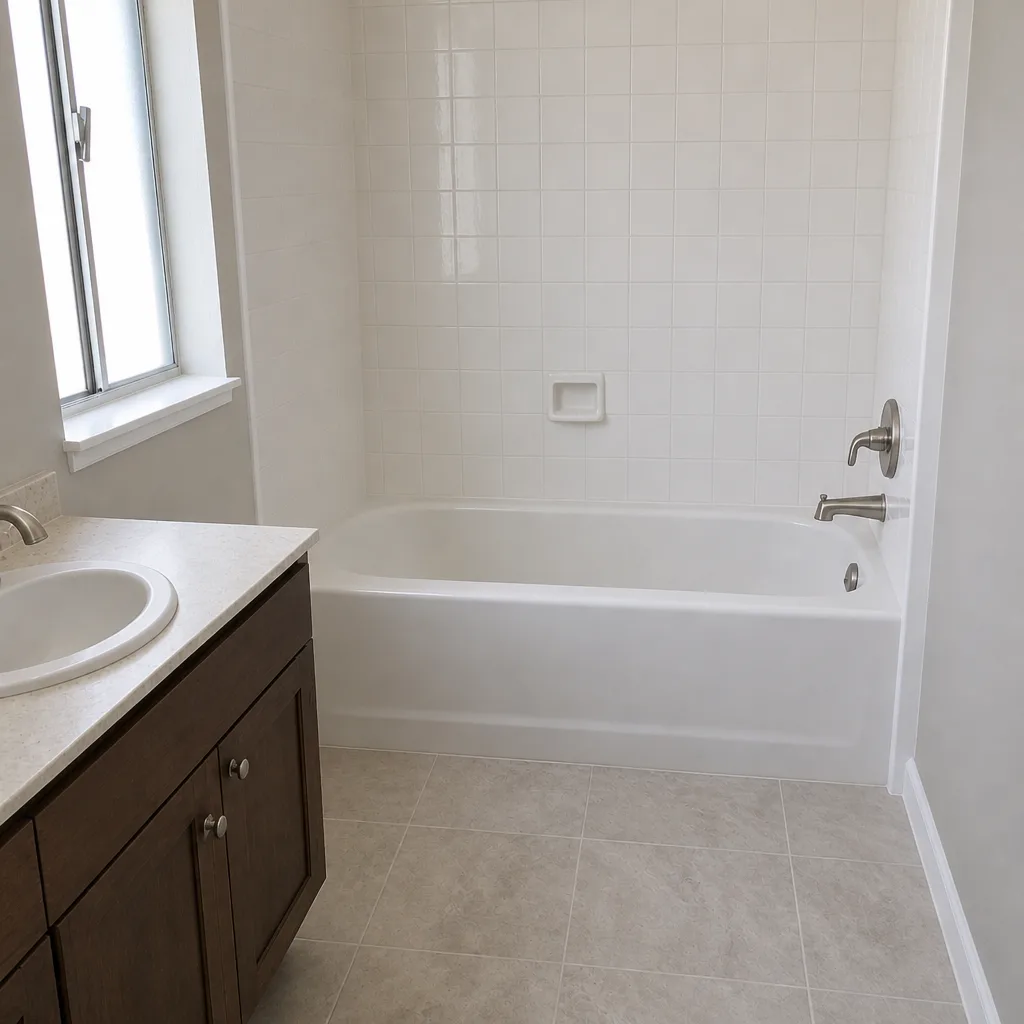 After
When to Call a Professional
Some bathroom work is a homeowner’s call – swapping a vanity, painting, a new mirror. Most of what fails is not. If your scope touches the waterproofing assembly, the shower pan and drain, moved plumbing or electrical, or structural framing, you’re into permitted, inspected, warrantable work. So is any bathroom remodel where the tile is going over a wet area. Call a professional when you don’t have the membrane spec in hand, when you can’t get the permit copy, or when the proposal doesn’t name the substrate and setting method. Bradford Remodeling Mesquite offers free estimates in Mesquite – call (844) 761-8665, and the written price and the guarantee terms arrive before any work starts. Our technicians have up to 22 years of experience, and every project is backed by the 365-Day Done Right Promise.
Frequently Asked Questions
The absence of a named waterproofing membrane and its installation standard. If the proposal doesn’t tell you which membrane system goes behind the tile and to whose spec, you have no basis to inspect the work and no basis to warranty it. When we quote bathroom work, the membrane system gets its own line with the brand named. Call (844) 761-8665 for a free estimate with the specification included.
Yes, because a price with no named materials lets the contractor substitute cheaper products after you sign. What you signed for was a bathroom, not a specific bathroom. A line-item price with named brands (KraftMaid, Wellborn, Cambria, Kohler, Moen, and others on our documented roster) keeps the specification in the contract, where you can hold someone to it. Call (844) 761-8665 for an exact written quote.
Yes. Permits are part of the scope and the written price, and we put the permit copy in your hands before demolition begins. Any contractor framing permit-skipping as saving you money is transferring the legal and financial risk to you – at resale, at insurance time, or at the first failed inspection. Call (844) 761-8665 to schedule a free estimate.
Every completed project carries a full-year written guarantee. If the work fails inside that window, we come back and correct it at no charge, and the exclusions are named in the warranty so there are no surprises. It’s part of the Garrison Standard – written, not verbal. Call (844) 761-8665 for the terms before you sign anything.
Ask directly, and expect a direct answer. Our technicians are background-checked and uniformed, with identity and conduct standards set at the company level rather than left to individual job sites. If a contractor can’t tell you who’s coming through your door, that’s a warning sign worth taking seriously. Call (844) 761-8665 for a free estimate.
A full bathroom remodel in Mesquite typically runs several weeks once demo starts – the schedule depends on inspection windows, cure times for the setting materials and grout, and material lead times. We put the start and completion dates in the contract, tie payments to milestones, and don’t compress the cure windows to save a day. Call (844) 761-8665 for a realistic timeline on your scope.
The Bottom Line
Bathroom remodeling warning signs are visible in writing before the first tile comes off the wall. The missing waterproofing spec, the unnamed substrate, the lump-sum price with no materials list, the permit that “isn’t needed,” the verbal warranty – each is a blank left in the contract on purpose. Fill those blanks and you’ve removed the room a contractor needs to substitute, cut, or stall. Before work starts, have three documents in hand: a signed contract with material specs, a permit copy, and a written warranty with named exclusions. Those three documents, plus a line-item written price, are the whole discipline of a squared-away job. When we finish a bathroom in Mesquite, the site is clean, the scope is documented, and the signed guarantee is in your hand – that’s what done right looks like.
Ready to see what a bathroom proposal should look like when it’s built on the Garrison Standard? Bradford Remodeling Mesquite offers free estimates in Mesquite. Call (844) 761-8665 to schedule yours, and the written price and the guarantee terms arrive before any work starts.
Written by the team at Bradford Remodeling Mesquite.