Last updated November 18, 2026








Free written scope consultation - allowances, timeline, and change-order rules on paper before a single trade is scheduled
Bathroom Remodeling Troubleshooting: Common Problems and How to Fix Them
Grout cracking within six months of a tile install isn’t a grout problem. It’s a substrate problem. If the backer board wasn’t properly fastened to the studs, or the mud bed wasn’t given time to cure before tile went down, the surface was going to crack no matter how good the grout was. The same logic applies to almost every post-remodel failure we get called out to look at in Mesquite: the symptom shows up at the finish layer, but the cause sits two or three stages back in the installation. This guide maps the five most common failures back to their root causes, tells you which ones are the contractor’s responsibility under a written guarantee, and gives you a walkthrough checklist that catches most of them before the final check clears.
Quick Answer
Most bathroom remodel problems after completion – cracked grout, separated caulk, slow drains, binding doors, fan condensation – trace back to a skipped or rushed installation step, not to wear and tear. Grout cracks because the substrate flexed. Caulk separates because it was applied over an uncured or dirty joint. Slow drains come from debris left in the trap or a poorly pitched line. Knowing which stage failed tells you who pays for the fix and what the repair should cost.
Styles & brands we work with
- Kitchen remodeling
- Bathroom remodeling
- Home additions & ADU
- Roofing
- Windows & doors
- Driveway & pavers
- Fence
Table of Contents
- The Five Most Common Post-Remodel Failures and Their Root Causes
- Why Is My Grout Cracking So Soon After the Remodel?
- Why Is the Caulk Pulling Away From the Tub or Shower?
- Why Is My New Drain Already Draining Slowly?
- Why Does the Bathroom Door Bind or Rub After the Remodel?
- Why Is the Exhaust Fan Leaving Condensation on the Mirror and Walls?
- Warranty vs. Maintenance: Who Pays for the Fix?
- What a Callback Means in the Trade and How to Document One
- The Final Walkthrough Checklist That Catches 80% of These Issues
The Five Most Common Post-Remodel Failures and Their Root Causes
In our experience across Mesquite remodels, the same five issues account for the majority of post-completion complaints. Each one has a specific installation-stage origin:
- Grout cracking. Root cause: substrate movement. Backer board fastened with too few screws, no thinset under the board, or tile set before the mud bed cured.
- Caulk separation at tub and shower joints. Root cause: caulk applied over a damp, dusty, or oily joint, or the wrong caulk type (paintable latex instead of silicone) where the joint moves.
- Slow drains. Root cause: thinset or grout debris flushed into the trap during tile work, or a drain line pitched flat during the rough-in.
- Door swing binding. Root cause: new tile floor raising the finished floor height without adjusting the door or jamb, or a frame set out of plumb.
- Exhaust fan condensation. Root cause: undersized fan for the cubic footage, or ductwork vented into the attic instead of through the roof or wall.
Notice the pattern: every one of these is a decision made before the finish went on. That’s why the fix is rarely cosmetic. When you call about a problem after a bathroom remodel in Mesquite, the first question a good contractor asks is what stage the failure traces back to.
Why Is My Grout Cracking So Soon After the Remodel?
Cracked grout within the first year almost always means the tile assembly moved underneath it. Grout is a rigid material with almost no flexibility. It holds fine over a stable substrate. It fails over one that flexes.
Three installation steps cause most of it:
- Improper backer board fastening. Cement backer board needs screws or nails every 8 inches on center, with edges supported. Skip that and the board moves between joists.
- No thinset under the backer board. Board laid over subfloor without a thinset bed leaves voids. Tile presses down, the void compresses, the grout line cracks.
- Tile set over an uncured mud bed. A mud bed needs time to cure before tile goes down. Rushing that step is common when schedules compress.
What the fix looks like depends on how much has failed. Isolated hairline cracks along a couple of grout lines can sometimes be raked out and regrouted. Widespread cracking, or cracks running in a straight line across the floor, usually means the substrate needs to come up and the tile gets reset. That’s a real repair, not a patch, and it’s the kind of work that should be covered under a written guarantee if the original install is at fault. In Mesquite’s dry climate, tile also moves seasonally with humidity swings, so marginal fastening shows up faster here than in a coastal market.
Why Is the Caulk Pulling Away From the Tub or Shower?
Caulk separation at a tub or shower joint has a narrow set of causes, and none of them are “the caulk went bad.” The material failed because it was applied over something it couldn’t bond to.
- Applied over a damp joint. Silicone won’t adhere to a wet surface. If the tub was wiped down but not fully dry, the bead sits on top of moisture and lets go as it cures.
- Dust or soap residue left in the joint. New construction leaves thinset dust in every corner. Caulk over dust is caulk over nothing.
- Wrong caulk type. A rigid grout or a paint-grade latex in a joint that moves will crack or pull away. Tub-to-tile joints need a flexible silicone.
- No backer rod in a deep joint. Caulk needs a joint depth roughly equal to its width. Too deep and it stretches until it tears.
The fix is to cut the old bead out completely, clean and dry the joint, and reapply the right silicone. A good contractor does this as callback work if the separation shows up inside the guarantee window and traces to installation. If it’s ten years old and the caulk has simply aged out, that belongs to the homeowner as routine maintenance.
Why Is My New Drain Already Draining Slowly?
A drain that moves slowly right after a remodel wasn’t installed correctly, or something got left in it. There are two typical culprits, and they’re easy to tell apart.
Debris in the trap. Thinset, grout, and mortar get flushed down during tile work. Most of it settles in the P-trap. The drain runs fine, then slows over a few weeks as the debris consolidates. This is the most common cause of a slow drain immediately after a bathroom remodel, and it’s a real find in Mesquite where we see it most on tub-to-shower conversions.
Improper pitch in the drain line. A horizontal drain needs roughly a quarter inch of fall per foot. Set it flat or back-pitched and water sits in the line. That’s a rough-in mistake, not debris, and the fix is more involved: the line has to be re-pitched, which can mean opening the floor or a wall.
How to tell them apart: if snaking the drain restores full flow, it was debris. If the drain still moves slowly or gurgles after snaking, get the contractor back to camera the line. A flat line is a workmanship issue. A line with thinset in it is also a workmanship issue if the crew was responsible for protecting the drain during tile work.
Why Does the Bathroom Door Bind or Rub After the Remodel?
New tile floor, new door problem. That’s usually the whole story. A tile assembly adds a half-inch to three-quarters of an inch of finished floor height. If nobody accounted for that during layout, the door drags the floor at the bottom, or the latch stops lining up with the strike plate.
Common scenarios:
- Door not trimmed or rehung. The door needs the bottom planed or the whole door reset to clear the new thickness.
- Frame set out of plumb before tile. The door fit before, the tile went down, and now the swing binds because it was marginal all along.
- Wrong hinge set. Thicker tile can push a door past the swing of its hinges. Adjustable hinges or a small jamb adjustment fixes it.
The fix is usually quick: plane the door, adjust the hinges, or shim the jamb. Ask the contractor whether the door swing was checked after the tile was set. On a proper job it should have been caught during punch walk. On a job where that step got skipped, it’s a callback and it belongs under the guarantee.
Why Is the Exhaust Fan Leaving Condensation on the Mirror and Walls?
Condensation after a shower means the fan isn’t moving enough air, or the air it moves isn’t getting out of the house. Both are sizing and installation issues, not a “bad fan.”
A bathroom exhaust fan should be sized to the room. The general rule is 1 CFM (cubic feet per minute) per square foot of bathroom, with a bump for jetted tubs or multiple shower heads. A 60-square-foot bathroom needs at least a 60 CFM fan. Put a 50 CFM builder-grade unit in a 90-square-foot bath with a rain shower head and you’ll get fog every morning.
The other cause: ductwork vented to the wrong place. A fan ducted into the attic or terminating in the soffit pushes the moisture right back into the structure. That’s a code violation in most jurisdictions, including under the current local building standards governing bathroom ventilation in Mesquite, and it traps moisture inside the wall cavity. Over a few winters, that’s a mold problem, not a mirror problem.
The fix is usually to replace the fan with a correctly sized unit and re-duct it through the roof or a side wall with a proper exterior damper. That’s a legitimate callback if the original install was undersized or mis-ducted.
Warranty vs. Maintenance: Who Pays for the Fix?
The single most important thing a homeowner can do before signing a remodel contract is read the guarantee carefully enough to know where workmanship ends and routine maintenance begins. Here’s how the line usually gets drawn, and the language to look for.
What a workmanship guarantee should cover:
- Failures caused by installation error or defective workmanship that show up inside the guarantee window.
- Grout or caulk that fails due to substrate, prep, or material-application mistakes.
- Drain problems rooted in the rough-in or debris left in the trap during construction.
- Doors that bind because finished floor height wasn’t accounted for.
- Exhaust fans that were undersized or mis-ducted at install.
- Water intrusion at a shower pan or tub surround traceable to waterproofing steps skipped during the build.
What typically falls to the homeowner:
- Aged caulk, aged grout, or aged silicone that has simply reached the end of its service life.
- Damage from a clogged toilet, an overflowing tub, or a dropped object on tile.
- Water damage from a failed supply line or clogged drain after the jobsite is handed over.
- Condensation from the homeowner leaving the fan off during showers.
- Scuffs, cracks, or damage from daily use and normal wear.
The specific language to look for in a written guarantee: how long the coverage runs, whether it’s a “repair or replace at our discretion” clause, whether it excludes “consequential damages” (secondary damage like carpet or drywall, which most guarantees do), and – the one that matters most – whether a free return visit is included. Our Bathroom Remodeling in Mesquite projects all carry the 365-Day Done Right Promise: a full year of written coverage, and if the work fails inside that window, we come back and correct it at no charge. Read your guarantee for those specifics before you sign anything. A one-line “guaranteed” is not a written guarantee.
What a Callback Means in the Trade and How to Document One
A callback is a contractor’s return visit to correct a defect in work they performed. It’s a normal part of the trade. Any experienced crew expects callbacks and factors them into a disciplined operation. What separates good contractors from bad ones isn’t the absence of callbacks; it’s how they handle them.
Typical callback windows: The industry standard callback window for workmanship is 30 to 90 days for high-visibility issues (cracked grout, separated caulk, binding doors) and the full guarantee period for structural or waterproofing issues (shower pan leaks, tile failures from substrate movement). A full-year guarantee extends the second category considerably.
How to document a callback request properly. A call to the office is the first step, but a text or email that creates a written record is what actually protects you. Here’s what to include:
- Date the problem appeared. “Cracked grout noticed 3/14, on 4 vertical lines in the shower niche.”
- Photos. Close-up of the failure plus a wider shot showing location.
- Weather or use context. “First noticed after a week of heavy use following the install.”
- Request in writing. Ask for a callback date in writing, not just “we’ll get to it.”
- Note the response. Keep a record of who responded and when.
A disciplined contractor will give you a date, not a “sometime next week.” If your contractor can’t commit to a callback window in writing, that’s the contract behavior that shows up in every other stage of the job. The Garrison Standard exists to put a written commitment on every project. Our callback commitments all sit inside the 365-Day Done Right Promise, and they’re documented before tools ever hit the site. It’s the same discipline our crews apply to every Kitchen Remodeling in Mesquite job.
The Final Walkthrough Checklist That Catches 80% of These Issues
The final walkthrough is the last chance to catch these problems before the check clears and the crew packs up. Do this now, on the day of the walkthrough, not a week later when everyone has moved on. A disciplined contractor welcomes a proper walkthrough; it’s part of close-out. Here’s what to check, in order:
- Tile and grout. Run your hand along every grout line. Tap the tile with a light knuckle – any hollow sound means a void under the tile. Any cracked grout is documented with a photo.
- Caulk joints. Inspect the tub-to-wall, shower pan-to-wall, and sink-to-counter joints. Look for gaps, lifting, or dark spots.
- Drains and supply. Run every fixture. Check flow rate. A slow drain is not “just settling in” – it’s a red flag.
- Door and window operation. Open and close every door. It should clear the floor by a sixteenth inch or so and latch cleanly. Windows should open and lock.
- Exhaust fan. Turn it on. Hold a piece of tissue up to the grille – it should pull flat. If it doesn’t, it’s not doing its job.
- Water test on the shower. Run the shower for five minutes. Check for water pooling at the corners or any sign of the pan failing at the drain.
- Vanity, mirror, and hardware. Open and close every drawer. Check the mirror is level. Check the faucet for drips after a full turn off.
- Site close. Is the site clean, all packaging and construction debris removed? A clean site is a proxy for a disciplined operation, and that discipline shows up in the work behind the walls too.
Document everything with photos and a written list at the walkthrough. A good contractor welcomes the list and schedules the fixes. If the number of items feels long, that tells you something. A General Contractor in Mesquite who runs a tight job should have a short punch list. A long punch list is a signal to slow down and have a frank conversation before the last check clears.
Common Mistakes to Avoid
- Signing a guarantee that doesn’t say “written” or doesn’t specify a return window. A verbal “we stand behind our work” is not a guarantee. Get the term, the coverage, and the callback commitment in writing before work starts.
- Accepting a bathroom quote over the phone or without a written scope. A price that “sounds about right” often isn’t. A written quote says what’s included – demolition, waterproofing, substrate, finish – and what isn’t. If the number moves at the door, walk.
- Assuming the tile crew is also waterproofing. They’re not always the same trade, and waterproofing is where shower leaks come from. Verify it’s on the scope.
- Skipping the drain test at walkthrough. A slow drain in Mesquite almost always shows up on the tub-to-shower conversion side. Run the water before you sign off.
- Accepting a “come back later” on a callback without a written date. “We’ll get to it” is not a callback. A date is a callback.
- Leaving the fan off because it doesn’t move enough air. If the fan doesn’t clear the mirror in three minutes, size and ductwork are wrong. Don’t adapt to a bad install.
- Doing the final walkthrough alone. Have the contractor walk through with you, or have a family member take notes. A handshake close without a list is where punch items get missed.
See the difference
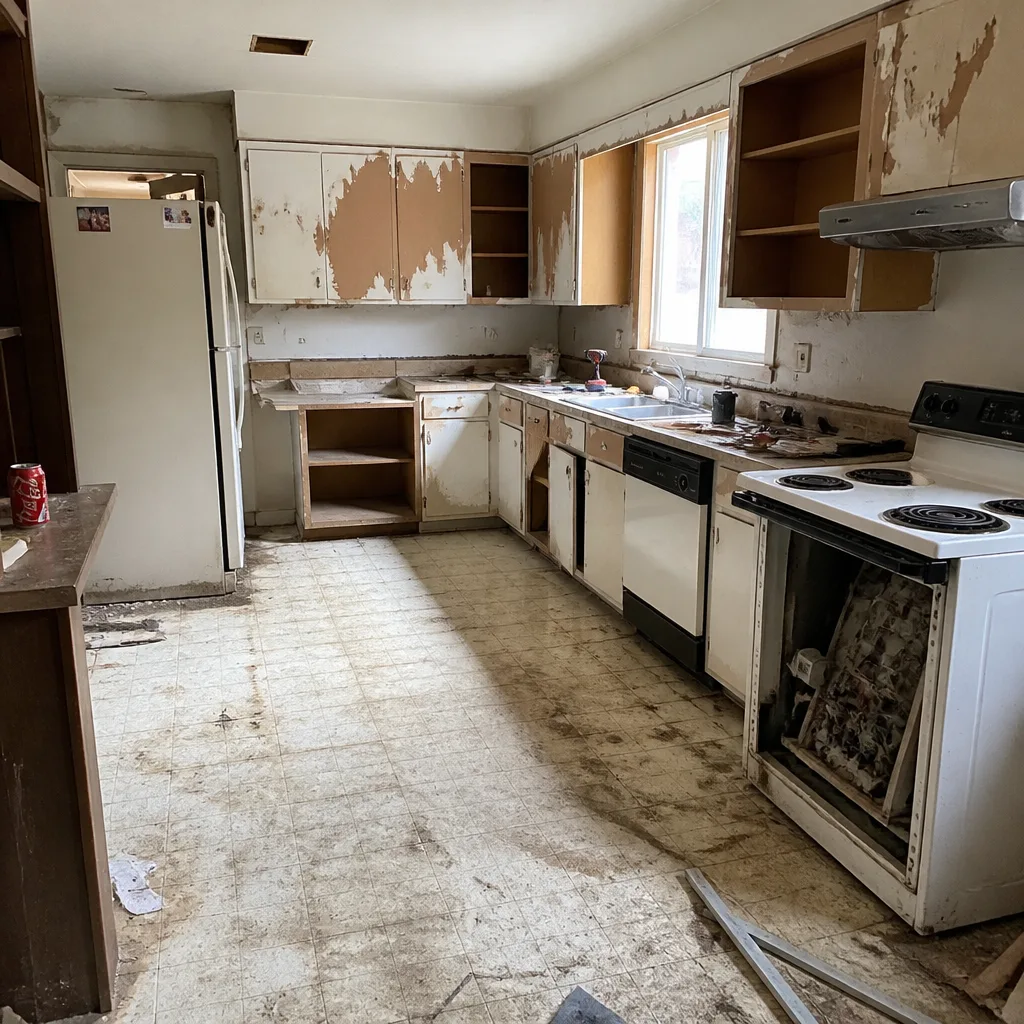 Before
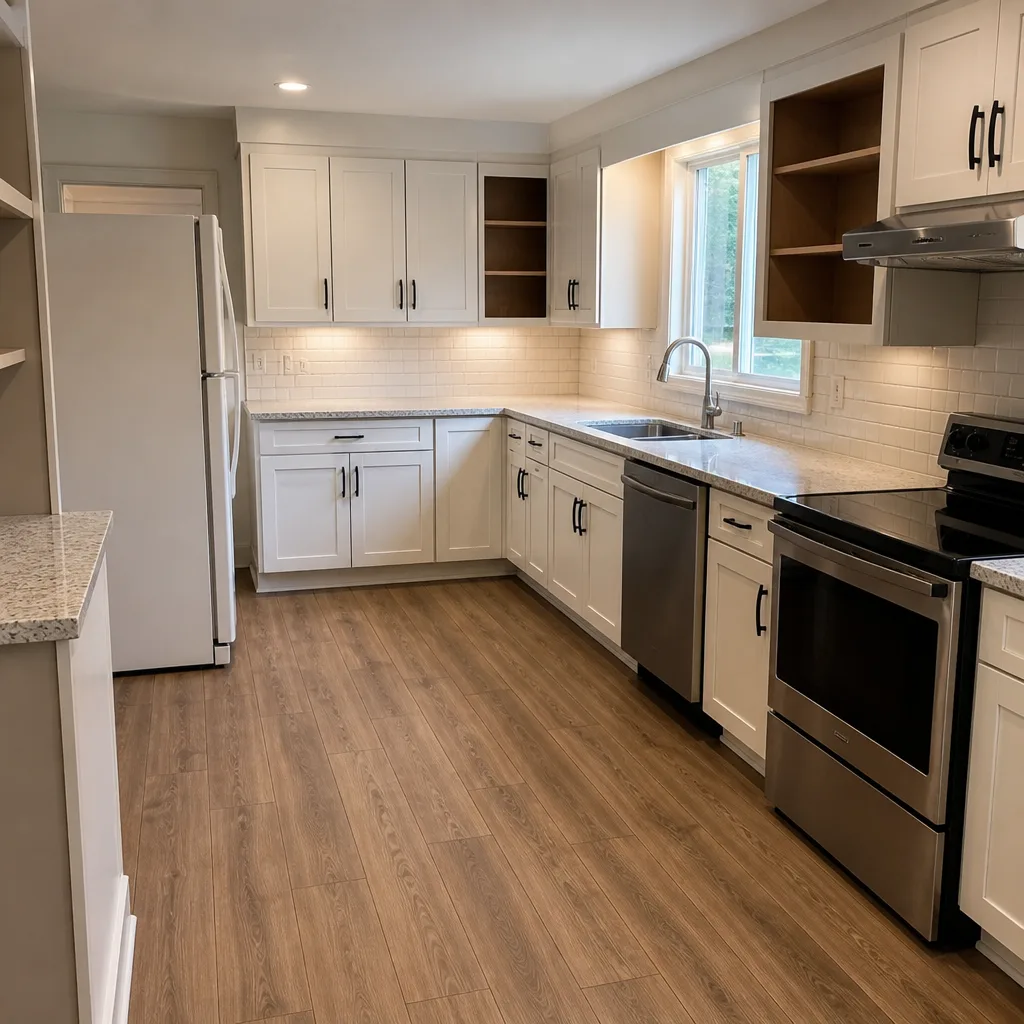 After
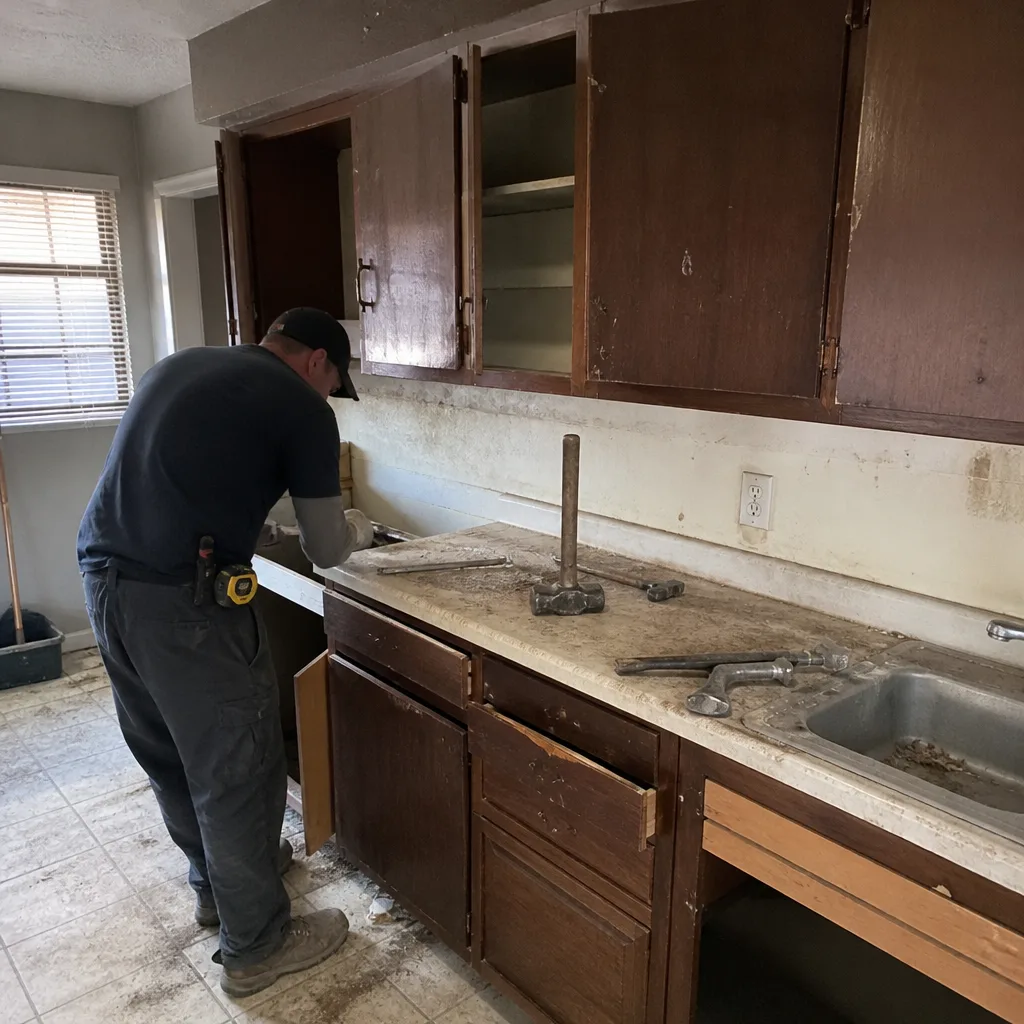 Before
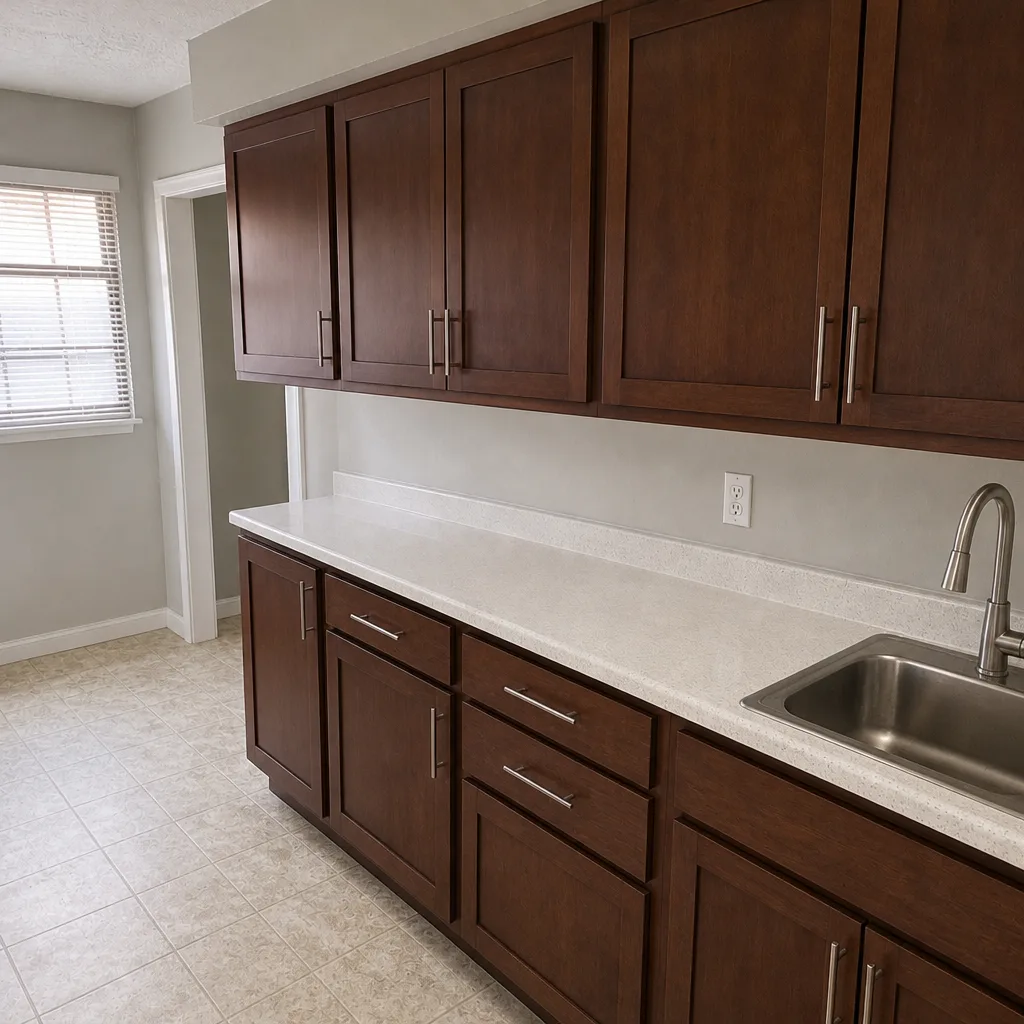 After
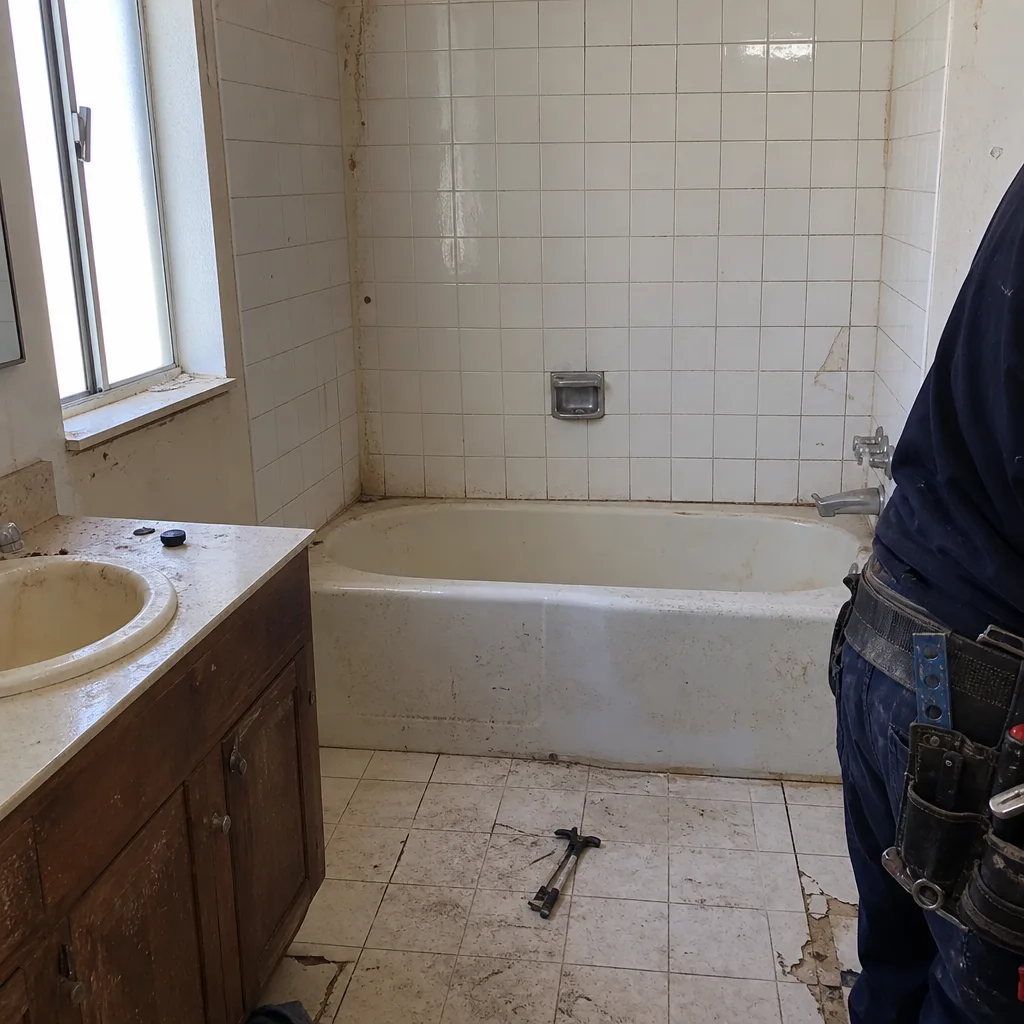 Before
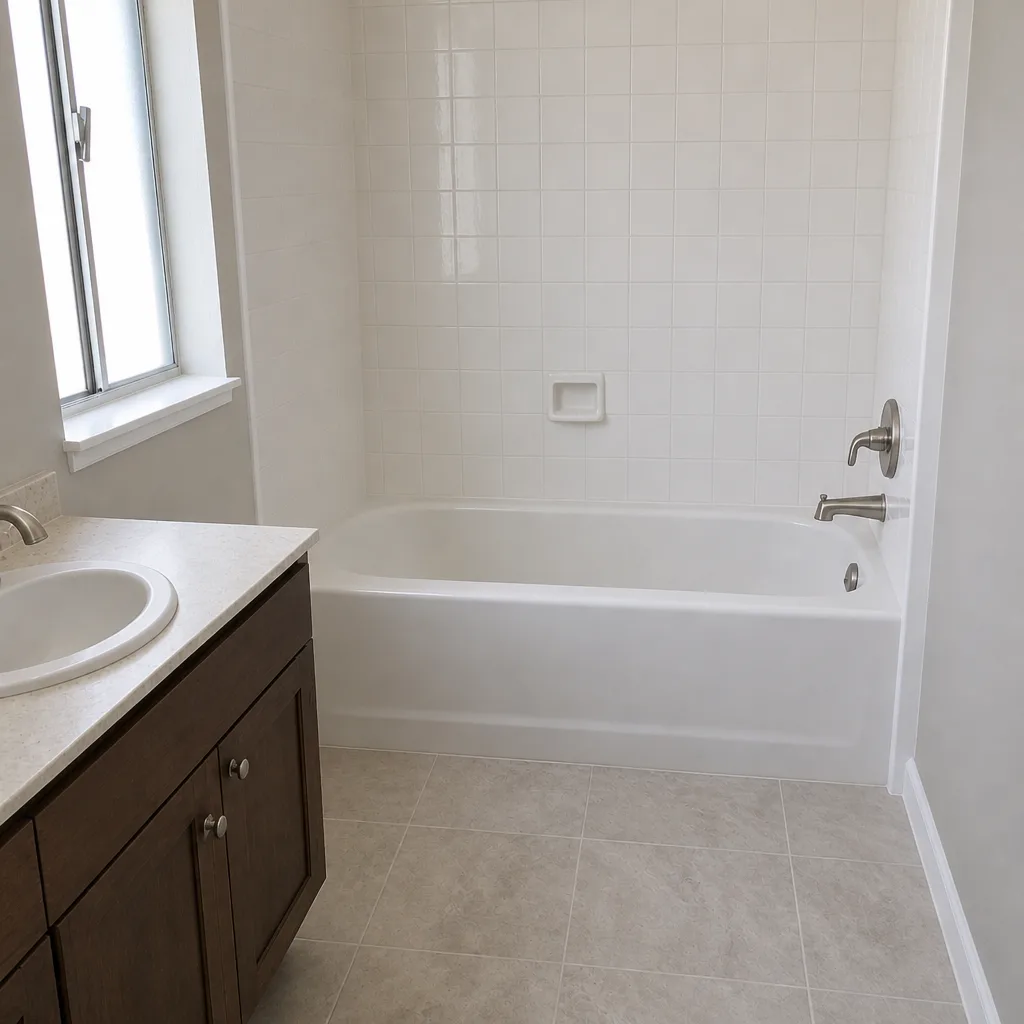 After
When to Call a Professional
Some of these problems are minor enough to handle yourself with a tube of silicone and an afternoon. Caulk that’s aged out on a ten-year-old tub is a homeowner job. Grout that’s cracked in a couple of lines can sometimes be raked and patched. But call a professional when the failure traces back to the substrate, rough-in, or waterproofing stages – those are the ones that cause silent damage behind the walls and floors. If you have a shower pan that’s leaking, a shower that’s showing efflorescence at the base (white crusty lines at the tile), a flat or debris-filled drain line, a fan vented into the attic, or widespread grout failure in a shower you paid for in the last year, get a trained eye on it before it turns into water damage. At Bradford Remodeling Mesquite we offer free estimates in Mesquite. Call (844) 761-8665 to schedule one, and bring your photos and the original written guarantee if you have it. A Bradford Remodeling Mesquite home page has a short overview of how we run work from a site visit forward.
Frequently Asked Questions
A localized shower leak fix typically runs $150 to $400 for caulking, drain re-sealing, or simple waterproofing patch work; a full shower pan replacement, if the pan itself failed, runs $2,000 to $5,500 and up depending on tile and layout. If the leak traces to the original install’s waterproofing inside the guarantee window, it should be covered at no charge under the 365-Day Done Right Promise. Call (844) 761-8665 for an exact quote – estimates are free.
It should not. Bradford Remodeling quotes a written price before any repairs begin, and that price does not change after the crew is on site. If a fix uncovers a pre-existing condition the contractor couldn’t have seen during the estimate, we pause the job and put the change in writing before proceeding. No surprise invoices. If a contractor won’t put a repair in writing before starting, that’s the signal to walk.
A callback is a return visit to fix a defect in workmanship; a warranty claim is a formal demand under the written guarantee. In practice they’re often the same visit. The difference is documentation: a callback is a phone call asking us to come back; a warranty claim is written notice citing the written guarantee term. Good contractors treat both with the same urgency, because either one means the work didn’t hold. Our 365-Day Done Right Promise covers both categories: workmanship first, and a return visit if the fix itself fails.
Grout can show a small hairline in the first 30 days while the underlying materials finish curing. Anything wider than a hairline, or any crack that appears after 60 days or runs in a straight line, is not settling – it’s substrate movement. Don’t patch it. Document it with photos and request a callback through the written guarantee. A hairline that widens over a few months is the same story.
Most bathroom remodels that touch plumbing, electrical, or structural components require a permit. Cosmetic-only work (paint, new fixtures without rough-in changes) usually doesn’t. On a Bradford project, we pull the permits, schedule the inspections, and pass them – and we’ll show you the signed-off inspection cards at close. If your contractor asks you to pull the permits, that’s a red flag: it usually means they don’t want their name on the inspection record.
For Mesquite’s dry climate with big seasonal swings, the finishes that hold up best are porcelain or rectified tile (more stable than natural stone over time), silicone caulk at all moving joints, and a substrate fastened with proper screw spacing and thinset. On fixtures, Kohler and Moen are our usual specs because the finishes and cartridges are traceable and the manufacturer warranties back our own guarantee. We also spec KraftMaid or Wellborn vanities when a new vanity is part of the job, and Cambria or Caesarstone surfaces where a counter is going in. Manufacturer specs and warranties matter on the callback side – a claim against a name-brand spec has a documented paper trail.
The Bottom Line
Post-remodel bathroom failures aren’t random. Every one traces back to a specific installation choice made before the finish went on: fastening, waterproofing, curing time, drain pitch, fan sizing. That matters for two reasons. First, it tells you who’s responsible – the contractor on workmanship issues, the homeowner on aged maintenance. Second, it tells you what the fix actually costs and whether a written guarantee should cover it. Before you sign a bathroom contract, get the price in writing, get the guarantee term in writing, and walk the finished job with a checklist and a camera. That’s the discipline that prevents the callback before you ever need one, and it’s how we run a bathroom remodeling project in Mesquite from the first estimate to the walkthrough. Call (844) 761-8665 for a free estimate and let’s put the numbers on paper.
Written by the team at Bradford Remodeling Mesquite.