Last updated November 18, 2026








Free written scope consultation - allowances, timeline, and change-order rules on paper before a single trade is scheduled
How to Hire a Construction Contractor in Mesquite: A Step-by-Step Guide
Nevada’s contractor license verification portal tells you whether a license is active. It doesn’t tell you how many times that contractor has been cited, fined, or had a lien placed against a job. That gap is where most hiring mistakes in small markets happen. In a town the size of Mesquite, the same two or three names cycle through every referral list regardless of track record, and the “get three bids and check reviews” advice stops working the moment the pool runs shallow. This guide gives you a process built for that reality – how to read the records that actually exist, what to put in the contract, and how to structure payments so you’re never paying ahead of completed work.
Quick Answer
Hiring a construction contractor in Mesquite means verifying more than an active license: pull complaint and lien history through the Nevada State Contractors Board and Clark County records, confirm workers’ comp coverage directly with the carrier, and sign a written fixed-price contract with a draw schedule tied to inspections. The three steps that prevent most disasters are the coverage check, the written scope, and the payment schedule, in that order.
Styles & brands we work with
- Kitchen remodeling
- Bathroom remodeling
- Home additions & ADU
- Roofing
- Windows & doors
- Driveway & pavers
- Fence
Table of Contents
- Why Mesquite’s Small Market Changes How You Vet
- How to Run a Real Records Search on a Mesquite Contractor
- Why the Lowest Bid Often Means No Workers’ Comp Coverage
- The Contract Clauses That Protect You Under Nevada Law
- How to Structure a Draw Schedule You Can Defend
- What a Written Guarantee Must Include to Be Enforceable
- How to Compare Bids Without Comparing Apples to Oranges
- Common Mistakes to Avoid
Why Mesquite’s Small Market Changes How You Vet
A metro like Las Vegas or Phoenix has thousands of licensed contractors, so reputation has somewhere to surface. Mesquite doesn’t. There are a limited number of general contractors licensed to work in the area, and the people recommending them are often the same people running the referral networks. That’s not a knock on Mesquite – it’s just how a community of roughly 20,000 works. Neighbors recommend the person they had a decent experience with, the Facebook group backs it up, and the vetting pretty much stops there.
The problem is that “active license” and “good track record” are two different questions. The Nevada State Contractors Board (NSCB) issues licenses based on exams and financial requirements, then maintains a public record of disciplinary actions. It does not surface complaints the way an e-commerce platform surfaces reviews. A contractor with a clean active license could have a dozen unresolved complaints or two recorded liens in the last five years. You have to go looking for those separately.
There’s also the climate factor nobody mentions in hiring guides. Mesquite sits in the Mojave at low elevation, so summer temperatures routinely push well past 100 degrees, and the swing between a scorching July and a mild January is hard on exterior materials – stucco, roofing, pavers, decking. A contractor experienced with Clark County heat has learned which fasteners, sealants, and substrates actually hold up here. One who builds mostly in cooler climates will spec assemblies that fail within a couple of summers. We’ve seen it in the field: paver driveways installed with the wrong base prep heave and shift after one or two July cycles. When you’re vetting, ask specifically how they handle the heat and what brands they trust for exterior work – names like Belgard and Unilock show up often in local hardscape because their specs are documented for this climate, which gives you a manufacturer warranty to lean on.
Here’s the short version of what a Mesquite hiring process needs to cover:
- Record history, not just license status – complaints, disciplinary actions, and recorded liens.
- Direct coverage verification – a workers’ comp certificate validated with the carrier, not just handed to you on paper.
- Written scope and fixed price – every line item and every dollar figure in the document before work begins.
- A defensible draw schedule – payments tied to completed and inspected work, never to a calendar date.
- An enforceable written guarantee – clear term, clear coverage, clear remedy.
How to Run a Real Records Search on a Mesquite Contractor
This is the step almost nobody actually does. You check the license is active, you feel okay, you sign. Here’s the fuller process, and it takes about 20 minutes per contractor.
- Start with the NSCB license lookup. Confirm the license is active, matches the contractor’s legal business name, and covers the classification your job requires. Nevada splits licenses by scope – a general contractor license (B classification, residential and commercial) is the broadest, but you want to verify the specific classification matches what you’re hiring for, especially on electrical, plumbing, and HVAC work.
- Pull the disciplinary and complaint history. The NSCB publishes disciplinary actions against licensees. Look for citations, fines, license suspensions, and unresolved complaints. Even one recent disciplinary action deserves a conversation with the contractor before you sign.
- Check the Clark County Recorder’s office for recorded liens. Liens against a contractor’s own business or against prior jobs sometimes show up here. If you find one, ask what happened and how it was resolved. A mechanic’s lien on a property isn’t a guarantee the contractor is bad, but a pattern of them tells you cash flow has been a problem.
- Cross-reference the contractor’s legal entity name on the Nevada Secretary of State’s business search. A contractor doing business under a trade name that doesn’t match the license is a red flag for liability questions later.
- Ask for current certificates of insurance. General liability and workers’ comp. Then verify them with the carrier – more on this below.
- Ask for two recent job addresses in Mesquite you can drive past. Actual addresses, not photos. If a contractor can’t produce two in a town this size, you’ve learned something.
If your project is a kitchen or full-home remodel, ask during this search how much of the work the contractor self-performs and what gets subcontracted. Knowing who’s actually in your house matters more when the project runs for weeks. A kitchen remodeling project in Mesquite may pull in three or four trades, and the general contractor’s job is to sequence them and hold each one to the same standard. That accountability is one of the reasons people hire a good general contractor instead of juggling subs themselves. For the broader picture on that role, see our guide to what a general contractor in Mesquite actually does on a job.
Why the Lowest Bid Often Means No Workers’ Comp Coverage
A bid that comes in 20 percent below every other bid on a remodel is not usually a contractor working cheap. It’s a contractor cutting something. In small markets, the thing most often cut is workers’ comp coverage, because it’s expensive and it’s invisible until someone gets hurt.
Here’s what that means for you. Under Nevada law, homeowners can be held liable for injuries suffered by uninsured workers on their property in some circumstances. So a contractor with no workers’ comp and a day-labor crew isn’t just taking a risk with his own business – he’s putting the risk on your homeowner’s policy and your front yard. The same dynamic applies to general liability insurance. An uninsured contractor who damages your home in the course of work may simply not have the money to make it right, which is why the written guarantee only means something when it’s backed by solid coverage.
Verifying coverage directly takes one phone call:
- Ask for a certificate of insurance that names the policy holder, the carrier, the policy number, the effective dates, and the coverage limits.
- Call the carrier’s certificate-verification line (the number on the certificate) and confirm the policy is active and the limits are what the certificate says.
- Confirm workers’ comp specifically – general liability does not cover worker injuries, and a certificate that shows only liability is not enough.
- Note the expiration date on the certificate. If your project runs past it, ask for an updated certificate before the policy lapses.
- Ask for the additional-insured endorsement if your job is large enough to warrant it – it puts your interests on the contractor’s policy directly.
A contractor who runs a disciplined operation isn’t offended by any of this. He has the certificate ready, the carrier answers, and the answer is clean. If a bid is dramatically lower than the others and the contractor is reluctant to provide coverage documentation, the gap between bids just explained itself.
The Contract Clauses That Protect You Under Nevada Law
Nevada’s contractor regulations require a written contract for residential jobs above a certain dollar amount (the current threshold is available from the NSCB, and it’s low enough that most remodel projects trigger it). The contract is also one of the most important documents in any project regardless of the legal minimum, because it’s what a court or mediator reads first if things go sideways. Here’s what needs to be in it.
- Full legal name and license number of the contractor as registered with the NSCB. If the signature line doesn’t match the license holder, stop and ask why.
- Detailed scope of work – itemized by area and by trade. “Kitchen remodel” is not a scope. “Demo existing cabinetry and countertop, install KraftMaid semi-custom cabinets, Cambria quartz countertop, Kohler sink and Moen faucet, GAF roofing repair to the small section over” is a scope.
- Price and payment schedule – the total dollar figure, the deposit amount, and every draw with the milestone it’s tied to. Never let a schedule say “due on Tuesday” when it could say “due upon completion of framing inspection.”
- Change order procedure – the process for scope changes, including who signs, how the price is adjusted, and whether there’s a markup on change-order work (many contracts allow 10-15 percent; it’s fine, just get it in writing).
- Timeline with milestone dates – start date, substantial completion date, and any intermediate inspections. Also specify what happens if weather or material delays push the schedule.
- Guarantee and warranty terms – what’s covered, for how long, and what the remedy is if the work fails.
- Dispute resolution – whether disputes go to the NSCB, to arbitration, or to court, and which jurisdiction (Clark County).
- Right to cancel – Nevada gives homeowners a three-day right of rescission on certain contracts signed in the home. The contract should acknowledge this.
If the contract uses phrases like “and other work as necessary” without a defined scope, or “price subject to adjustment per material costs,” that’s your scope creep. Those clauses let the price move after you’ve signed. A written price that holds, with change orders only by signed agreement, is the standard that matters.
How to Structure a Draw Schedule You Can Defend
Draw schedule disasters look similar across every project. Homeowner pays 50 percent up front, contractor shows up intermittently for two weeks, then disappears. Homeowner is out of money, the project is half done, and the next contractor wants to charge full freight to finish. Avoiding this is mostly about where your money sits relative to completed work.
Here’s a schedule that protects the homeowner, on a hypothetical $40,000 kitchen remodel:
- Deposit: 10-15 percent ($4,000-$6,000). Covers mobilization, ordering long-lead materials, and securing the schedule. Any contractor demanding 50 percent up front on a residential job should be asked to justify it in writing.
- Rough-in completion: 10 percent ($4,000). Paid after electrical, plumbing, and HVAC rough-in have passed inspection. Don’t pay for rough-in before inspection – that’s exactly what inspections are for.
- Drywall and substrate: 15 percent ($6,000). Paid after drywall is hung, taped, and primed, and substrate (the layer of material the cabinets, countertop, and tile attach to) is installed and level.
- Cabinetry and countertop install: 20 percent ($8,000). Paid after cabinets are hung and countertops are set. If you’re considering brands like KraftMaid or Wellborn, this draw is when you’ll see the documentation for the cabinets actually delivered match the spec on the contract.
- Fixtures, finishes, final inspection: 20 percent ($8,000). Paid after plumbing fixtures are installed, electrical devices are completed, and the project has passed final inspection.
- Substantial completion: 15 percent ($6,000). Paid on the punch list being closed out and possession turned over.
- Retainage: 10 percent ($4,000), held for 30 to 60 days after substantial completion to allow any defects to surface. Paid on the written guarantee issuing.
Those percentages are a template, not a rule – the exact structure will depend on the job. What matters is that each draw is tied to a completed, verifiable milestone. “Verifiable” means an inspection pass, a photo-documented completion, or a walkthrough with you present. If you’re paying for a draw while the work it corresponds to is still in progress, ask to restructure it.
What a Written Guarantee Must Include to Be Enforceable
A verbal guarantee is worth somewhere between nothing and very little. Memory is unreliable, “we’ll take care of you” doesn’t specify a remedy, and there’s no recourse if the contractor changes his mind six months later. The written guarantee is the only guarantee that exists.
Here’s what a real one includes:
- A defined start and end date for the guarantee term. “One year from substantial completion” is enforceable. “For as long as we’re in business” isn’t, and it’s also a promise nobody can back.
- A specific list of what’s covered. Workmanship defects should be listed explicitly (cracking grout, failing caulk joints, hardware that fails prematurely, seams that open). Material failures typically fall under the manufacturer warranty, so the guarantee should clarify how the two interact.
- The remedy. If the work fails, what happens? Free return visit? Full repair? Replacement at no cost?
- Exclusions. What isn’t covered (owner modifications, damage from water intrusion after the project, acts of God, normal wear and tear). Exclusions are fair and standard – a guarantee without them usually isn’t a guarantee worth reading.
- The method of invoking it. A phone number, an address, a stated response time. “Call us” is fine but “call us and we respond within X business days” is better.
- Signatures. Both parties, dated.
Bradford Remodeling Mesquite operates under what we call the 365-Day Done Right Promise. Every completed project carries a full written guarantee for a year; if the work fails inside that window, we come back and correct it at no charge. That’s a specific term, a specific remedy, and it’s signed and dated before the project closes. Whether you work with us or with someone else, insist on comparable specificity. “We guarantee our work” without a term and a remedy is a marketing line, not a contract.
How to Compare Bids Without Comparing Apples to Oranges
Two bids on the same remodel can look identical on paper and be entirely different underneath. One includes cabinet hardware and the other doesn’t. One specs mid-grade GAF roofing and the other specs a builder-grade shingle. One handles the permit and the other expects you to. The trick to comparing bids isn’t to compare the totals – it’s to compare line items against a scope you wrote first.
Here’s the approach we suggest to homeowners comparing estimates in Mesquite:
- Write your own scope first. Before any contractor visits, list every item you want done, the brands you’re considering, and the finish level you expect. Use specific names where you have preferences – for instance, “Therma-Tru entry door” instead of “exterior door,” or “James Hardie siding” instead of “siding.” Once your scope is written, every bid gets measured against it.
- Require itemized bids. A bid that says “kitchen remodel: $38,000” isn’t a bid, it’s a guess. Ask for a sentence-by-sentence breakout: demo, framing, electrical, plumbing, drywall, cabinetry, countertop, tile, painting, cleanup. Require brands and model lines.
- Compare line by line, not totals. The bid that’s $3,000 lower might be missing three items from your scope. Add them back in and see what the comparison looks like.
- Note what the bid excludes. Permits, disposal fees, appliance installation, and any landscaping repair after material delivery are commonly excluded. Ask specifically.
- Ask for the price guarantee in writing. If the bid can’t be turned into a fixed price before work begins, ask why.
- Ask about the close. What does “done” look like at the end of the job? A written punch list in your hand, a site that’s been cleaned, and a signed written guarantee. If moving the dumpster off your driveway and cleaning the yard aren’t specified in writing, both are things you should ask about.
If your project touches the kitchen or bath package, we’ve covered the sequencing and material specifications for a bathroom remodeling project in Mesquite as well as kitchens – reading those before you bid is a good way to know what the line items should look like. For the whole-home picture, the general contractor guide is the place to start.
Common Mistakes to Avoid
- Trusting an active license as a green light. An active NSCB license means the contractor passed an exam and posted a bond. It doesn’t mean the complaint history is clean, and in Mesquite’s small market the referral lists won’t surface bad records for you. Do the separate search.
- Paying the deposit before the contract is signed. A verbal handshake, a “we start Monday,” and a check are a bad combination. Get the scope, the price, and the guarantee in writing first, then pay the deposit.
- Skipping the workers’ comp verification because the contractor “seems reputable.” Reputation and coverage are separate questions. One phone call to the carrier protects you against a liability risk you can’t otherwise see.
- Accepting “we’ll work it out” on scope changes. Every scope change in Mesquite should trigger a written change order with a price and a schedule adjustment. Verbal changes on a remodel are how $40,000 becomes $55,000 by mid-project.
- Paying ahead of work. A draw schedule that pays for a milestone before the milestone is complete is not a draw schedule, it’s a loan to the contractor. Refuse it, and if the contractor insists, treat that as information about how the job will run.
- Signing a contract without the guarantee in writing. “We stand behind our work” isn’t a guarantee. A signed document with a term, a remedy, and a way to invoke it is what protects you.
- Ignoring Clark County heat when comparing material options. Stucco, roofing, and pavers that perform in milder climates can fail in Mesquite’s summer swings. Ask how the contractor specs for this climate specifically, and ask for brand documentation.
When to Call a Professional
Some home projects look like weekend jobs and aren’t. Anything that touches electrical wiring, gas lines, plumbing mains, or high-load structural elements needs a licensed professional, and in Mesquite the permit process will require one regardless. Roof work at height, exterior stucco at height, and anything involving a crawlspace or attic in July heat fall into the same category – the physical risk isn’t worth the DIY attempt. Larger projects like a full kitchen or bathroom remodel are a different case; the issue isn’t whether you can do it, it’s whether all the trades will sequence correctly and whether the work will hold up inside a guaranteed term. That’s where a general contractor earns his keep. If you’re unsure whether your project needs one, a phone call is a fast way to find out. Bradford Remodeling Mesquite offers free estimates in Mesquite – call (844) 761-8665 to schedule yours, and a live person will pick up.
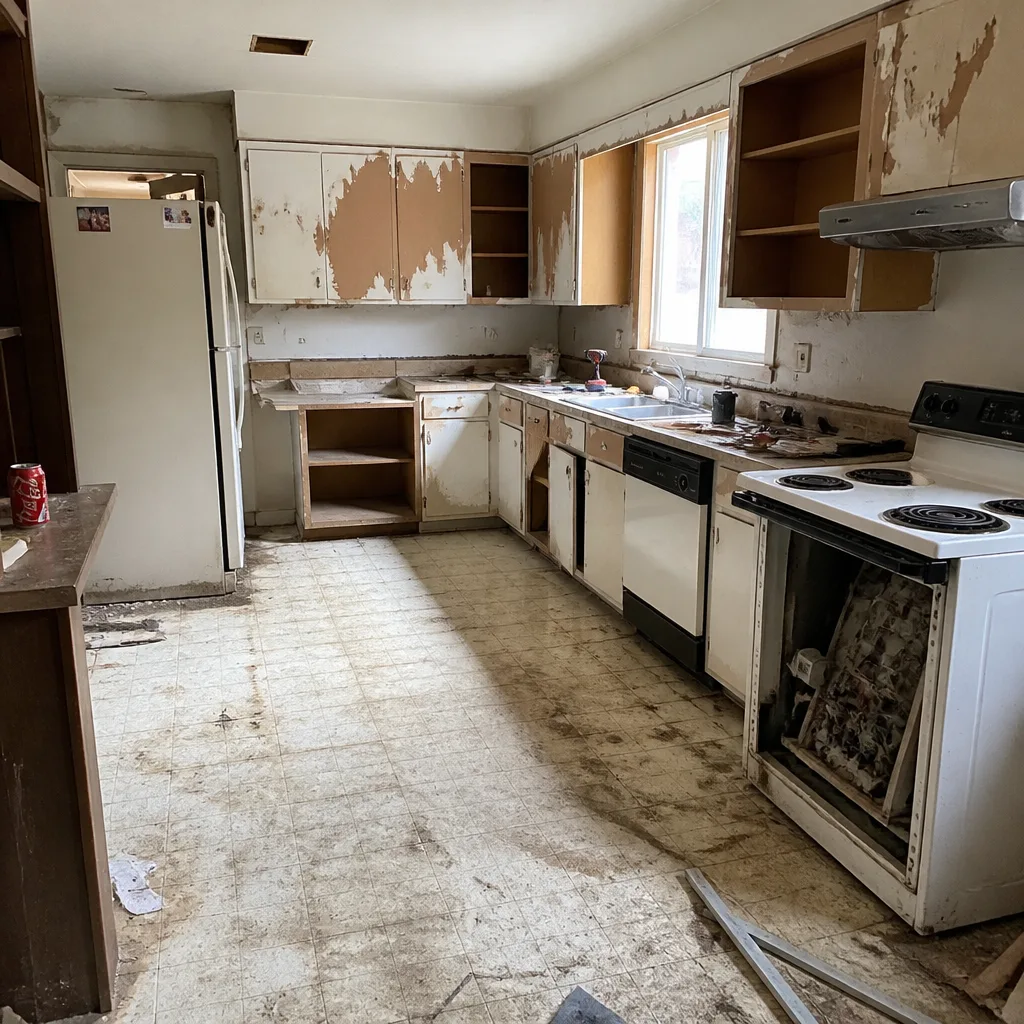
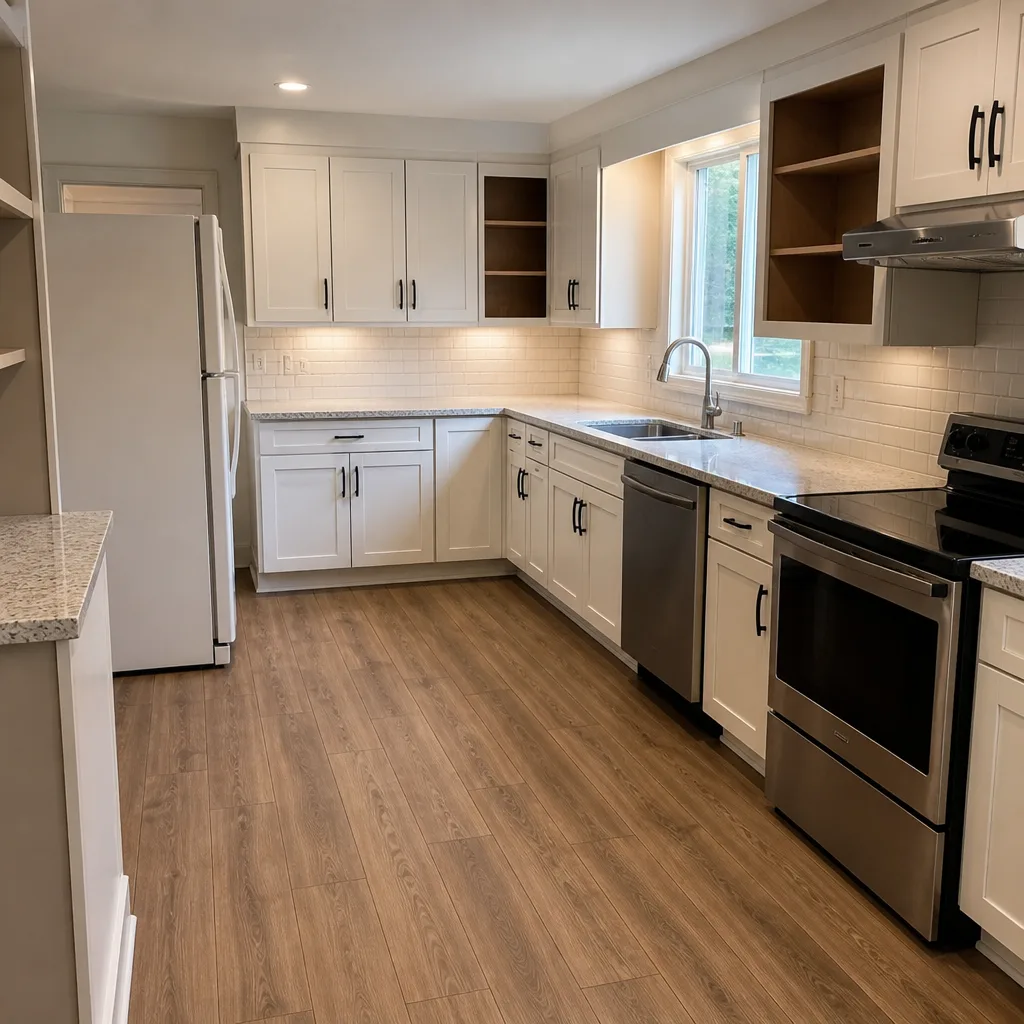
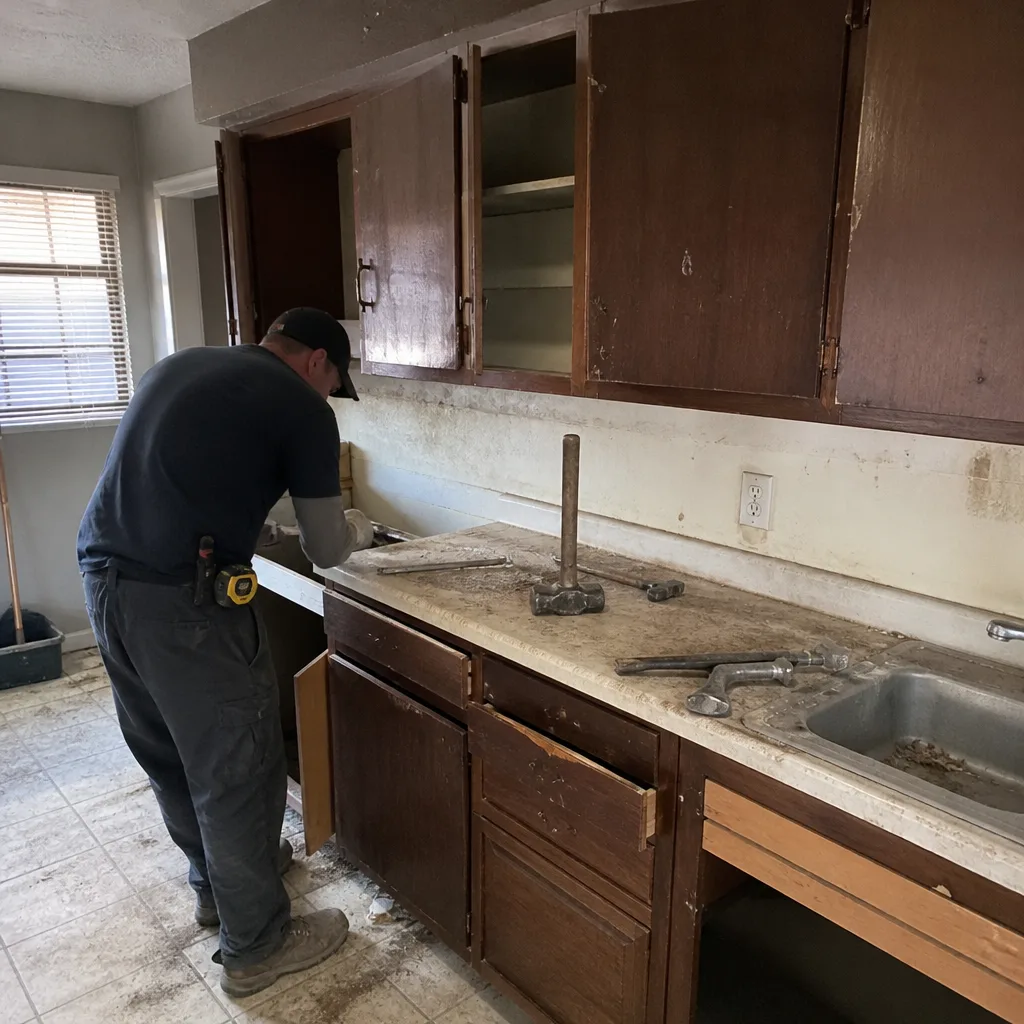
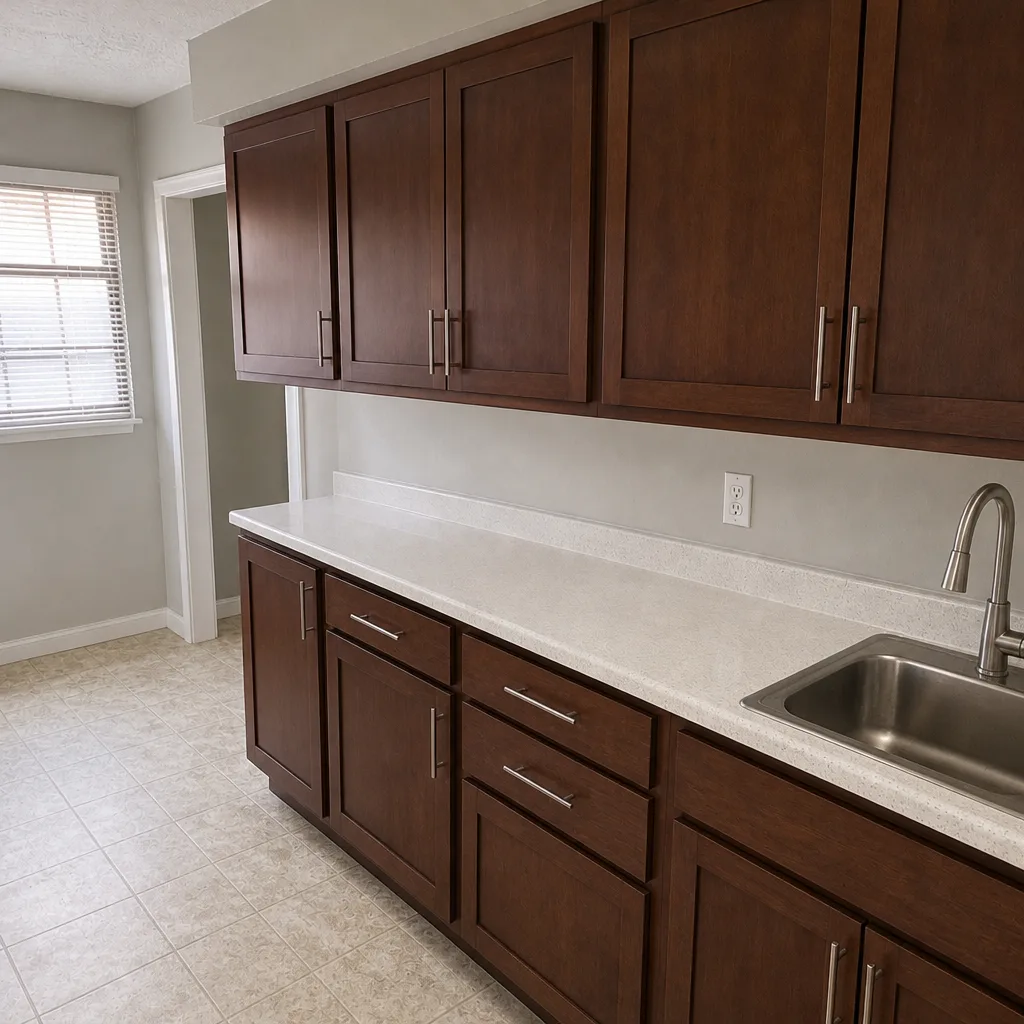
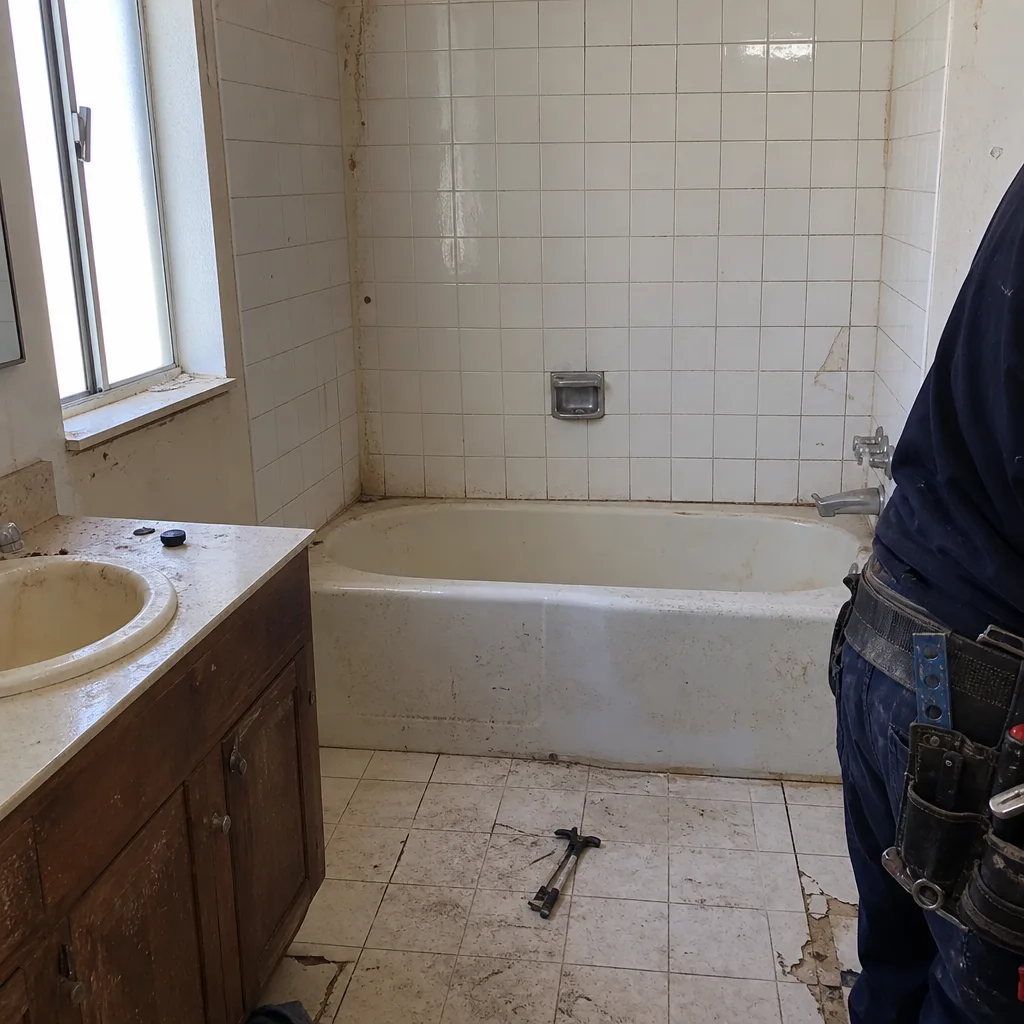
See the difference
 Before
 After
 Before
 After
 Before
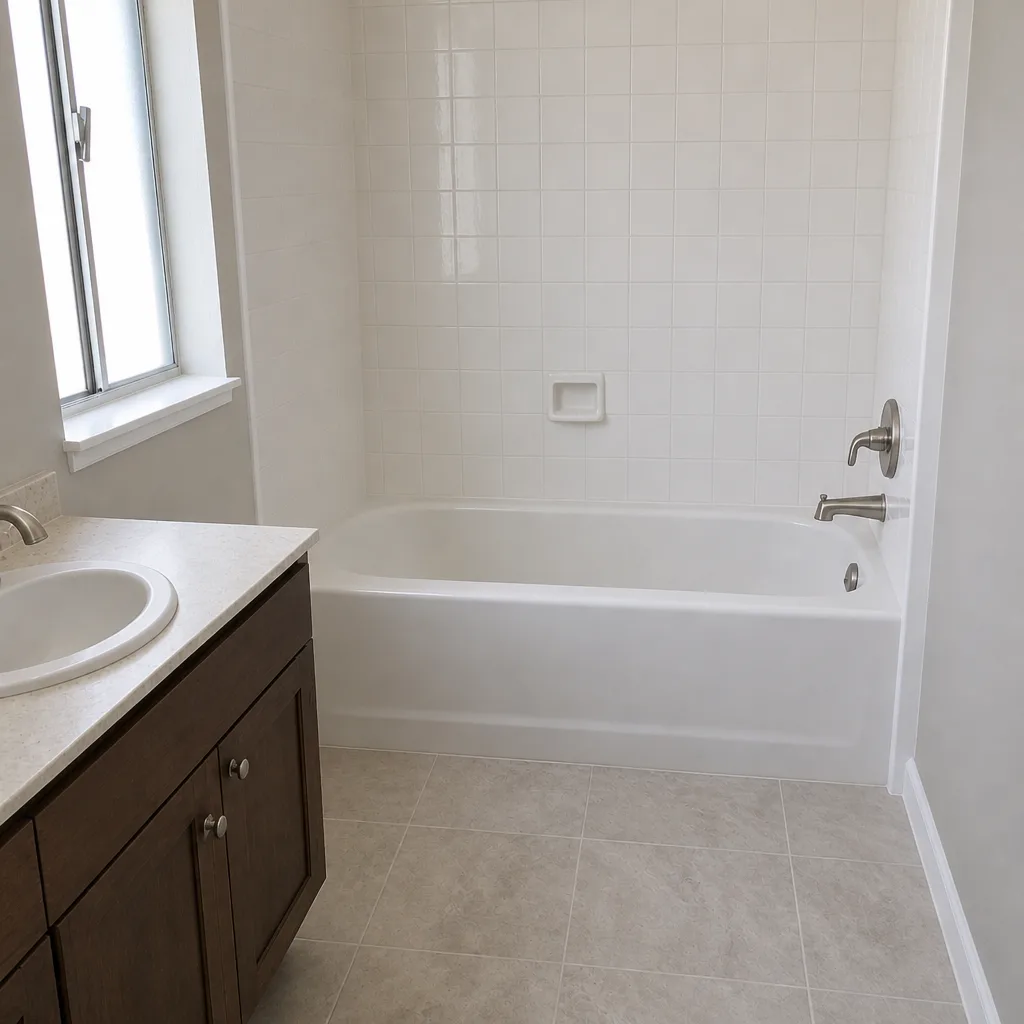 After
Frequently Asked Questions

Use the Nevada State Contractors Board (NSCB) license lookup, which shows license status, classification, and disciplinary history. Verify the name on the license matches the name on the contract, and confirm the classification covers the work you’re hiring for. After that, check the Clark County Recorder’s office for any recorded liens against the contractor or prior jobs.
A deposit of 10 to 15 percent of the project cost is standard in Mesquite. Anything above 20 percent up front deserves a written explanation, and anything above 50 percent is a red flag regardless of what the contractor tells you about material costs. The deposit should be specified in the contract along with the milestone schedule for all subsequent draws.
It shouldn’t change if the scope is fixed and the contract includes a signed change-order procedure. Price changes come from three things: scope additions the homeowner requested, concealed conditions the contractor couldn’t have reasonably foreseen (a rotted subfloor behind old tile, for instance), or a contract with adjustable-pricing clauses. A written fixed price with a documented change-order process eliminates the first and third. Call (844) 761-8665 for an exact quote on your project – estimates are free.
Yes, most kitchen and bathroom remodels in Mesquite require permits, particularly when the work touches electrical, plumbing, or structural elements. Your contractor should pull the permits and coordinate inspections; if a bid doesn’t include permits in the line items, ask why. Pulling permits and passing inspections are part of what we consider a completed job, not an add-on.
A year from substantial completion is a standard, defensible guarantee term for residential work. Shorter terms don’t give enough time for defects to surface, especially with materials that respond to seasonal temperature swings. Make sure the guarantee is signed, dated, and specifies the remedy if the work fails.
File a complaint with the NSCB immediately, and document everything – photos, copies of the contract, every payment, and any written communication with the contractor. The NSCB has a recovery fund for certain residential claims, and the sooner you file, the better your options. Collection is very difficult without a written contract, which is one more reason the paperwork matters before the first payment.
The Bottom Line
Hiring well in Mesquite comes down to a few things. Verify the record, not just the license – NSCB complaints, Clark County liens, and carrier-verified coverage. Write the scope, the price, and the guarantee before you sign. Structure payments so they follow completed and inspected work, not the calendar. And make sure the guarantee has a real term, a real remedy, and a signature. Everything else is marketing. If you want to see what a disciplined process looks like, start on our Bradford Remodeling Mesquite home page – and when you’re ready to talk through your project, call (844) 761-8665 for a free estimate. A live person answers 24/7, and the first price you hear will be the price you’ll pay.
Written by the team at Bradford Remodeling Mesquite.