Last updated November 18, 2026








Free written scope consultation - allowances, timeline, and change-order rules on paper before a single trade is scheduled
Home Remodeling Warning Signs Every Homeowner Should Know
A contractor who shows up on time, dresses professionally, and runs a sharp website can still leave you with a lien on your house. The warning signs that actually matter are in the paperwork, not the first impression. We’ve watched homeowners in Mesquite sign scopes of work that never named a material, never set a payment schedule, and never mentioned a lien waiver, then wonder why the project stalled three weeks in. What follows is how to read a remodeling contract the way a contractor does, spot the omissions that turn into disputes, and know what to verify before anyone touches a tool. If you take one thing from this guide, take this: the estimate is a sales document, but the scope of work is the legal one.
Quick Answer
The biggest home remodeling warning signs aren’t personality red flags like a late arrival or a messy truck. They’re contract omissions: no lien waiver language, vague material specs, no payment schedule tied to milestones, and a contractor who won’t put the price in writing. Verifying a Nevada contractor’s license, bond, and insurance inside the state database, then reading the scope line by line, protects you more than any first impression ever will.
Styles & brands we work with
- Kitchen remodeling
- Bathroom remodeling
- Home additions & ADU
- Roofing
- Windows & doors
- Driveway & pavers
- Fence
Table of Contents
- The Contract Omissions That Signal Future Disputes
- How to Verify a Nevada Contractor’s License
- What “Licensed, Bonded, and Insured” Actually Means
- The Lowball Bid Trap, Explained With Real Math
- Behavioral Patterns During the Estimate Phase
- What a Legitimate Change Order Looks Like
- How to Read a Scope of Work, Step by Step
- Reading Bids in Mesquite: Heat, Dust, and Permits
The Contract Omissions That Signal Future Disputes
What’s missing from a contract tells you more than what’s in it. A vague scope is where disputes are born, and the vaguest document we see is the one that lists “install flooring” without a product name, a grade, or a square footage. Here are the omissions worth walking away over, whether the project is a guest bath or a full kitchen remodel in Mesquite.
- No lien waiver clause. Material suppliers and subs can file a mechanic’s lien against your property if the general contractor doesn’t pay them, even after you’ve paid the general. A legitimate contract states that the contractor will provide conditional lien waivers as payments are made and unconditional waivers at job close.
- Vague material specifications. “Premium tile” or “quality cabinets” means nothing. You want a manufacturer and a model or series name, a color, and an allowance number for anything not yet chosen. That’s how you compare Cambria against Silestone against Caesarstone on real cost rather than guessing.
- No milestone payment schedule. Payments should be tied to completed stages, not to dates. A deposit, then draws at rough-in, drywall, cabinetry set, and final punch are typical. A contract that asks for 50 percent up front and another chunk “at start of install” gives the crew more leverage than you want.
- No defined change order process. A real contract says in writing how changes are handled: written request, written price, signed approval before work proceeds. If that language is absent, expect verbal repricing mid-job.
- No completion and punch-list definition. “Substantial completion” needs a definition and a punch-list process. A job isn’t done when the tools leave; it’s done when the punch list is signed off.
If a document is missing three or more of these, don’t sign it. Ask for a revised scope. A contractor who runs squared away will welcome the ask; one who bristles at it has told you something important about the rest of the project.
How to Verify a Nevada Contractor’s License
In Nevada, remodeling work over a small threshold requires a license from the Nevada State Contractors Board, and verifying that license takes about four minutes online. Do it before you sign anything, not after a problem surfaces. Here’s the exact process.
- Get the license number in writing. Ask for it on the estimate or contract, not spoken over the phone. A contractor who can’t produce a number quickly is telling you something.
- Search the Nevada State Contractors Board database. Enter the number and confirm the name and business entity match the company you’re hiring. A license held by a different name is a red flag.
- Check the license classification. Nevada issues different classifications for different work. Confirm the classification actually covers the scope you’re hiring for, not just general work.
- Check status and complaint history. Look at whether the license is active, current, and in good standing. Read the complaint record. A single old complaint may not matter; a pattern of disputes about unfinished work does.
- Confirm bond and insurance separately. The license database may show bond information. Insurance is separate; ask for a certificate of insurance and confirm it’s current and covers general liability and workers’ compensation.
We’ll say plainly what we tell homeowners in Mesquite: a license number on a business card means nothing until you’ve looked it up. The look-up is the whole point.
What “Licensed, Bonded, and Insured” Actually Means
Those three words get said together so often that most homeowners treat them as one credential. They’re three separate legal protections, and each covers a different failure. Understanding the split tells you what to ask for and what to check.
- Licensed means the contractor has met the state’s requirements to operate and is subject to discipline if they don’t perform. The protection is regulatory: it gives you a place to file a complaint and grounds for the board to act.
- Bonded means a surety has set aside a sum that can be claimed against if the contractor fails to meet legal obligations. It’s a backstop for certain kinds of losses, not a guarantee that covers every dollar on your project. Ask what the bond amount is; it varies by license classification.
- Insured means the contractor carries general liability insurance and, if they have employees, workers’ compensation. This is what covers a broken pipe, a dropped beam, or an injury on your property. Ask for a certificate of insurance and confirm it’s active.
All three should appear on a legitimate written estimate. Where to confirm them: the contractor’s license in the state database, the bond information in that same record, and the insurance certificate from the contractor’s carrier. None of the three reassures you about quality; that’s where the written guarantee comes in. That’s why every Bradford Remodeling Mesquite project carries the 365-Day Done Right Promise: a written year-long guarantee. If the work fails inside that window, we come back and correct it at no charge. The guarantee is a separate promise from license, bond, and insurance, and you should have all four in hand.
The Lowball Bid Trap, Explained With Real Math
The lowball bid isn’t always dishonest. It’s often a different job wearing the same description. Here’s how a number gets trimmed to look competitive when two bids for the same kitchen come in 30 percent apart.
Say a kitchen remodel in Mesquite is bid at $42,000 by one contractor and $58,000 by another. The $42,000 bid is usually pitched as identical scope. It almost never is. What gets cut to make the number work:
- Cabinet quality. KraftMaid or Wellborn boxes with real hardware replaced by builder-grade stock with stapled joints. The line item still says “cabinetry.”
- Countertop material. Cambria quartz substituted with an entry-level engineered stone or a laminate with a misleading name. Both listed as “quartz countertop.”
- Substrate and prep. Backer board replaced with drywall behind tile; subfloor repair dropped entirely. Not visible until failure.
- Permits and inspection fees. Excluded from the bid and billed later, or skipped entirely.
- Labor hours. A crew paid on speed, not on detail, produces a finished look that fails within a year at the seams.
The math works like this: a $42,000 bid minus $6,000 in skipped permits and prep minus $9,000 in downgraded materials minus $4,000 in labor comes out to roughly $23,000 in actual work behind a $42,000 invoice. When change orders land for the missing pieces, the gap closes. The homeowner who thought they saved $16,000 pays it back in rework and delay.
The fix is to normalize the bids. Ask each contractor to itemize by trade: demolition, framing and rough-in, plumbing, electrical, drywall, cabinetry, countertops, flooring, paint, trim, permits, and a contingency line. Compare line by line against the same products. When you can see KraftMaid against KraftMaid and Cambria against Cambria, the gap between the numbers usually reflects labor discipline, not padding.
Behavioral Patterns During the Estimate Phase
The estimate visit is a sample of how the project will run. The scheduler on the front end is the same person managing the crossover schedule mid-job, and the estimator who returns calls promptly is the one you’ll reach when a fixture doesn’t land on time.
Patterns worth noting:
- How quickly they return the written scope. The verbal estimate gets delivered same day; the written scope arrives days later. The gap tells you how much care went into the document.
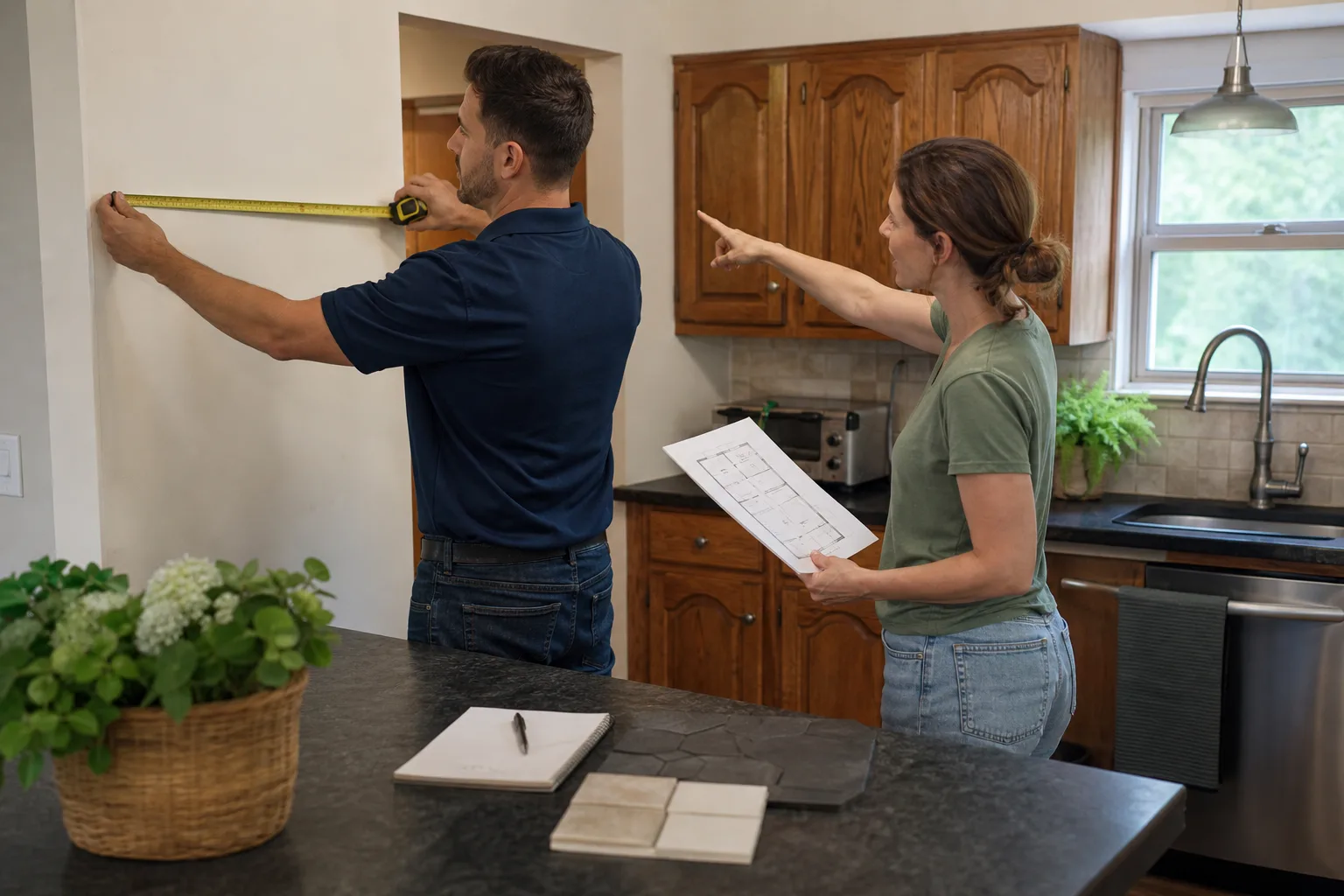
- Who actually measures. A serious estimator measures the space and photographs conditions. A quick walkthrough with a smartphone note without measuring usually produces a finished, polished scope with guesswork behind it.
- Whether they ask questions. A contractor who never asks about your schedule, appliance choices, or existing power doesn’t have enough information to price a kitchen. A fixed price based on assumptions becomes a change order later.
- Response time on follow-up questions. If a question about the scope takes three days to answer during the sales phase, expect a longer answer when things get hard.
- Themselves on the crew list or not. A contract that names the crew lead and confirms background checks for everyone entering your home solves a lot of later friction.
Notice the pattern of these patterns: none of them involve personality. They’re all about discipline under small stakes. The same discipline is what makes a work site squared away at close: clean, documented, and with a signed guarantee in your hand.
What a Legitimate Change Order Looks Like
A proper change order is a written document with a description of the change, the cost, the schedule impact, and a signature line. It happens before the work is performed, not after. Here’s the contrast.
| Legitimate change order | Problem behavior |
|---|---|
| Written request from the homeowner or the field lead | Verbal “hey, this won’t work, we need to add” |
| Line-item price: labor and material shown separately | Round number pricing with no breakdown |
| Schedule impact stated clearly | No adjusted completion date |
| Signed by homeowner before work proceeds | Work already done, invoice stated at close |
| Revision to the master scope and the running total | Change orders stacked up, total not tracked |
The test is simple. If a contractor wants to add cost or change the scope and won’t put it in writing before continuing, that’s not a change order; it’s a verbal price increase. Repricing mid-job with a voice at the door is how surprise invoices get built. A legitimate contractor stops work, documents the change, gives you the price in writing, and doesn’t charge until you’ve had a chance to review it.
The other side of this is the written price itself. A Bradford Remodeling Mesquite project starts with a written price before any work begins, with no numbers that move at the door. If a scope draft is incomplete, we don’t proceed; we update the scope, we hand you the revised number, and you sign it or don’t.
How to Read a Scope of Work, Step by Step
A scope of work is the document that says exactly what gets built, from what, by when, and how it will be verified before you pay. Reading it actively is the single highest-value thing you can do. Here’s how.
- Read the demolition line first. It should say what gets taken out, what gets protected, and how debris leaves the site. A blank here usually means “we’ll figure it out,” which means you pay for it later.
- Check every material line for a name. Manufacturer, series or model, color. Instead of “tile: allowance,” you want “floor tile: XYZ brand, 12×24, color X, allowance $Y, overage at $Z per square foot.”
- Verify the rough-in scope. Plumbing and electrical rough-in means the pipes and wires installed behind the walls before surfaces close up. What gets moved, what gets added, what gets inspected. This is where a lowball usually trims.
- Confirm the finish schedule. Cabinetry, countertops, fixtures, paint colors, trim. Product names and brand set. Kohler for the faucet means the price moves less; “faucet provided by homeowner” means someone has to source it and the schedule shifts.
- Find the permit line. Who pulls the permit, who pays for it, who is present for inspections. Missing means you’ll be asked to pay later or the work is unpermitted at resale.
- Read the payment schedule out loud. Deposits, milestone draws, and final retention, in dollars, not percentages of a changing total. Each draw should correspond to a completion milestone.
- Find the close-out terms. Punch list, final walkthrough, lien waivers, and warranty. The end of the scope matters as much as the beginning. This is where our written guarantee lives, and where it should live in every contract you sign.
If you’d like to see what a full scope of work looks like for a specific project, you can see our general contractor service in Mesquite or bathroom remodeling in Mesquite pages for the depth we put into ours. And if you’re starting from the ground up, the home page for Bradford Remodeling Mesquite lays out how we run a project end to end.
Reading Bids in Mesquite: Heat, Dust, and Permits
Some warning signs are local. Mesquite’s climate, building stock, and permitting landscape shape which omissions matter most in a bid. Here’s what we look for.
Mesquite sits in the Virgin River valley at roughly 1,600 feet, with summer highs regularly over 105°F and a monsoon pattern that dumps rain fast. That combination punishes exterior prep: stucco that wasn’t done right cracks, exterior paint chosen for a cooler climate chalks, and any deck or patio surface that wasn’t sealed to spec takes damage in the first year. A bid that names GA, James Hardie, or a comparable product and states the sealing schedule is more trustworthy than one that says “paint exterior.”
Dust is the other local factor. In Mesquite, fine dust finds gaps during construction, and interior protection on a whole-home job matters more than it would in a wetter market. A bid without a protection line is telling you who cleans up at the end.
On permits: Nevada’s local building authorities require permits for structural changes, electrical and plumbing rough-in, and additions. A legitimate bid lists the permit line at cost plus a stated fee, or shows it as a pass-through with a number. A bid that says “permits are the owner’s responsibility” on a kitchen or bath remodel means nobody has walked the process, and inspections will slip your schedule.
Here’s the Mesquite-specific version of that: get the price in writing, itemized, with permit numbers named. Then hold the scope against the contract. Run both through the Mesquite home guide on our site for how we run a project end to end.
Common Mistakes to Avoid
- Choosing on price alone in Mesquite’s competitive market. A number that comes in 25 percent below two other bids is a different scope, not a discount. Compare line items, not totals.
- Skipping the state license look-up. Four minutes in the Nevada State Contractors Board database saves months of headaches. Confirm the entity name matches the contract.
- Accepting “bonded and insured” without seeing certificates. Ask for the certificate of insurance and confirm coverage is active today, not at the time the estimate was quoted.
- Signing a contract with no lien waiver language. Without waivers, a supplier can place a lien on your home after you’ve paid the general in full.
- Agreeing to verbal change orders. A voice at the door adding $2,000 is not a change order. It’s a repricing. Get every change in writing, with a price and a signature, before work continues.
- Letting a contractor pull every permit in their own name with no documentation to you. You want a copy of the permit and a record of passed inspections at close. Unpermitted work follows the house at resale.
- Paying a large lump sum before any milestone is complete. Draws should follow completed stages, not precede them. If the crew needs cash to mobilize, that’s a working capital problem they’re shifting onto you.
When to Call a Professional
Some conditions need a licensed, insured contractor in the room before you can write a scope of work at all. If your project involves moving any load-bearing wall, changing the electrical panel, re-piping gas, or re-routing plumbing, you’re in that territory. In Mesquite, projects that cross into permitted structural work, additions, or whole-home reconfigurations need someone who knows the local inspection process and will pull the permits in writing. And if you’re already mid-project and noticing any of the warning signs in this guide, having a second licensed contractor walk the scope is worth the hour. Bradford Remodeling Mesquite offers free estimates in Mesquite. We’ll sit down with your plans and your current bids and give you a written price before any work begins. Call (844) 761-8665 to schedule.
See the difference
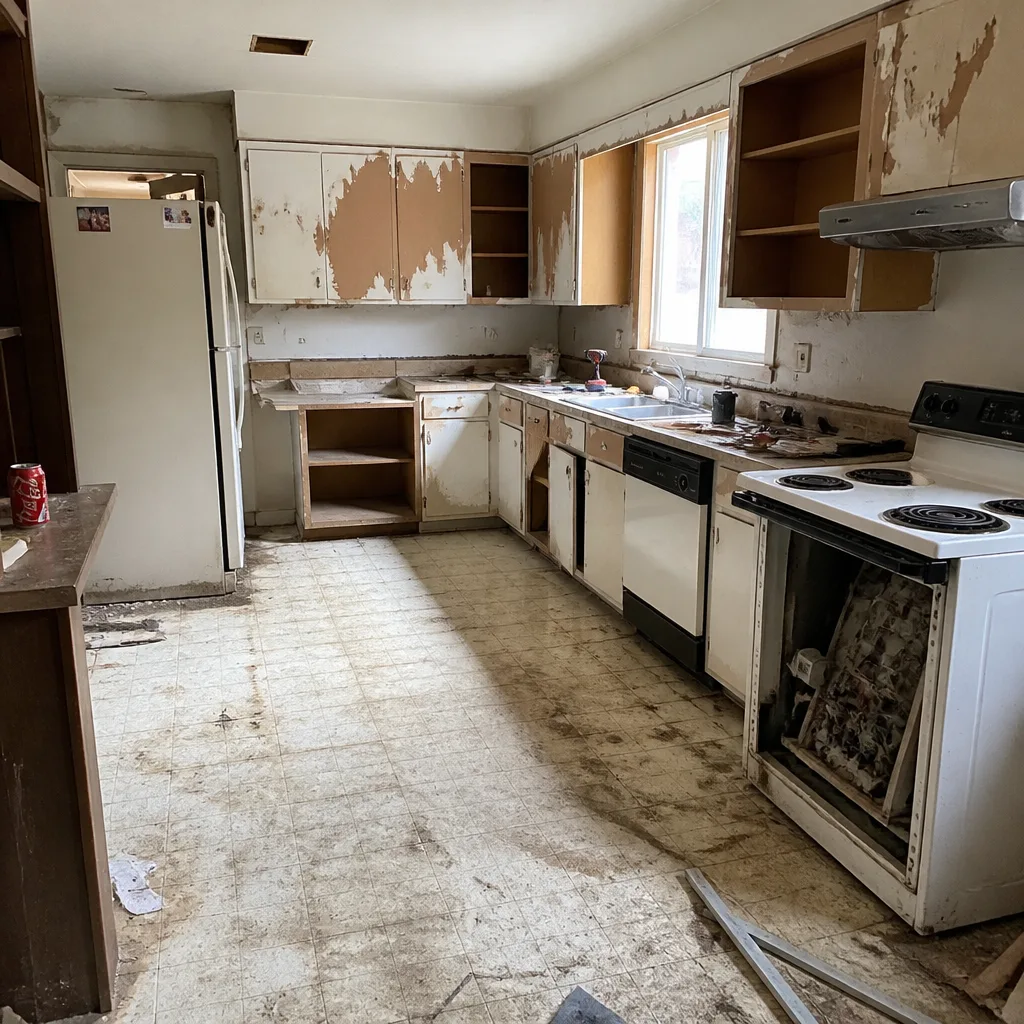 Before
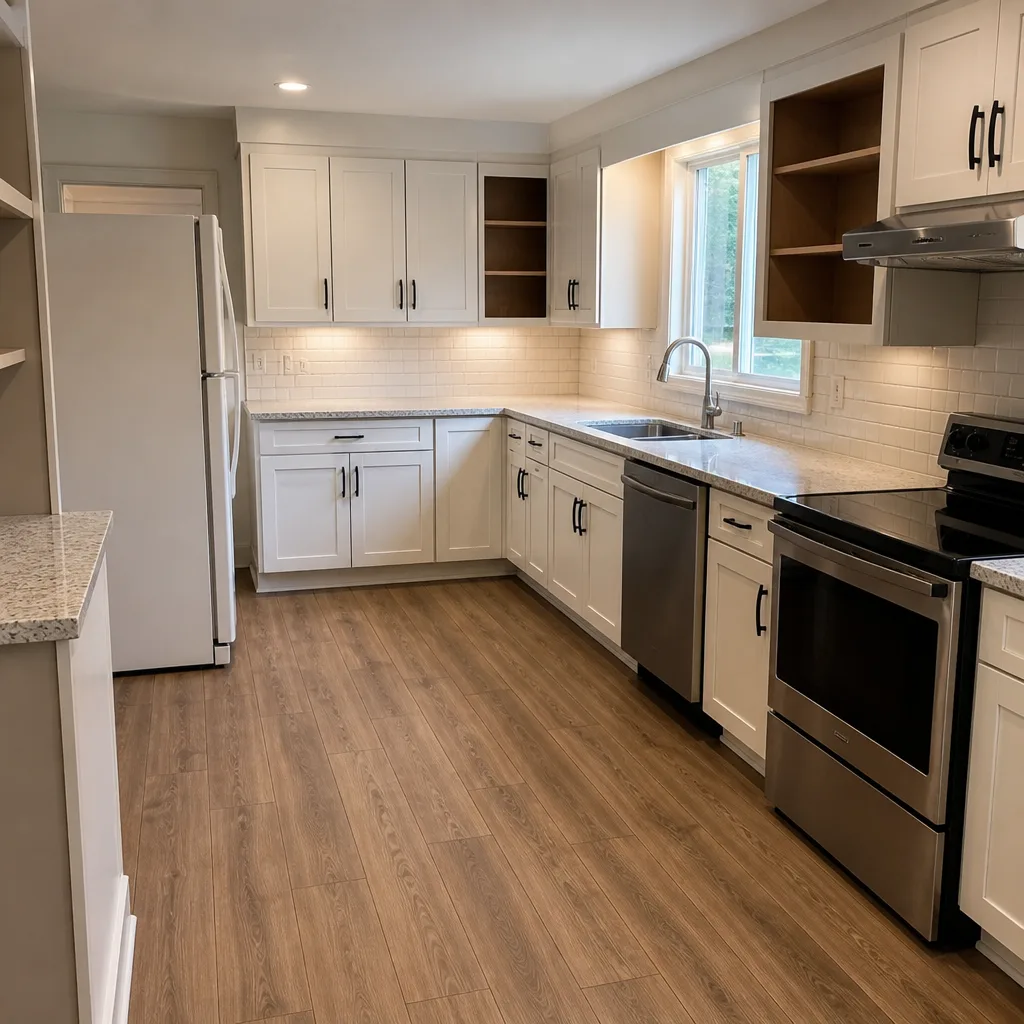 After
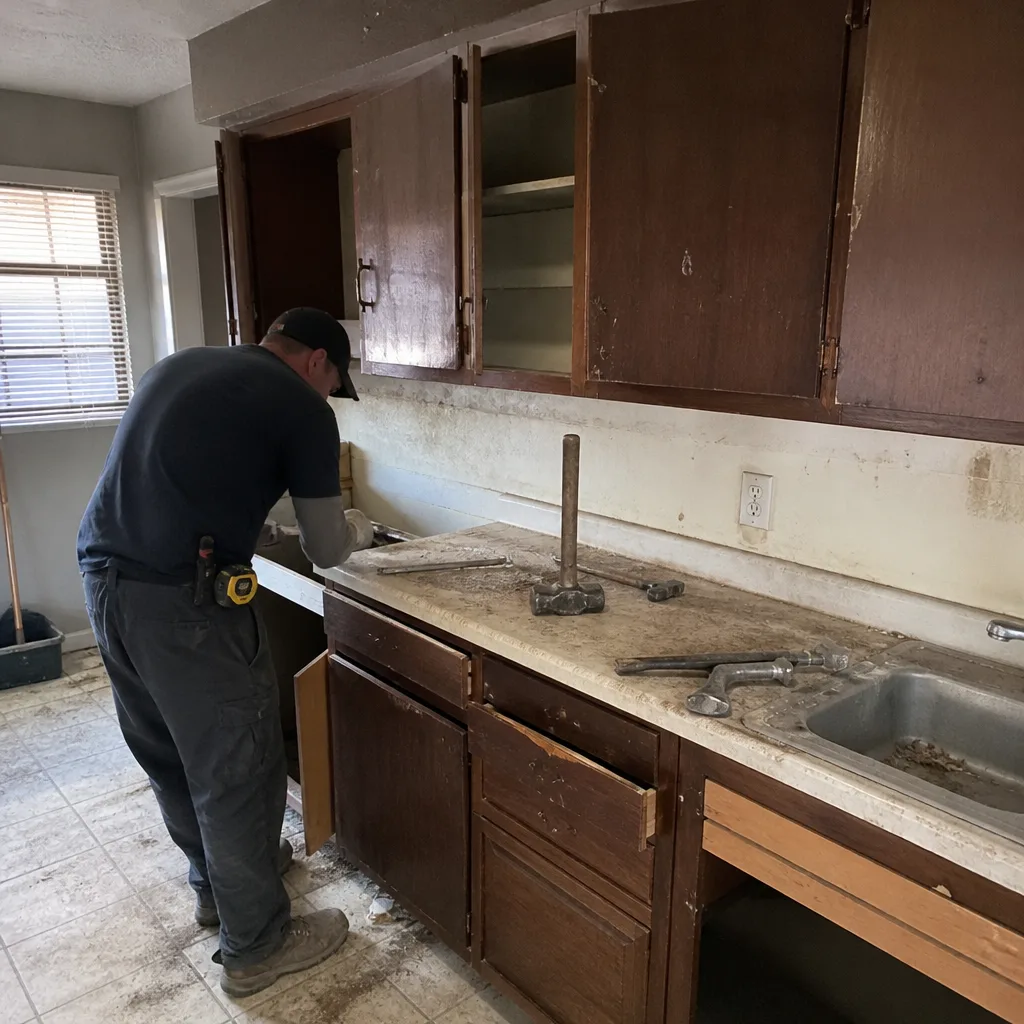 Before
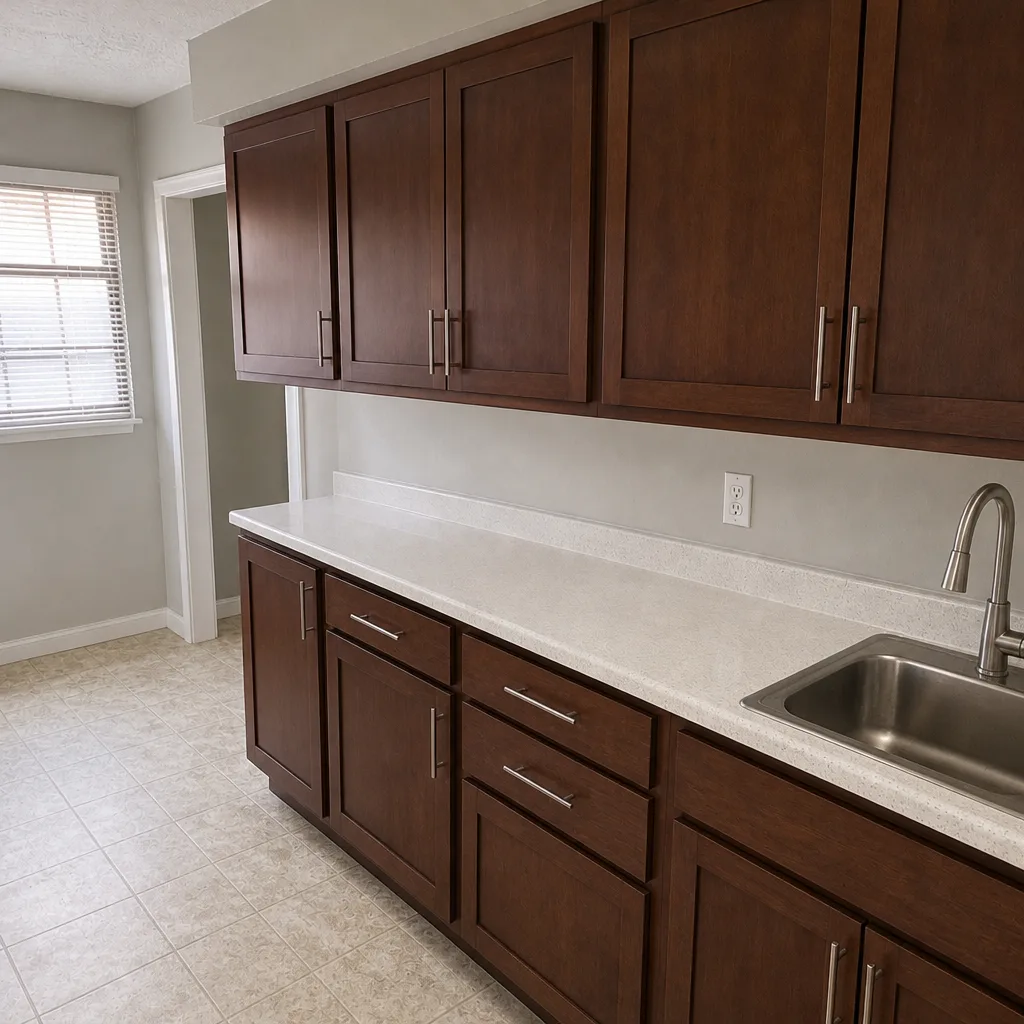 After
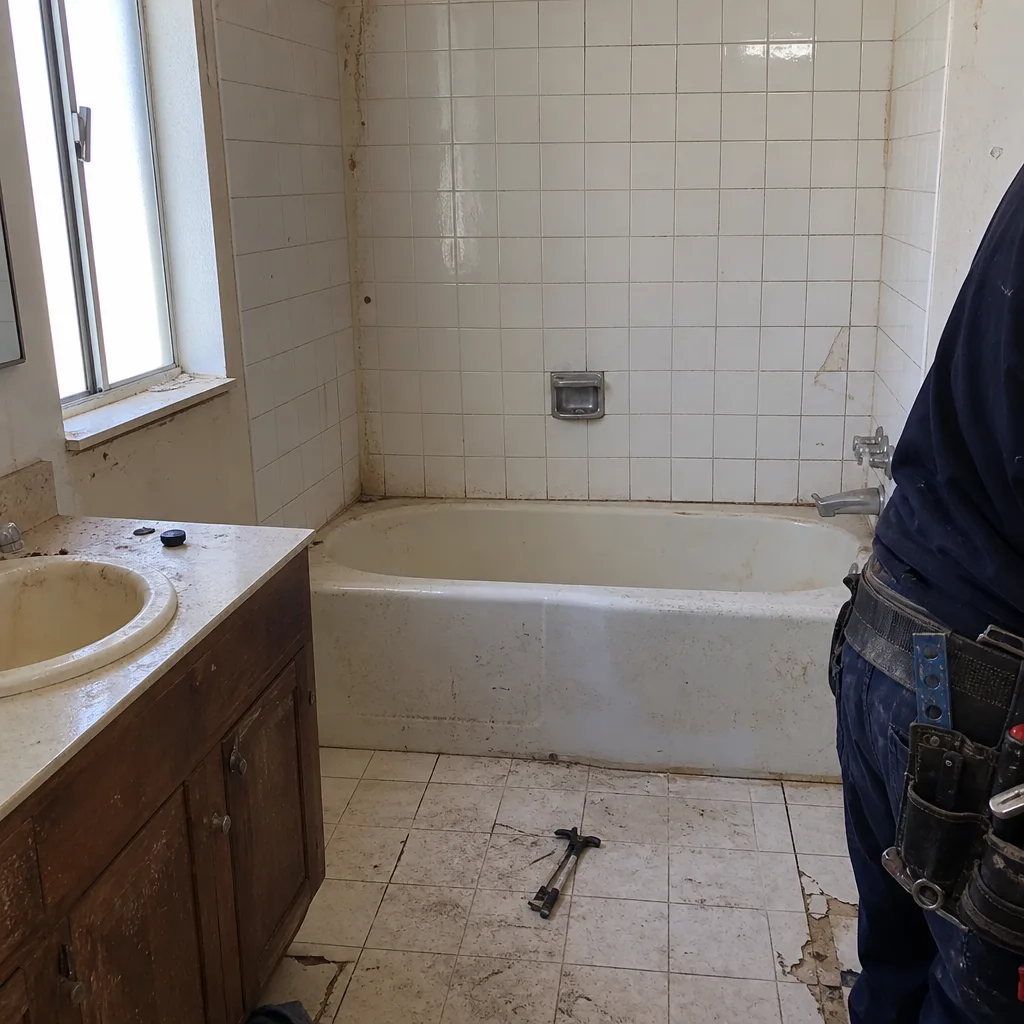 Before
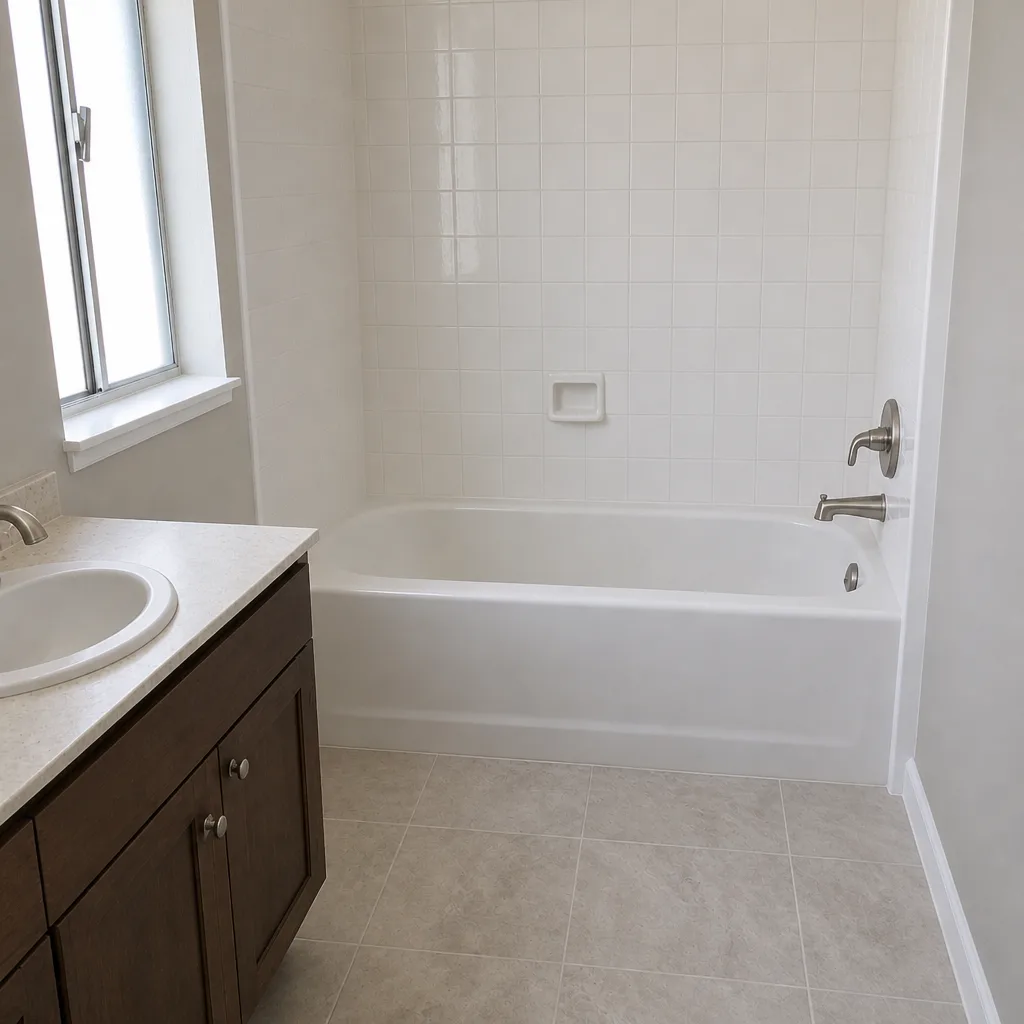 After
Frequently Asked Questions

Vague material specifications are the most common warning sign. A line that says “install flooring” or “premium cabinetry” with no manufacturer, series, color, or allowance number gives the contractor room to substitute cheaper materials and charge you for the difference at close. Ask for a named product and an allowance on every finish line before you sign.
Search the Nevada State Contractors Board’s public database using the license number the contractor provides in writing. Confirm the name matches, the classification covers the scope of work, and the license is active and in good standing. Then ask separately for the certificate of insurance; that’s not on the license record. Call (844) 761-8665 for a free estimate and we’ll walk you through exactly what we can put in writing.
Each word protects against a different failure. Licensed gives you regulatory protection through the state board. Bonded gives you a claim against a surety if the contractor fails on certain legal obligations. Insured covers property damage and injuries on the job through the contractor’s liability and workers’ comp coverage. They’re three separate protections and all three should be in hand before work starts.
A deposit on a remodeling contract in Mesquite typically ranges from 10 to 30 percent, with the balance drawn against completed milestones. The exact number varies by project size and material lead times, so ask for a dollar-based schedule tied to each stage. Call (844) 761-8665 for a free estimate; estimates are free and the pricing we quote is written before any work begins.
A legitimate change order is written, itemized, dated, and signed before work continues. It states the change, the cost in labor and material, the schedule impact, and the revised total. A repricing mid-job is a verbal number at the door with work already underway. If a contractor won’t put a change in writing, don’t agree to it.
Yes, if the work touches plumbing, electrical, or structural elements, you need a permit through the local building authority. Cosmetic work like paint and flooring generally doesn’t require one. A legitimate bid names the permit line, the fee, and who pulls it. If a bid omits permits on a project that clearly needs them, that’s a warning sign, not a savings.
Other Mesquite Contractors – Where We Stand
Mesquite’s remodeling market has plenty of contractors. We’re not the right fit for every homeowner, but we’re honest about what we are. Bradford Remodeling Mesquite is a member of the Garrison Partners family and operates as an independently owned and operated business held to The Garrison Standard. Our technicians have up to 22 years of experience. Every project gets a written price before work begins, background-checked and uniformed technicians on the job, and the 365-Day Done Right Promise: a written year-long guarantee. If the work fails inside the window, we return and correct it at no charge. If you want a written scope, itemized to product names like Cambria, Silestone, or Kohler, that’s the standard we hold ourselves to.
The Bottom Line
The warning signs that matter aren’t in the first impression; they’re in the paperwork. A clean website and a professional handshake tell you nothing about lien waivers, material specs, or payment schedules. The homeowner who reads the scope line by line, verifies the Nevada license and insurance certificate, and refuses verbal change orders is the one who doesn’t end up in a dispute. That protection is available to anyone with an hour and a phone, and it’s the same standard we hold in every Mesquite project we run. Get the price in writing, get the guarantee in writing, and get your home squared away.
Contact Us
If you’re ready to put your remodeling project on solid footing, call Bradford Remodeling Mesquite at (844) 761-8665 for a free estimate. We’ll walk your scope, answer your questions, and put the price and the guarantee in writing before anyone touches a tool. Calls are answered by a live person 24 hours a day.
Written by the team at Bradford Remodeling Mesquite.