Last updated November 18, 2026







Free written scope consultation - allowances, timeline, and change-order rules on paper before a single trade is scheduled
How Long Does Bathroom Remodeling Take? Timelines and What to Expect
A bathroom with 8 working days of labor can legitimately span 4 to 6 weeks on the calendar. That gap trips up more homeowners than any part of the job. If your contractor quotes “two weeks” without explaining the difference between working days and calendar days, you’re already set up for a conversation that ends badly. Inspections, material lead times, and waterproofing cure schedules all live in the space between “days on the tools” and “days on your calendar.” We’re going to walk you through the real sequence stage by stage, show you where the calendar gets eaten, and tell you what a proper schedule document looks like before you sign anything. This guide is written from Mesquite, where the desert climate, Clark County inspection schedules, and the local tile market all shift the math.
Quick Answer
A full bathroom remodel typically takes 3 to 6 weeks on the calendar for a hall bath and 6 to 10 weeks for a master suite, even though the actual labor rarely exceeds 10 to 15 working days. The extra time is inspection holds, waterproofing cure time, and material lead times. A half bath runs 2 to 3 weeks. Custom vanities and special-order tile can push any of these out by an additional 2 to 5 weeks before a single tool is picked up.
Styles & brands we work with
- Kitchen remodeling
- Bathroom remodeling
- Home additions & ADU
- Roofing
- Windows & doors
- Driveway & pavers
- Fence
Table of Contents
- Working Days vs. Calendar Days: Why the Gap Exists
- The Bathroom Remodel Sequence, Stage by Stage
- Inspection Hold Points: Where the Calendar Stalls
- Material Lead Times and the Pre-Construction Window
- How Bathroom Size Changes the Math
- What a Legitimate Schedule Document Looks Like
- Mesquite-Specific Factors That Affect Timing
- Common Mistakes to Avoid
Working Days vs. Calendar Days: Why the Gap Exists
A working day is a day a trade is physically on site swinging a hammer, pulling wire, or setting tile. A calendar day is a Tuesday. They are not the same unit, and the confusion between them is the single biggest reason bathroom timelines feel dishonest.
Here’s the arithmetic. A hall bath remodel might carry 8 working days of labor. But those 8 days get spread across 4 to 6 weeks because between the labor days sit three kinds of non-working time:
- Inspection holds. Rough-in plumbing and rough-in electrical must be inspected before the walls close up. That’s not labor. That’s a scheduled appointment with Clark County.
- Cure and dry time. Waterproofing membranes and setting materials need time to cure per manufacturer spec. You cannot rush a Schluter membrane schedule without voiding the warranty.
- Material delivery windows. Fixtures, tile, and cabinetry arrive on their own schedule, not yours.
In our experience across Mesquite, the honest number homeowners want is the calendar number. The working-day count is useful for understanding cost (labor is billed by working day). The calendar count is useful for understanding your life: how long will the guest bath be out of commission, how many weeks of dust, when can the family stop sharing one shower. When a contractor cites only one figure, ask for the other. A quote of “two weeks” for a full bath is almost never a calendar promise. It’s a working-day count missing its context.
The Bathroom Remodel Sequence, Stage by Stage
Every bathroom remodel, whether it’s a half bath in a Mesquite starter home or a master suite with a curbless shower, runs through the same ordered sequence. The order matters because most stages can’t start until the previous one is signed off. Here’s the full trade sequence with typical working-day ranges for a standard full bath:
- Demo and site protection (1-2 working days). Tear-out of old tile, vanity, toilet, tub, and drywall to the studs. Floors get protected, dust barriers go up. A clean demo sets the tone for everything after it.
- Rough-in plumbing (1-2 working days). New supply and drain lines for the shower valve, sink, and toilet. This is where the substrate gets prepared for the real waterproofing.
- Rough-in electrical (1 working day). GFCI receptacles, vanity lighting circuits, exhaust fan wiring. Bathrooms require ground-fault protection, and that’s not negotiable.
- Inspection hold (2-7 calendar days). Clark County inspects the rough plumbing and rough electrical before anything gets covered. See the next section for why this hold is variable.
- Insulation and drywall (2 working days). Walls close up. Moisture-resistant board in wet zones.
- Backer board and waterproofing (1-2 working days plus cure). Cement or foam backer board goes up, then a bonded waterproofing membrane like Schluter Kerdi over the shower walls and pan. The membrane needs to cure before tile goes on.
- Tile setting (2-4 working days). Floor and walls. A large-format tile with a simple layout moves fast; a herringbone or mosaic shower pan eats days.
- Grout and seal (1 working day plus cure). Grout needs 24 hours minimum before fixtures hang near it.
- Fixture and finish plumbing (1-2 working days). Set the toilet, mount the vanity, install the Grohe shower valve trim, hook up the sink. Sterling tubs and surrounds typically arrive pre-finished and set clean.
- Finish electrical (1 working day). Trim out receptacles, switches, vanity lights, and the exhaust fan.
- Final inspection (2-7 calendar days). The last sign-off before you take possession of the room.
- Punch list and clean (1 working day). Touch-ups, caulk, and a thorough cleaning. A squared-away close means the homeowner walks into a finished room, not a debris field.
Add the working-day ranges and you land around 15 to 19 labor days for a standard full bath. That’s the number on the crew’s timesheet. Now map those across the calendar with inspections and cures and you get the 4 to 6 weeks homeowners actually live through.
Inspection Hold Points: Where the Calendar Stalls
Two stages in a bathroom remodel legally cannot proceed without passing inspection: the rough-in inspection and the final inspection. If you skip either, the work is unpermitted and can complicate a future sale, insurance claim, or refinance.
Rough-in inspection covers plumbing and electrical before the walls close. The inspector checks drain slope, venting, GFCI placement, and the shower valve rough-in. Final inspection checks that fixtures are set, the exhaust fan is wired and venting to the exterior, and everything matches the permitted scope.
Typical Clark County inspection scheduling in the Mesquite area adds 2 to 7 calendar days to the schedule per hold point, depending on the day of the week and the current inspection backlog. A rough inspection requested Friday afternoon might land Tuesday or Wednesday. That’s not a delay caused by anyone’s sloppiness. It’s the nature of the inspection calendar.
You can see the calendar impact clearly: two inspection holds at 2 to 7 days each stack 4 to 14 calendar days onto the job before any material or labor variables enter the picture. That alone explains most of the gap between “two weeks” and “five weeks.” Ask your contractor up front how they schedule inspections and whether they can request rough-in inspection the same day the rough work completes. A crew that plans around the inspection calendar finishes more predictably than one that requests inspection after the fact.
Material Lead Times and the Pre-Construction Window
The clock starts before the first day of demo. Materials have to arrive, and the lead time on those materials sets the early end of your calendar. This is the pre-construction window, and it’s the part of the schedule most contractors gloss over.
Stock vs. Special-Order Tile
In-stock tile at a Mesquite supplier ships in days. A special-order tile with a 3-week factory lead plus a freight window can push the start of tile work out substantially. A tile selected for a specific pattern often needs a longer lead because dye lots vary. That’s not a contractor excuse; it’s the factory.
Standard vs. Custom Vanities
A stock KraftMaid or Wellborn vanity cabinet in a standard size typically arrives in 1 to 3 weeks. A custom-sized vanity in a nonstandard depth or finish can run 4 to 8 weeks. If the vanity is the last thing holding the job start, that custom order is the calendar.
Stock Fixtures vs. Special-Order Plumbing
A standard Kohler or Moen shower valve and trim package is usually in stock. A special-order finish or a discontinued Grohe trim can take weeks to source. Same story with tubs. A Sterling stock tub ships fast. A freestanding soaking tub with a specific finish can be a 6-week order.
The lesson: the pre-construction window is the sum of your longest-lead item, plus the demolition it takes to make room for it. Order the vanity and tile first. Lock in a start date that leaves margin for a factory slip. We build the material order date into the written project schedule so nobody’s waiting on a truck that ships in three weeks.
How Bathroom Size Changes the Math
Bathroom size changes the working-day count. It doesn’t always change the calendar count proportionally. That’s the counterintuitive part.
A half bath (powder room, no shower or tub) drops the plumbing rough-in to a toilet and sink and eliminates the tub/shower waterproofing entirely. Working days fall to roughly 5 to 8. But the calendar can still run 2 to 3 weeks because the inspection holds and material windows are nearly the same size for a half bath as for a full bath. You don’t get to skip the inspections just because the room is small.
A full hall bath (tub/shower, sink, toilet) runs roughly 15 to 19 working days and lands at 4 to 6 weeks on the calendar.
A master bath (double vanity, walk-in shower, freestanding tub, sometimes a water closet) runs 20 to 30 working days and lands at 6 to 10 weeks calendar. The working-day count climbs because there’s more plumbing to rough, more tile to set, and more finish plumbing to trim. But the calendar count climbs less than you’d expect, because the inspection holds happen once regardless of size. The gap between working and calendar days actually narrows on a bigger job, because more of the calendar has actual labor on it.
When a homeowner asks how long their specific Mesquite bathroom will take, the honest answer is: give us the room dimensions, the planned layout, and the finish selections, and we’ll quote both numbers on paper before any work starts. A written schedule with both the working-day count and the calendar span is the only way to compare one bid against another fairly.
What a Legitimate Schedule Document Looks Like
A real project schedule is not a text message that says “about a month.” It’s a document that maps the stages, the trade assigned to each, and the calendar date each stage is scheduled to start and finish. Before you sign a bathroom remodeling contract, ask for five things:
- A stage-by-stage list matching the sequence above, from demo to final inspection. Every stage should have a start and finish date.
- The inspection hold dates called out explicitly. If a contractor won’t commit to when they’ll request inspections, they haven’t planned the job.
- A material delivery schedule listing the order date for tile, vanity, and fixtures alongside the expected arrival date.
- A written price covering the entire scope. No number should move once the contract is signed, and there should be a stated change-order process for anything the homeowner requests mid-job.
- A written guarantee. At Bradford, that’s the 365-Day Done Right Promise: if the work fails within a year of completion, we come back and correct it at no charge. That’s in writing before the first tool comes out.
A schedule document that hits all five of those markers is the sign of a crew that runs on The Garrison Standard, the framework that governs how every Garrison Partners location operates. A schedule that’s a promised number from a phone call is not a schedule. It’s a hope. And hopes are what leave homeowners staring at a half-finished bathroom three weeks after the promised finish date, with a contractor who stopped answering.
Mesquite-Specific Factors That Affect Timing
Local conditions shift the math a little. Three stand out in Mesquite and the surrounding Clark County area.
Heat and tile setting. During summer, ambient temperatures in Mesquite push setting materials and grout to cure faster than the manufacturer’s stated window. A crew that’s used to a Las Vegas Valley schedule knows to work smaller tile areas at a time and manage cure times carefully. In our experience, sloppy heat management leads to hairline cracks in grout months later, which then turns into a warranty callback. We plan tile days around the temperature.
Inspection backlog. Clark County building inspection scheduling varies with the current permit volume. Mesquite sits at the eastern edge of the county, and drive time for the inspector can add a day to any hold. Ask specifically how long the rough-in inspection has been taking recently. A contractor with a recent track record of realistic inspection timelines has better answers than one quoting from an old schedule.
Supplier distance. Tile, fixtures, and vanities often ship from Las Vegas or from national warehouses. The freight window between the factory and a Mesquite job site adds a day or two on each end compared to a metro delivery. That’s why it’s worth specifying in the material order that shipment goes straight to the job site rather than through a middle warehouse.
None of these factors changes the fundamentals. But each adds margin that a realistic schedule builds in from day one.
Common Mistakes to Avoid
- Accepting a single timeline number. “Two weeks” without a working-day and calendar-day distinction means the contractor doesn’t understand how to schedule the job. Ask for both numbers.
- Not asking when materials are ordered. A special-order vanity has a 6-week lead time that will eat most of your calendar. If the contractor hasn’t ordered anything before demo starts, the schedule is already broken.
- Skipping permit and inspection planning. Unpermitted bathroom work can stall a future sale and complicate insurance. Ask for the permit number and the inspection schedule before signing.
- Comparing a working-day bid to a calendar-day bid. A 12-working-day quote and a 6-week quote may be the same job. Compare like to like.
- Ordering custom tile or fixtures late. Every week of delay on a 3-week lead tile shrinks the tile window on the back end. Order long-lead items first.
- Trusting a verbal price. A written price before work starts, with a stated change-order process, is the only protection against a number that drifts up mid-job.
- Not asking who’s on site. A crew that runs background-checked, uniformed technicians with a documented training standard – not a rotating cast of subs – is more likely to hit their schedule. That’s how Garrison Partners operates.
See the difference
 Before
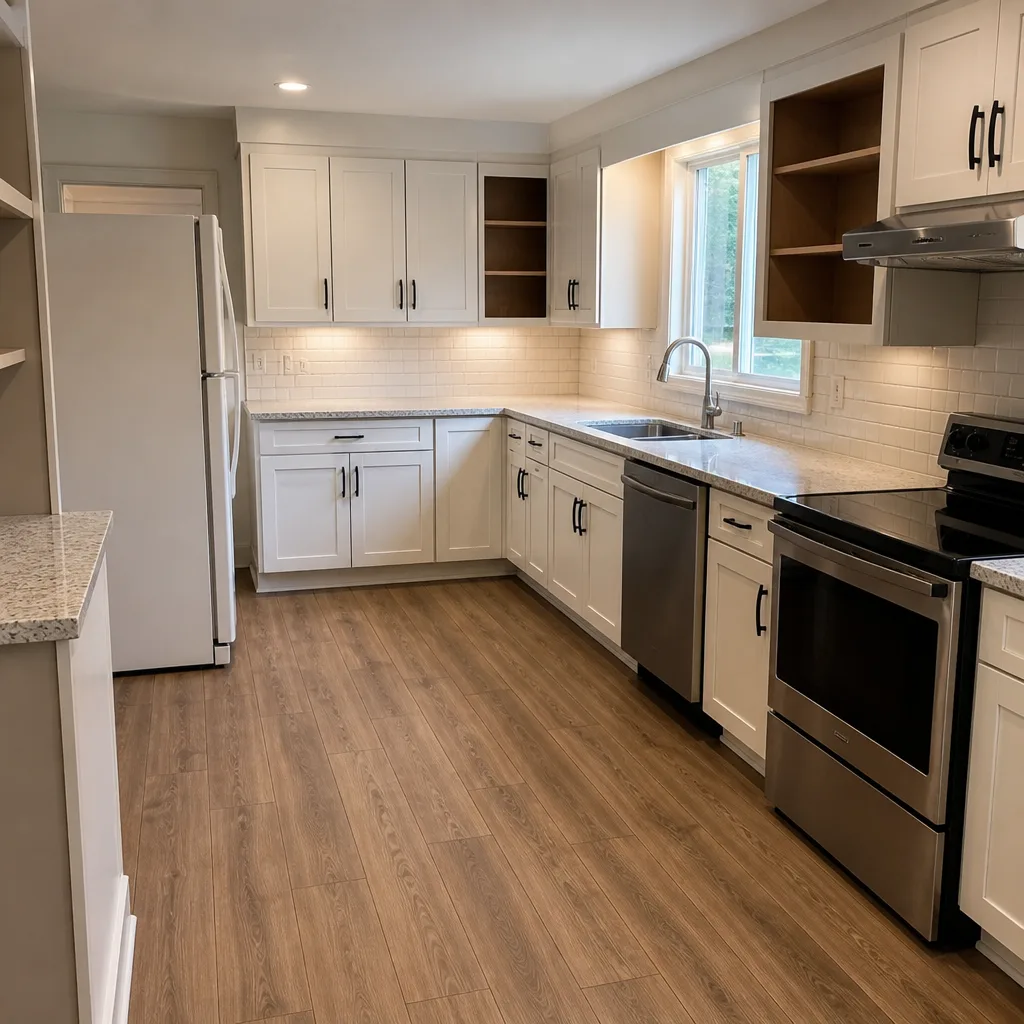 After
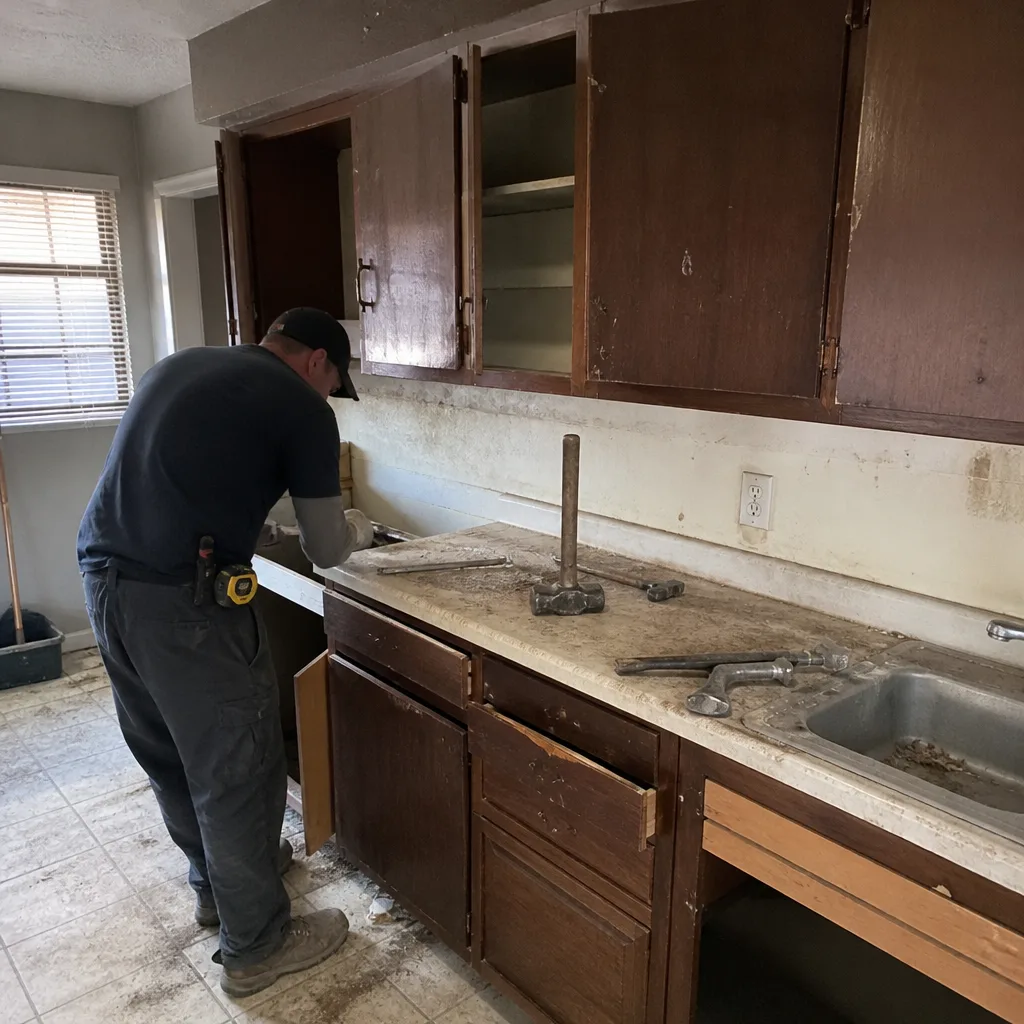 Before
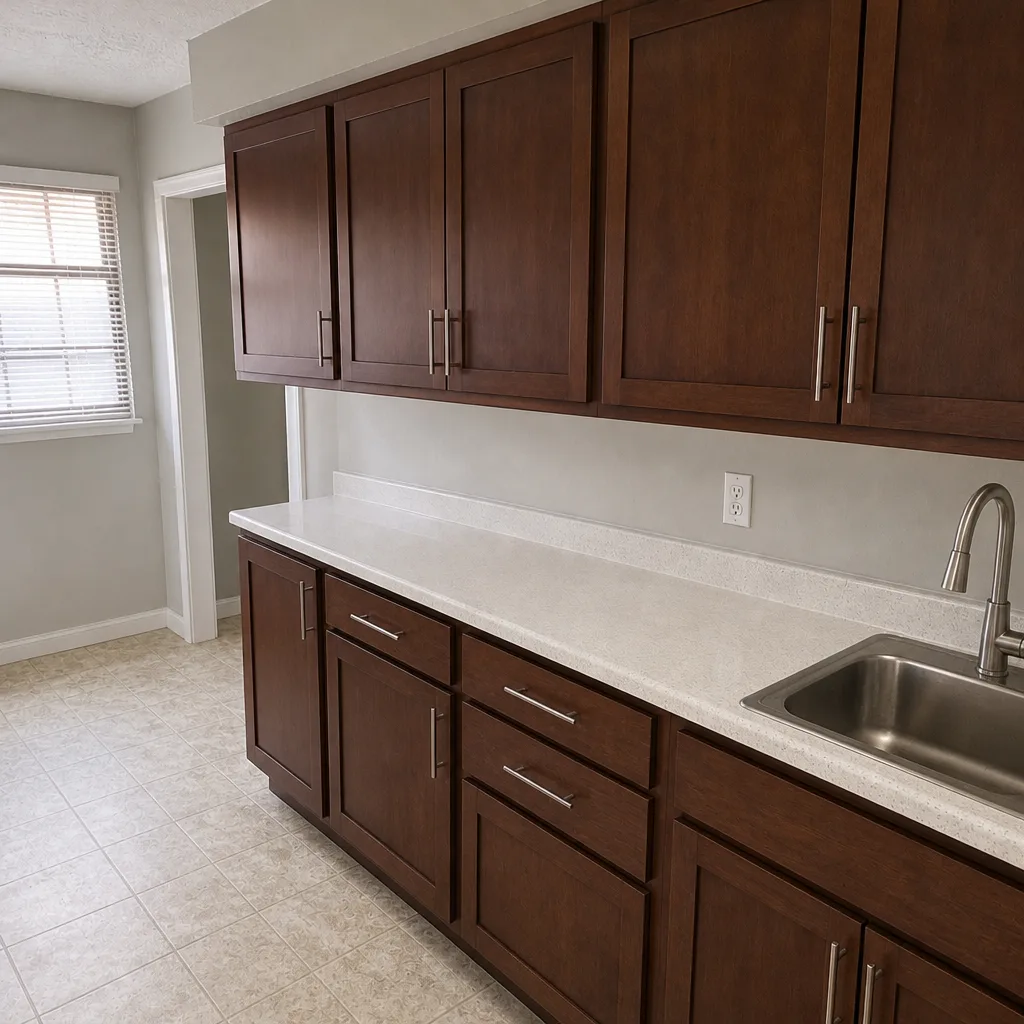 After
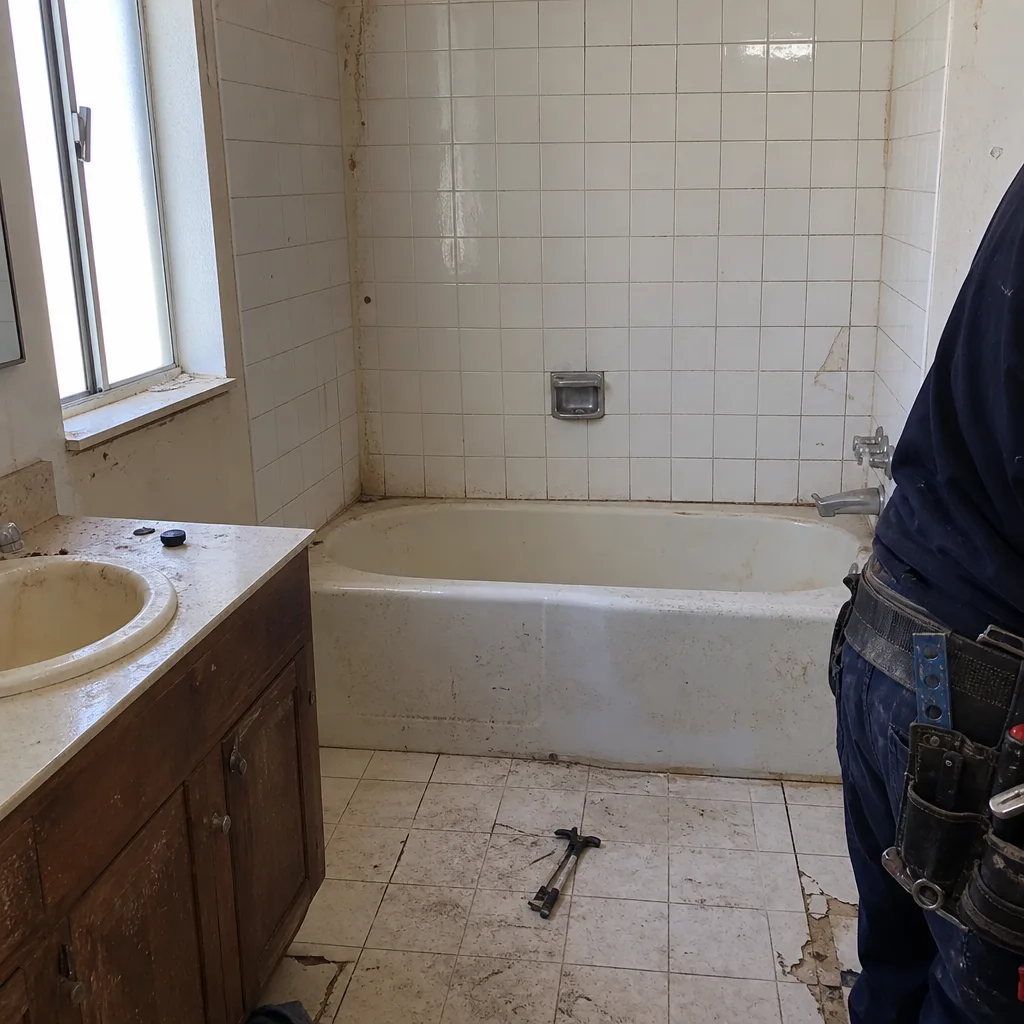 Before
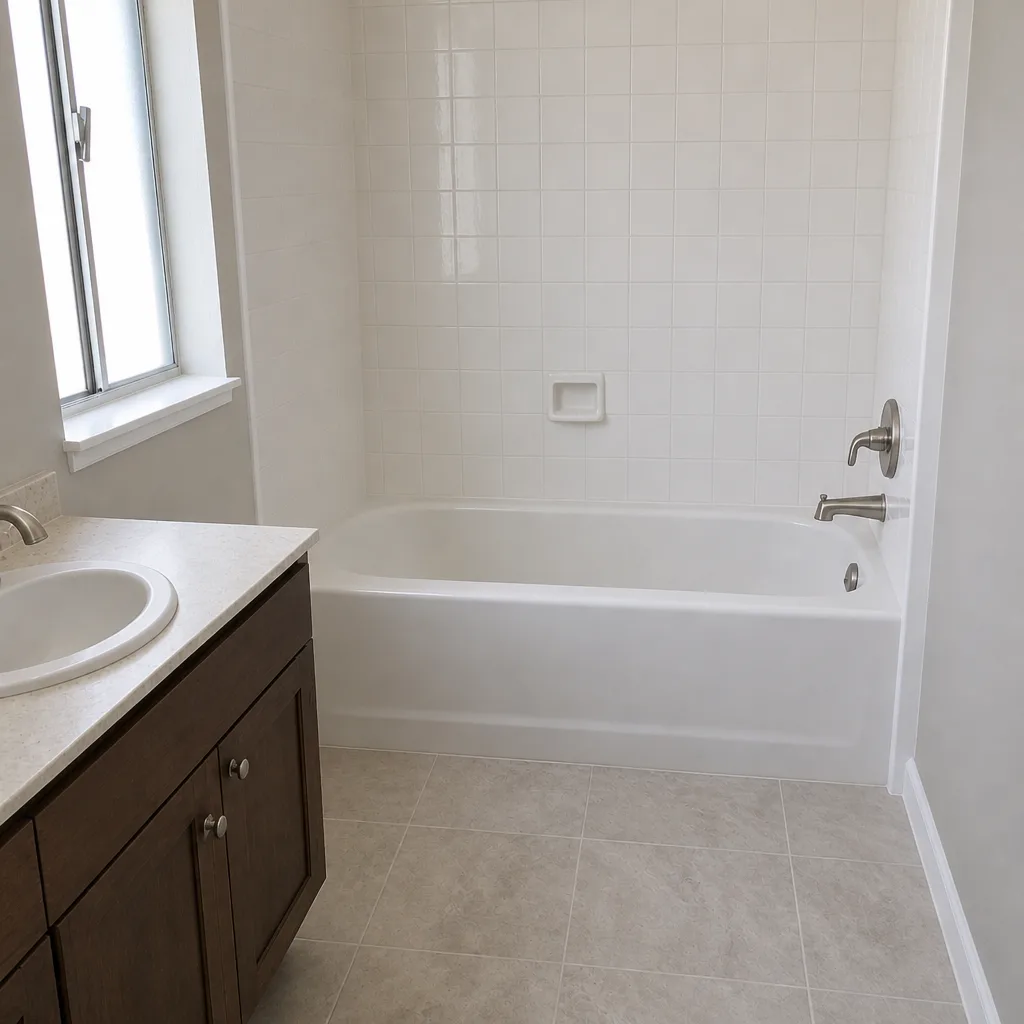 After
When to Call a Professional
Some bathroom work is genuinely a DIY weekend. Replacing a toilet, swapping a vanity cabinet for a stock unit, repainting. But the moment the job involves moving plumbing, relocating a drain, cutting into drywall to run new electrical, or building a wet-area shower from the substrate up, the timeline and the stakes both jump. A bathroom remodel in Mesquite that touches the rough plumbing or electrical needs permits and passes Clark County inspection. A crew that backgrounds its technicians, quotes a written price before work starts, and puts a written guarantee behind the finished work is the one that turns a 5-week job into exactly that. Bradford Remodeling Mesquite offers free estimates in Mesquite. Call (844) 761-8665 to schedule yours.
Frequently Asked Questions
No, not for a full bathroom. Two weeks is not enough calendar time to pass two Clark County inspection holds, cure the waterproofing membrane, and set tile. A two-week claim from a contractor usually refers to 8 to 10 working days of labor, missing the inspection and cure time entirely. A half bath can land in 2 to 3 weeks; a full bath cannot. Call (844) 761-8665 for a written schedule with both the working-day and calendar-day counts.
In our experience, special-order materials drive the biggest delays, often adding 2 to 5 weeks to the pre-construction window before demo even starts. A custom vanity in a nonstandard finish, a discontinued Grohe trim, or a tile with a factory lead time all shift the calendar. The second biggest is the inspection hold, which typically adds 2 to 7 calendar days per inspection in the Mesquite area. Both are predictable and should be scheduled in writing.
A master bathroom typically runs 6 to 10 weeks on the calendar and roughly 20 to 30 working days of labor. The larger window comes from more plumbing to rough, more tile to set, and more fixtures to trim out. Push it to the high end if the design includes a curbless walk-in shower, a freestanding tub with a custom filler, or any special-order surfaces like Cambria or Caesarstone.
Yes, if the work touches plumbing, electrical, structural framing, or the wet-area waterproofing. Cosmetic updates like paint and a vanity swap typically don’t require permits. When a permit is pulled, expect two inspection holds (rough-in and final) that add calendar time. Ask your contractor for the permit number before work starts. An unpermitted remodel can stall a future home sale.
Yes for a hall bath or guest bath, provided the family has a second full bathroom. Expect dust, a shared shower, and a few weeks of limited access to the work zone. For a master bath in a single-bathroom home, plan an alternate shower arrangement for the full calendar window. A proper crew protects floors, hangs dust barriers, and cleans daily so the disruption stays contained.
Ask each contractor for a written schedule that shows both working-day counts and calendar-day dates for every stage from demo to final inspection. Ask for the material order and delivery dates in writing. Ask for the inspection request dates. A bid with only a total number on it can’t be compared fairly to one with a detailed schedule. For a bathroom remodeling in Mesquite with a written price and schedule before work starts, call (844) 761-8665.
The Bottom Line
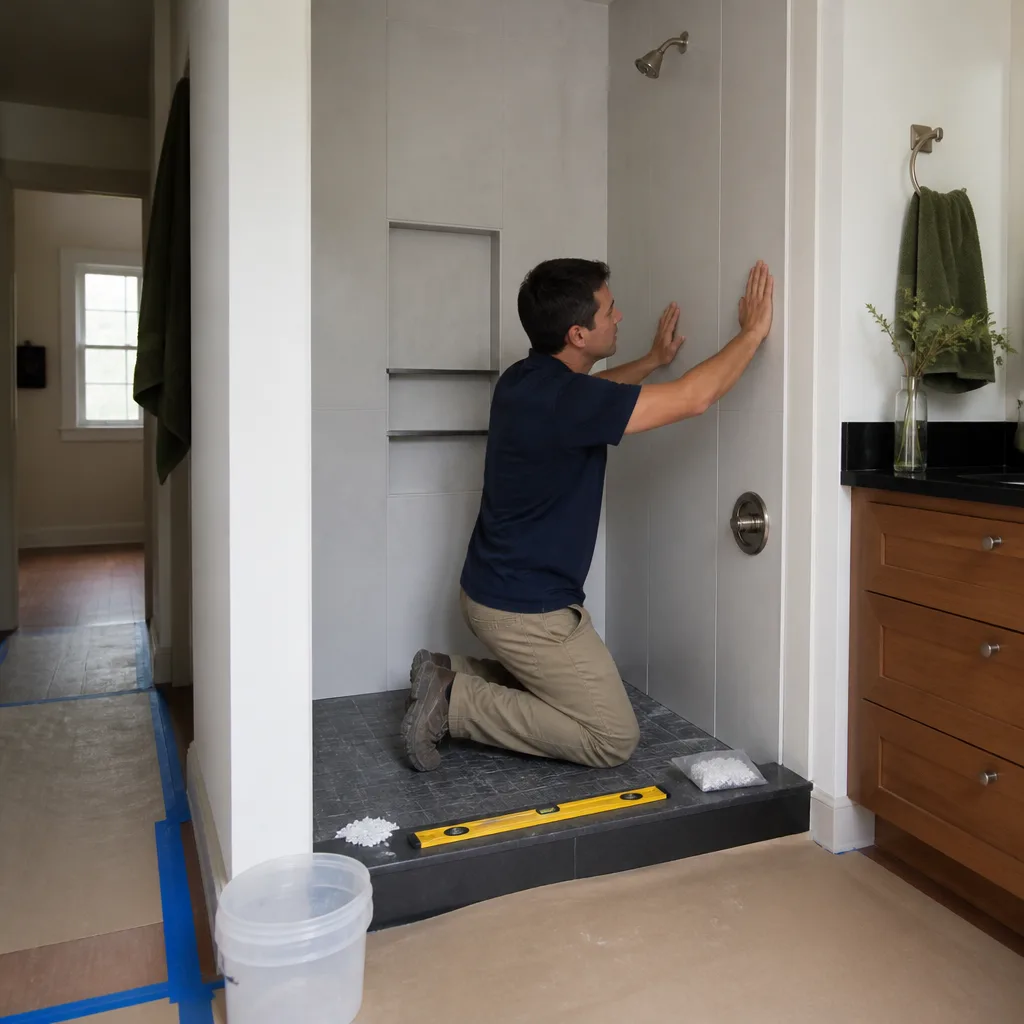
Bathroom timelines get misquoted because contractors cite working days and homeowners hear calendar days. A full bath with 15 to 19 working days of labor runs 4 to 6 weeks on the calendar once inspection holds and material lead times are factored in. A master bath runs 6 to 10 weeks. A half bath runs 2 to 3 weeks. The stages are knowable: demo, rough plumbing, rough electrical, inspection, backer and waterproofing, tile, fixtures, finish trades, final inspection. What separates a predictable schedule from a painful one is whether the contractor plans around the inspection calendar and material lead times. If you want both numbers on paper before any work starts, that’s how we work. Whether you’re planning a general contractor project in Mesquite that includes a bathroom or a standalone kitchen remodeling in Mesquite alongside it, the scheduling discipline is the same. Call Bradford Remodeling Mesquite at (844) 761-8665 for a free estimate, with a written schedule and a written price you can hold us to.
Written by the team at Bradford Remodeling Mesquite.