Last updated November 18, 2026








Free written scope consultation - allowances, timeline, and change-order rules on paper before a single trade is scheduled
Home Remodeling Troubleshooting: Common Problems and How to Fix Them
A cracked foundation wall found mid-remodel is not automatically your contractor’s fault. But a contractor who walls over it with drywall and never tells you has committed a code violation and possibly a fraud. Those are two very different problems with two very different remedies, and most homeowners never learn the difference until they’ve already spent money on the wrong fix. The same confusion runs through nail pops, tripping breakers, slow drains, and vanishing crews. This guide sorts remodeling failures into three categories, shows you the documentation each one requires, and explains what a written guarantee should actually cover. We’ve watched Mesquite homeowners waste months on the wrong remedy, and the fix usually starts with naming the problem correctly.
Quick Answer
Most home remodeling problems fall into three categories with distinct resolution paths: workmanship defects (a contractor callback or warranty claim), code violations (a building department complaint), and contract disputes (a demand letter or small claims court). Identify the category first, document it in writing, and only then decide who to call. Filing the wrong complaint in Nevada costs you time and usually gets the case closed without action.
Styles & brands we work with
- Kitchen remodeling
- Bathroom remodeling
- Home additions & ADU
- Roofing
- Windows & doors
- Driveway & pavers
- Fence
Table of Contents
- The Three Categories of Remodeling Problems
- Workmanship Defects: The Contractor Callback Path
- Code Violations: When the Building Department Is Your Remedy
- Contract Disputes: Demand Letters and Small Claims
- The Documentation Standard for Each Problem Type
- Common Whole-Home Remodel Failures by Trade
- What a Written Warranty Covers (and What It Excludes)
- Common Mistakes to Avoid
The Three Categories of Remodeling Problems
Every remodeling complaint we hear about fits into one of three buckets, and the bucket determines everything that follows. Getting this wrong is the single most expensive mistake homeowners make after a bad job.
Workmanship defects are failures in how the work was done. A tile shower that leaks at the pan, drywall seams that crack within months, a door that doesn’t latch square. These are handled through the contractor’s warranty or callback process, governed by your contract.
Code violations are failures against the building code itself, independent of whether the work matches the contract. Missing GFCI protection in a wet area, an unvented plumbing drain, framing notched past the allowable limit. In Mesquite these get reported to the city building department, which inspects and issues a correction order.
Contract disputes are disagreements about scope, payment, or completion. The contractor says the job is done and wants final payment; you say three line items were never installed. This category runs through demand letters, mediation, or small claims depending on the amount.
The confusion happens because one failure can trigger two categories. A covered-up foundation crack is both a possible code violation (undisclosed concealed condition) and a contract dispute (work outside the agreed scope). That overlap is why you document first and act second. It’s also why a written scope at the start, with a firm price before work begins, sidesteps most of these fights. If you’re planning a major project in Mesquite, our General Contractor in Mesquite page explains how a properly scoped job is supposed to run from day one.
Workmanship Defects: The Contractor Callback Path
Workmanship defects are the most common and the easiest to resolve, provided you handle the first contact correctly. The remedy path is simple: notify in writing, give a reasonable cure window, and escalate only if the contractor ignores you.
- Document the defect with photos and dates. Wide shot, close-up, and a scale reference. Note when you first saw it and whether it’s growing.
- Send written notice. Email is fine and creates a timestamp. State the defect, when it started, and request a return visit within 14 days.
- Keep it factual. No accusations, no threats. “The master shower pan is leaking into the ceiling below as of March 3. Photos attached. Requesting a warranty visit.”
- Give a cure window. Two weeks is standard and courts treat it as reasonable.
- Escalate only after the window passes. If the contractor doesn’t respond, then contact the Nevada State Contractors Board and file a workmanship complaint.
In our experience, most workmanship complaints that go bad go bad because the homeowner never sent written notice in the first place. A phone call that fades into a text thread that fades into silence is not documentation. The contractor’s guarantee, if it’s a real one, should spell out the callback process in writing. Bradford’s 365-Day Done Right Promise works this way: a written guarantee on every completed project, and if the work fails within the year, we return and correct it at no charge. That’s the standard a warranty should meet, and it should be in your hands signed before the job closes.
Mesquite’s dry climate makes certain workmanship failures predictable. Drywall seam cracks and nail pops show up in the first summer because interior humidity swings faster here than on the coast, and a crew that taped too thin or shot drywall without enough fasteners gets found out within months. If you see cracks along the seams rather than in the field of the board, that’s a taping or fastener problem. Cracks radiating from corners are usually framing movement or fastener spacing, which points back to installation.
Code Violations: When the Building Department Is Your Remedy
A code violation is a legal finding, not an opinion. This is the category where you stop negotiating with the contractor and start talking to the authority having jurisdiction: in Mesquite, that’s the city building department.
What actually qualifies as a reportable code violation, versus a workmanship gripe:
- Electrical: missing GFCI protection in kitchens, baths, garages, and exterior outlets; junctions buried in walls without an accessible box; undersized circuits for the load.
- Plumbing: unvented drains or revented fixtures done wrong, undersized waste lines, improper slope on horizontal runs, no accessible cleanouts.
- Structural: notched or bored framing past the code allowance, missing hardware, decks without proper ledger attachment and flashing.
- Concealment: covering over a known defect (like that foundation crack) without disclosure, or drywalling over work that never got the required rough-in inspection.
The process is straightforward if you bring documentation. Call the Mesquite building department, describe the concern, and ask whether it falls under their inspection authority. If it does, they’ll schedule an inspection and issue a correction notice to the permit holder. In Nevada, work performed without a required permit is itself a violation, and that’s reportable independently.
One caution: filing a code complaint on a contractor who’s still on your job will likely end the working relationship. That’s fine if the relationship is already over, but it’s the wrong first move for a fixed defect. Reserve it for real violations. If you’re mid-remodel and suspect a problem is code-related, get an independent inspection before you file anything; our Bradford Remodeling Mesquite home page walks through how a properly permitted project should be inspected at each phase, which is a useful baseline.
Contract Disputes: Demand Letters and Small Claims
A contract dispute is about money or scope, not quality. The classic cases: the contractor wants the final draw and you say the punch list isn’t done, or the invoice came in higher than the written price, or the crew stopped showing up mid-project after you paid a draw.
Nevada gives you a clean escalation path. Start with a written demand letter, sent certified mail, that states the specific amount or remedy you’re asking for and gives a deadline (14 to 30 days is standard). If the amount in dispute is under the small claims limit for Mesquite’s justice court, small claims is the cheapest route and doesn’t require a lawyer. Above that, justice court or district court filings get more involved and usually justify a consultation.
Before any of that, know whether you actually have grounds. A contract dispute requires a written contract to work from. If you signed a one-page estimate with no schedule, no scope detail, and no warranty terms, you’ve made the dispute much harder to win. This is why a written price and a documented scope before work starts isn’t a formality. Every Bradford Remodeling Mesquite project runs on The Garrison Standard, which puts the price and the guarantee in writing before any tools come out. That’s the paper trail that prevents a demand letter from ever being necessary.
Payment structure matters here too. If you paid in full before the job finished, you’ve given up your leverage. Progress payments tied to completed milestones, with a final draw held until the punch list is signed off, are the standard, and they’re worth insisting on regardless of who you hire.
The Documentation Standard for Each Problem Type
The documentation you need changes with the category. Sending the wrong package to the wrong authority is the fastest way to have a complaint closed without action. Here’s what each type requires.
For a workmanship defect
- Dated photos: one wide, one close-up, one with a tape measure or scale reference.
- A short written notice to the contractor with a clear defect description and a requested cure date.
- A copy of the contract clause or written warranty that governs the defect.
- Any prior correspondence about the same issue.
For a code violation
- The permit number for the work, if you have it.
- Photos that show the specific violation, not just the general area.
- Any inspection reports already issued.
- A dated written record of when you discovered the condition.
For a contract dispute
- The signed contract and any change orders, in full.
- All invoices, receipts, and payment records.
- A written punch list of what remains incomplete, with dates.
- Screenshots or PDFs of every email and text that touches on scope or timeline.
- The demand letter itself, sent certified mail with return receipt.
Keep a single folder, physical or digital, and add to it in real time. Reconstructing a paper trail after the fact is where most homeowners lose their case, and it’s entirely preventable. Nevada’s small claims and contractor complaint processes both run on documents, not memory.
Common Whole-Home Remodel Failures by Trade
Not every failure is a defect. Some failures are nuisance symptoms that point to a different root cause than the one you’d guess. Knowing the difference saves you a wrong complaint and a wasted return visit.
Drywall: nail pops vs. seam failure
A nail pop is a small, circular bulge where a fastener pushed through the paint film. It’s usually a single fastener backing out slightly as the framing dries and shrinks, common in new framing during its first heating season. A seam crack is a straight line along the joint where two boards meet. That’s a taping or fastener-spacing problem, and it’s a workmanship issue. One pop is a one-hour fix; a room full of seam cracks is a callback, and possibly a re-tape.
Electrical: breaker trips vs. GFCI nuisance trips
A breaker that trips when you run the microwave and the toaster together is an overload, and it’s often the homeowner’s usage, not the wiring. A breaker that trips with nothing plugged in points to a fault in the circuit, which is a code-level concern. A GFCI that trips occasionally on a bathroom outlet during humid weather is a nuisance trip, and it’s usually a failing device or moisture, not a wiring defect. A GFCI that trips immediately every time you reset it is a fault and needs an electrician today.
Plumbing: slow drains vs. vent failures
A slow drain that responds to a snake is a localized clog. A slow drain that recurs, or that gurgles when a nearby fixture drains, points to a vent problem: the drain needs air behind it to flow, and a vent blocked or improperly tied in during a remodel will slow every fixture on that branch. That’s a rough-in defect, not a clog, and snaking won’t fix it. In Mesquite, hard water also accelerates mineral buildup in older galvanized supply lines, which shows up as low pressure at one or two fixtures before it shows up everywhere.
Doors and windows
A door that sticks in summer and swings free in winter is seasonal movement, usually normal in a dry-climate house. A door that never latched from day one is an installation problem: the frame is out of plumb or the strike is set wrong. Therma-Tru exterior doors are spec’d on many of our jobs precisely because the factory hardware and frame tolerance make that kind of misalignment rare, but it still happens if the rough opening wasn’t shimmed correctly.
If your remodel includes an exterior door swap, the flashing detail at the threshold is where water gets in, and it’s worth confirming it was done before the siding goes back up. We see this mistake most often around the older ranch homes in the Mesquite core, where a previous owner’s door replacement left the sill pan off entirely.
What a Written Warranty Covers (and What It Excludes)
Every warranty is a boundary. The useful question isn’t whether you have a warranty, it’s whether the thing that failed falls inside or outside the line. Most contractor disputes over warranty coverage come down to a homeowner and a contractor reading the same clause differently.
What a fair written warranty should include:
- A defined coverage period, stated in months or days, not “for a reasonable time.”
- A clear description of what happens if the work fails: who returns, at what cost, in what window.
- Coverage of both material and labor for the defect, not labor only.
- A named contact and process for filing a claim.
What most warranties legitimately exclude:
- Damage from water intrusion, neglect, or misuse.
- Failures of the homeowner’s own additions or later work by others.
- Normal wear and settling (which is why documenting a nail pop’s date matters).
- Manufacturer defects, which run through the manufacturer’s warranty, not the contractor’s.
- Damage from acts of nature or the homeowner’s failure to maintain the finished product.
When a contractor refuses to return, the first question is whether the failure is covered under the warranty’s own language. A leaking shower pan that failed because the slope was built wrong is a workmanship failure and should be covered. A shower pan that failed because a drain was never snaked and water backed up is a maintenance issue and usually isn’t. Read the clause, then decide whether the refusal is a breach or a legitimate exclusion.
Bradford’s 365-Day Done Right Promise covers the full year after every completed project, and if the work doesn’t hold inside that window, we return and correct it at no charge. That’s what a written guarantee should mean. If you’re planning a kitchen or bath remodel and want to compare warranty language before you sign, our Kitchen Remodeling in Mesquite and Bathroom Remodeling in Mesquite pages show what the scope and guarantee look like in writing.
Common Mistakes to Avoid
- Filing a building department complaint over a workmanship issue. The inspector will tell you it’s not a code violation, and you’ve burned your relationship with the contractor over something the warranty would have fixed.
- Making the first notice verbal. A phone call that isn’t followed by an email isn’t documentation, and it won’t help you in a Nevada State Contractors Board complaint.
- Paying the final draw before the punch list is signed off. Once you’ve paid in full, your leverage is gone, and the contractor’s incentive to return shrinks with it.
- Not photographing the framing and rough-in before drywall. In Mesquite, wall cavities are sealed within days of rough inspection. A photo of every wall before it’s closed up is the most valuable record you’ll ever have.
- Hiring without a written scope. A one-line estimate that says “kitchen remodel” leaves the definition of “done” entirely up to whoever holds the checkbook, and that’s how contract disputes start.
- Snaking a gurgling drain on repeat. If the same drain clogs three times in a year, the problem is venting, not clogs, and snaking won’t fix it.
- Assuming a warranty covers everything. Read the exclusions before you sign. A warranty that excludes labor, or excludes “settling,” covers less than you think.
See the difference
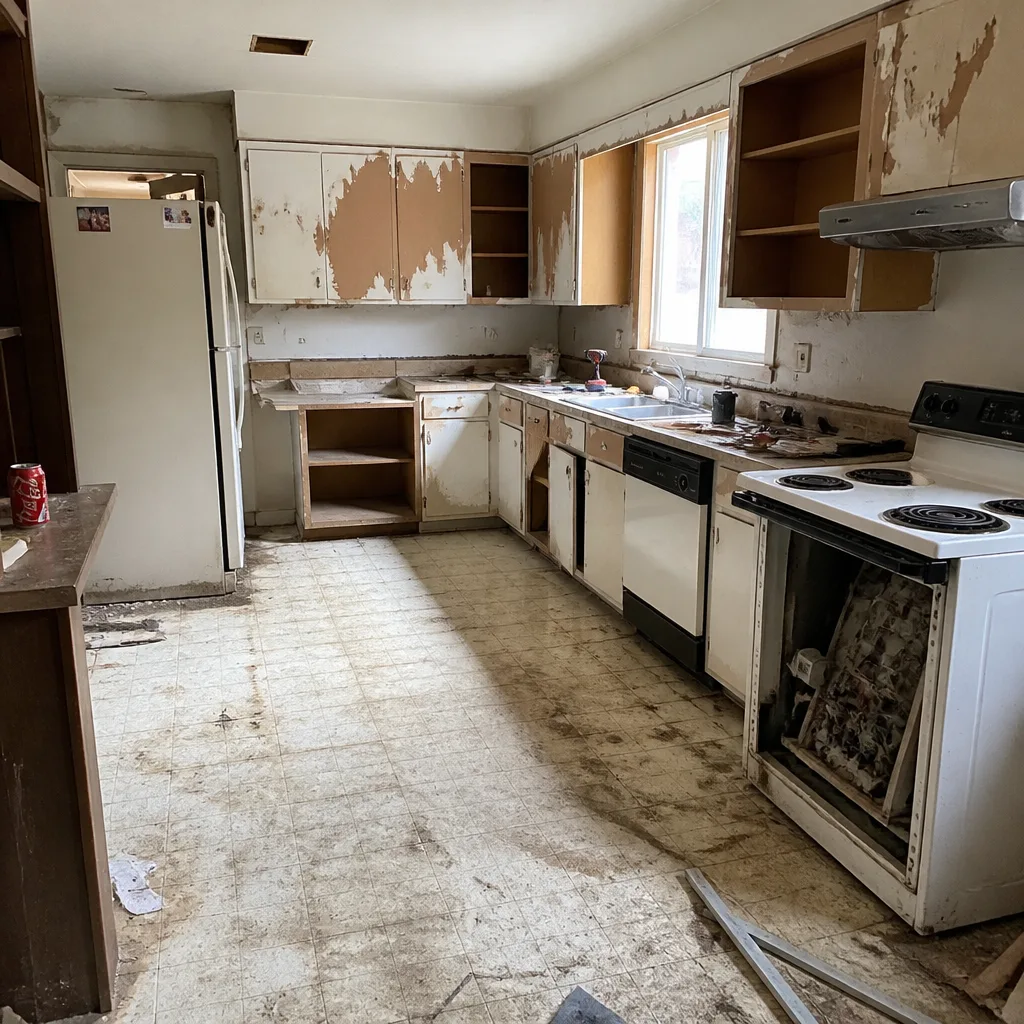 Before
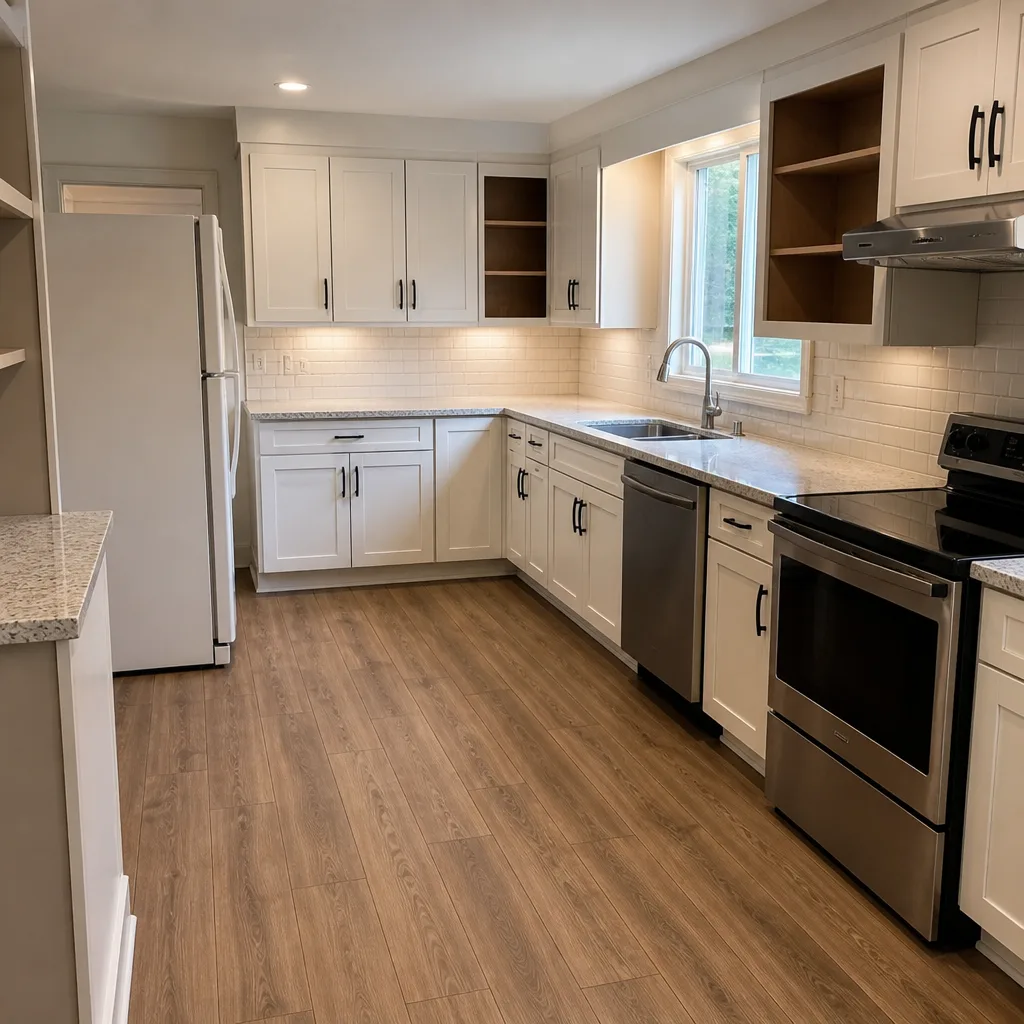 After
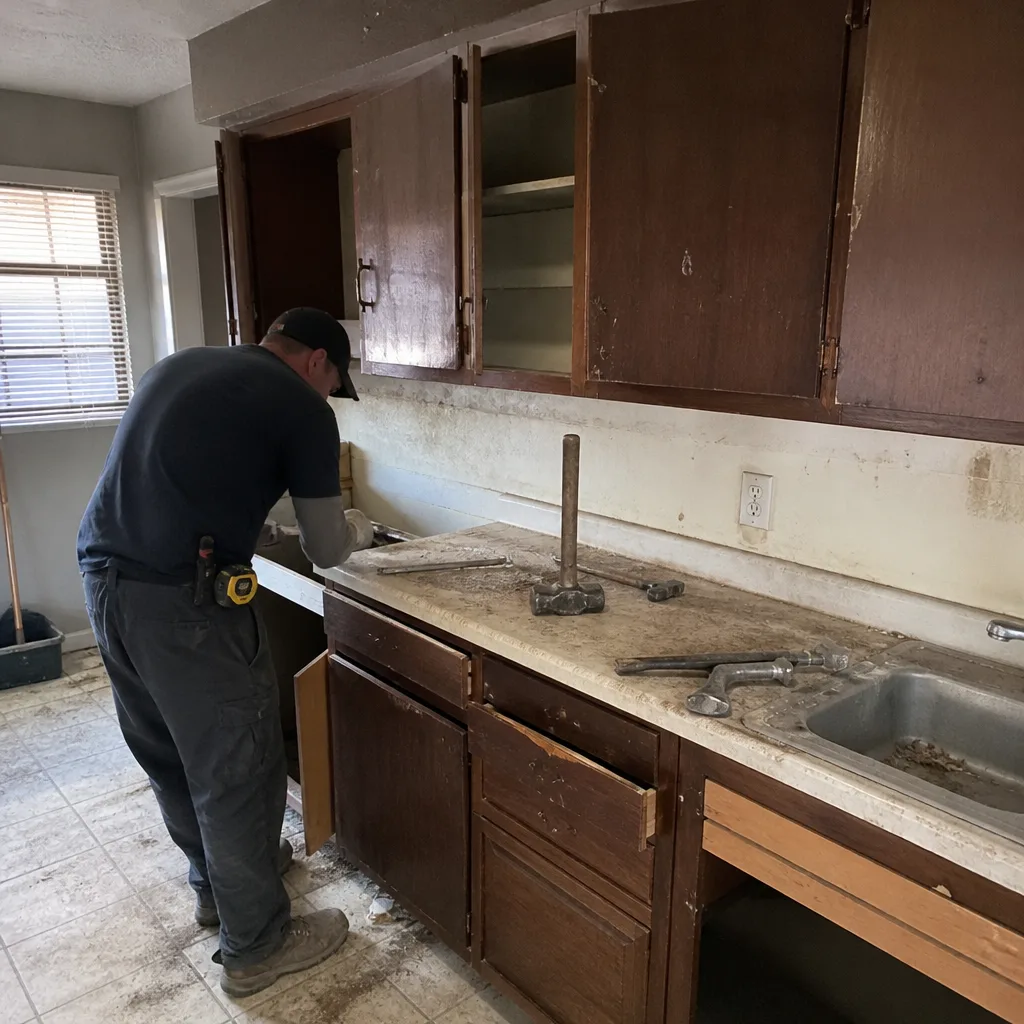 Before
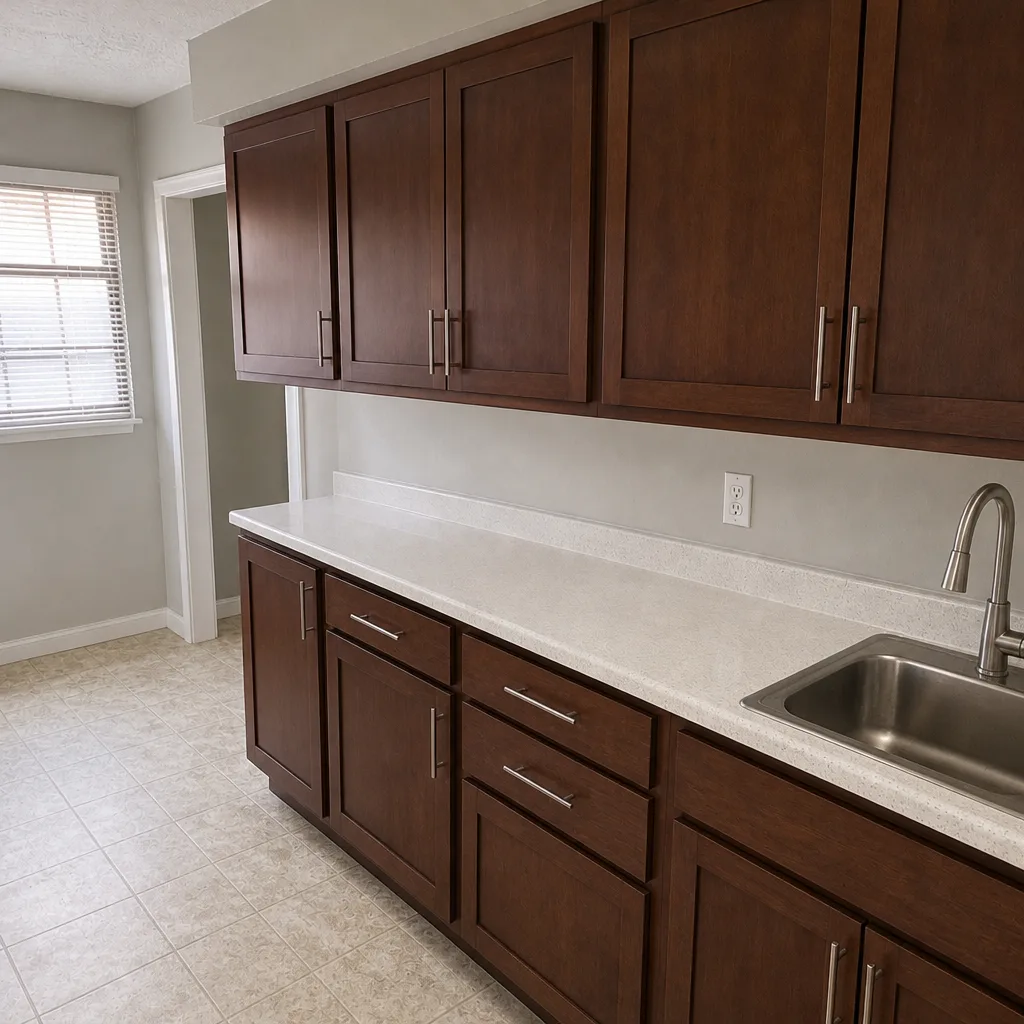 After
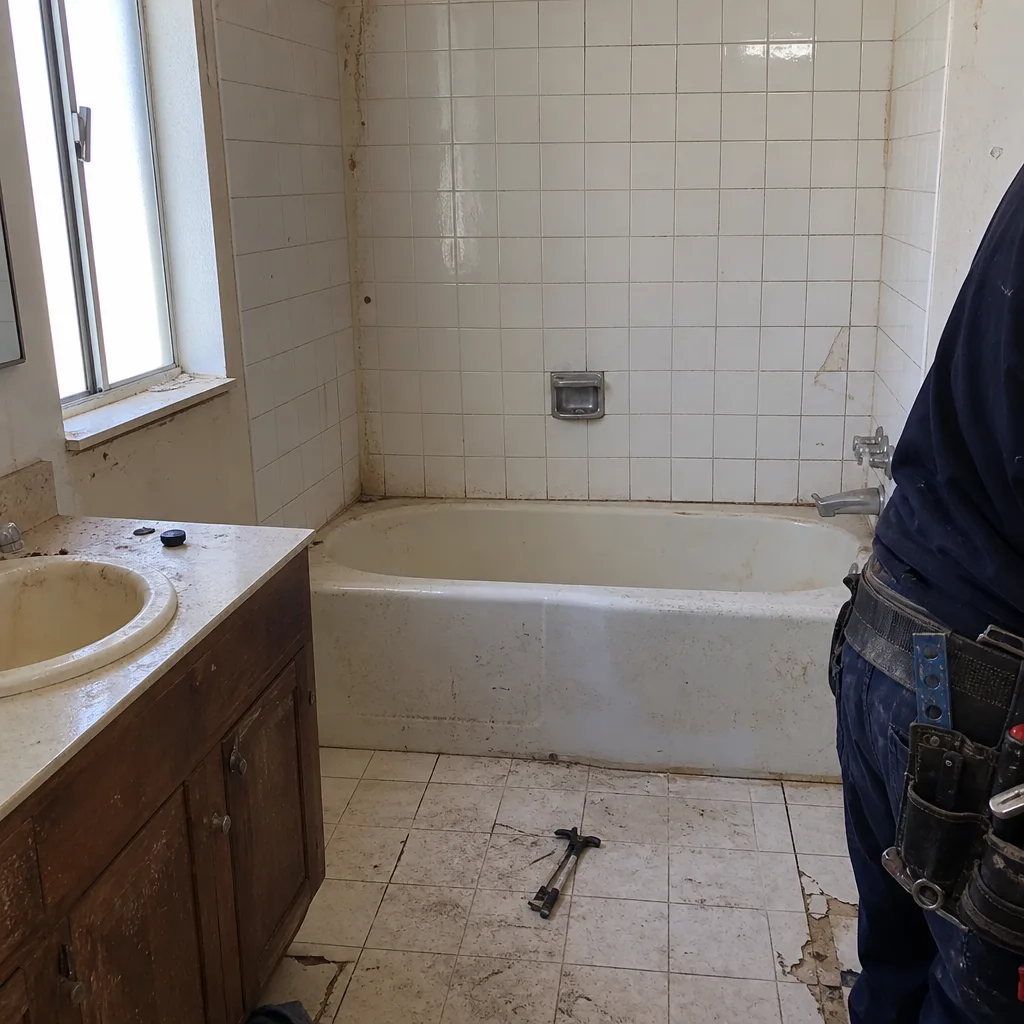 Before
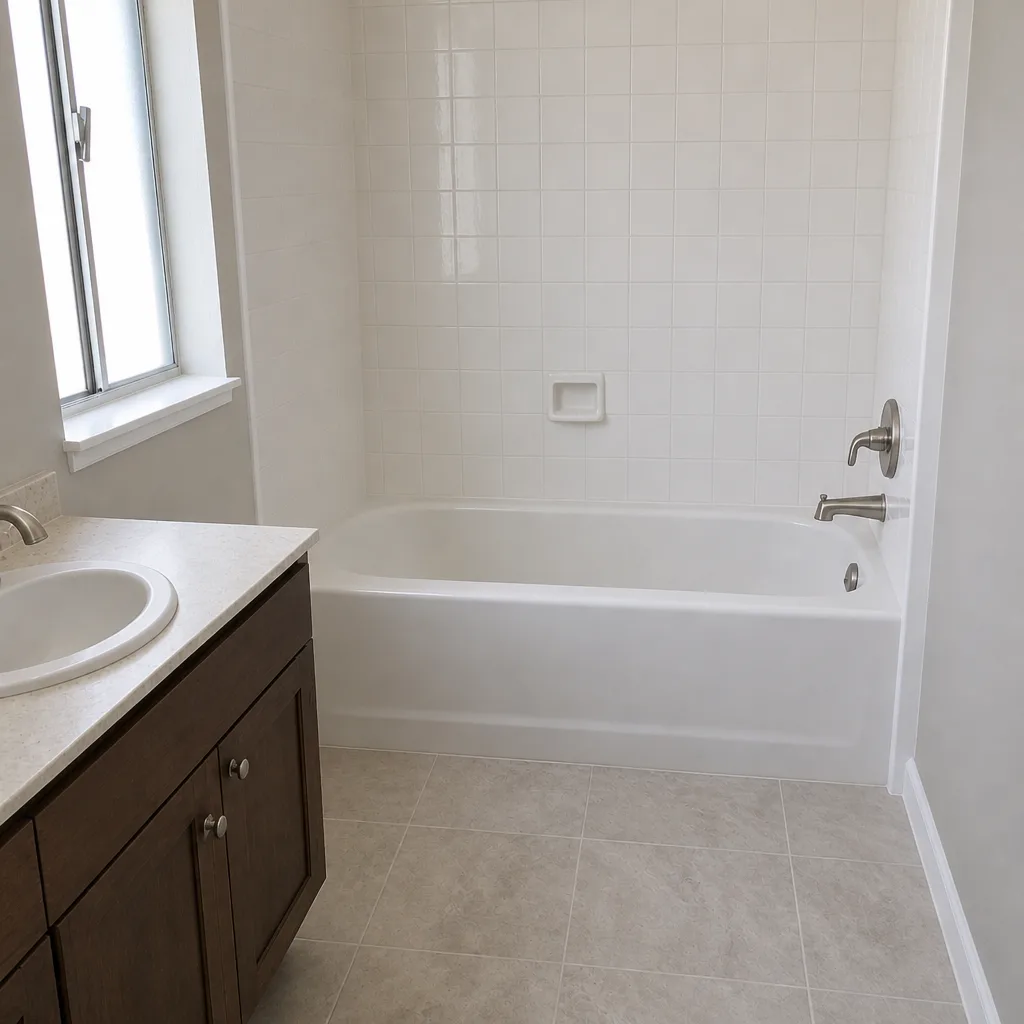 After
When to Call a Professional
Some problems are safe to sort out yourself with documentation and a phone call. Others aren’t. Call a licensed professional when the failure is in a concealed or high-voltage system: an electrical fault that isn’t a usage overload, a gas-line issue, a plumbing failure inside a wall or slab, or a structural concern like a compromised foundation or framing. These aren’t questions for a weekend fix, and poking at them yourself can turn a repair into a permit violation.
Call a lawyer or file with the Nevada State Contractors Board when the contractor has stopped responding in writing, when the work is abandoned mid-project, or when the dispute exceeds small claims. Call a building inspector when you have a genuine code violation with photos to back it up.
And when you want a second set of eyes on a project before you commit, Bradford Remodeling Mesquite offers free estimates in Mesquite. Call (844) 761-8665 and a live person answers, day or night, and we’ll walk through what a properly scoped, properly guaranteed project looks like. Bradford operates as part of the Garrison Partners family, established in 2004, with each location independently owned and operated and held to The Garrison Standard. Our technicians have up to 22 years of experience, every price is written before work starts, and every completed project carries the 365-Day Done Right Promise.
Frequently Asked Questions

A workmanship defect is a failure in how the work was done against the agreed scope. A code violation is a failure against the building code, independent of scope. The two overlap when a defect is also non-compliant, such as a covered-up foundation crack or unvented plumbing. Document with photos first, then ask the Mesquite building department whether the condition falls under their inspection authority before filing anything.
For workmanship or contract issues, file with the Nevada State Contractors Board, which handles licensing complaints and can require the licensee to respond. For code violations, contact the city building department. For money disputes, send a certified demand letter first, then file in small claims if the amount is under the court’s limit. Call us at (844) 761-8665 if you want to talk through which path fits your situation before you file.
A fair warranty should cover labor and material for workmanship defects for a defined period, with a stated process for filing a claim and a named contact. It should exclude homeowner misuse, damage from water intrusion or neglect, later work by others, and manufacturer defects, which run through the manufacturer. Bradford’s 365-Day Done Right Promise covers a full year after completion and returns at no charge if the work fails inside that window.
A single nail pop or short hairline crack near a corner is usually cosmetic and normal settling. Straight-line cracks along the seam between two boards indicate a taping or fastener problem, and if they recur in the same spot after repair, the underlying cause wasn’t fixed. Wide cracks radiating from corners, or cracks that keep widening, warrant a professional look.
Gurgling plus slow drainage on more than one fixture points to a vent problem, not a clog. The drain needs air behind it to flow; a vent blocked or incorrectly tied in during the rough-in will slow the whole branch. Snaking won’t fix it. Call a plumber for an inspection, and check whether the rough-in was signed off at the time of the remodel.
Yes. Bradford Remodeling Mesquite provides a written, line-item price before any work begins, and the number doesn’t move at the door. Call (844) 761-8665 for a free estimate, and you’ll have the scope and the guarantee in writing before you commit to anything.
The Bottom Line
Most remodeling problems go wrong because the homeowner pursues the wrong remedy. Match the problem to the category first: workmanship defects go to the warranty or contractor callback, code violations go to the building department, contract disputes go to a demand letter and then small claims. Document everything in writing, keep a photo record before walls close up, and read your warranty clauses before you ever need them. A written price, a written scope, and a written guarantee signed before the job starts prevent most of what we’ve described here. If you want to see how that paperwork looks in practice, or you’re planning a project in Mesquite, call Bradford Remodeling Mesquite at (844) 761-8665 for a free estimate.
Written by the team at Bradford Remodeling Mesquite.