
Last updated November 18, 2026





Free written scope consultation - allowances, timeline, and change-order rules on paper before a single trade is scheduled
Kitchen Remodeling Warning Signs Every Homeowner Should Know
A contractor who won’t give you a fixed price on demo day isn’t being flexible. He’s leaving himself an escape route. That’s not a business style; that’s a liability shift onto you. The expensive problems in a kitchen remodel rarely start on install week. They start in the first conversation, in the line items nobody explained, in the handshake that replaced a written number. We’ve watched homeowners in Mesquite sign contracts that looked fine and turn into eighteen-month disputes. This guide teaches you to read contractor behavior as a risk signal. Not just credentials on a website. Behavior, in writing, before you sign.
Quick Answer
The biggest warning signs in a kitchen remodeling contractor are a refusal to give fixed written pricing, pressure to start before permits are pulled, vague “unforeseen conditions” language that acts as a blank check, and invoices that arrive ahead of completed milestones. If any of those show up in the first conversation, treat it as a preview of how the whole job will run. A written price, a named contingency, and pullable permits are the three things you should never compromise on.
Styles & brands we work with
- Kitchen remodeling
- Bathroom remodeling
- Home additions & ADU
- Roofing
- Windows & doors
- Driveway & pavers
- Fence
Table of Contents
- Why a Contractor Who Won’t Fix the Price Is a Red Flag
- Legitimate Contingency vs. the Blank-Check Clause
- The Permit Problem: Why Starting Early Is the Highest-Risk Sign
- Mid-Project Warning Signs Homeowners Miss
- What a Real Change Order Looks Like vs. a Verbal “It’ll Cost a Little More”
- The Three-Question Script to Use Before You Sign
- Mesquite-Specific Risk Factors Nobody Warns You About
- Common Mistakes to Avoid
Why a Contractor Who Won’t Fix the Price Is a Red Flag
A fixed written price before demo day is the single most useful piece of paper in a kitchen remodel. When a contractor won’t produce one, the reason is almost never “the job is too complex to price.” It’s that a fixed number removes his ability to move the number later. That’s the escape route. Once your cabinets are off the wall and your family is eating off paper plates, you lose negotiating power. He knows it. You should too.
Here’s what a real fixed price includes and what a “ballpark” number leaves out:
- Demolition and haul-away – named, priced, with dumpster cost included.
- Rough-in adjustments – plumbing and electrical moves stated as allowances or fixed line items, not left to “as needed.”
- Cabinet and countertop specs – brand, model line, and material named. KraftMaid and Wellborn cabinets or Cambria and Caesarstone surfaces have published specs and manufacturer warranties. That traceability is the point.
- Fixture selection – Kohler and Moen fixtures priced with model numbers so substitutions can’t happen silently.
- Final clean and punch list – written as a deliverable, not a favor.
In Mesquite, we see bids that leave out cabinet removal from the price because the property sits on a slab and the contractor assumes “standard tear-out.” That’s not standard on every job, and it’s the kind of gap that turns into a surprise invoice. A written price eliminates the guessing. Our position is simple: a written price before any work starts, every time, non-negotiable. If a contractor in Mesquite hesitates on that, that’s your first warning sign.
Legitimate Contingency vs. the Blank-Check Clause
Contingency in a remodeling contract is normal. Drywall hides things. A wall might have old knob-and-tube wiring or a corroded supply line. What separates a legitimate contingency from a blank check is simple: a real contingency is named and capped in dollars. A blank check is language that lets the contractor charge you for anything and call it unforeseen.
Here’s the difference in plain terms:
- Legitimate: “Allowance of $1,200 for electrical rough-in. Any overage must be authorized in writing before work continues.”
- Legitimate: “Contingency line item of $2,500 for undocumented conditions behind the existing drywall. Capped, itemized, and reconciled at job close.”
- Blank check: “Additional costs may apply for unforeseen conditions.” No cap. No named scope. No process.
- Blank check: “Price subject to change based on material availability.” That’s a shell game with lumber and cabinet lead times.
Your contract should never contain the phrase “as needed” without a dollar amount next to it. If a contractor in Mesquite hands you a contract with three “as needed” clauses and no dollar figures, don’t sign it. Ask for named caps and a written change order process. If he won’t put a number on his own contingency, he’s pricing you by feel. That’s a red flag dressed up as flexibility.
The Permit Problem: Why Starting Early Is the Highest-Risk Sign
A contractor who pushes you to start before permits are pulled is showing you his highest-risk tell. Most homeowners worry about the inspection at the end. That’s the small concern. The bigger concern is your homeowner’s insurance. Unpermitted work during construction can void your coverage if something goes wrong. A fire during electrical rough-in, a water line failure during relocation, a slip-and-fall on a job site. Any of those events can turn into an uninsured claim if the work wasn’t permitted and inspected.
Why contractors push to start early:
- They want progress payments sooner. Cash flow. Their problem, not yours.
- They’re avoiding the permit process. Sometimes because of their own track record, sometimes because they’ve never pulled one in your jurisdiction.
- They’re trying to beat the material price calendar. Legitimate concern, but not one you should absorb.
Mesquite has its own permitting realities. Exterior changes, structural work, and most plumbing or electrical rough-in changes require a permit and inspections. You don’t need to memorize the code book. You do need to ask the contractor to name the permit office and the inspection schedule before signing. If the answer is “we’ll pull it once we start,” you’ve found your answer. Permits pulled and inspections passed belong in the written scope. In our experience, a contractor confident in the job welcomes the permit conversation because it forces discipline into the schedule.
Mid-Project Warning Signs Homeowners Miss
The early conversation is predictive, but the middle of the job is where most homeowners stop paying attention. Kitchen fatigue sets in around day twelve and continues for weeks. That’s when you’re most vulnerable to a job going sideways. Watch for these signals:
- Work stops without explanation. A day off is normal. Three days with no explanation means a schedule problem, a material problem, or a cash flow problem.
- Subcontractors arrive without the GC present. In some states, that’s normal. In any state, you should know exactly who is in your home and who is accountable for their work. Background-checked, uniformed technicians should be the standard, not the exception.
- Invoices arrive ahead of milestones. If you agreed to pay after cabinet installation and the invoice shows up after demolition, don’t pay. Payment tied to milestones is your leverage. Without it, you have none.
- The crew doesn’t clean up. At close of every day, the site should be walkable and safe. A contractor who leaves sawdust in your sink on Tuesday will leave a scrape in your countertop on the last day.
- Change orders appear after the work is done. More on this next.
We’ve seen kitchen remodels in Mesquite slow to a crawl during the August heat because the schedule had no insulation for crew fatigue. The sign isn’t heat. The sign is a GC who had no plan for it.
What a Real Change Order Looks Like vs. a Verbal “It’ll Cost a Little More”
A change order is written, signed, and priced before the change is performed. Full stop. A verbal “it’ll cost a little more” is how $1,400 disputes turn into small claims filings. The difference is not stylistic. It’s the difference between contract law and trust.
A legitimate change order includes:
- A description of the change in scope, in writing.
- A dollar amount, both the line item and the revised contract total.
- A schedule impact if any, in days.
- A signature from you, dated, before the work is performed.
Warning signs of a change order process going wrong:
- The change was already made before you saw a document.
- The change is documented only in a text message.
- The price appears on the next invoice with no prior conversation.
- You’re told “we’ll sort it out at the end.”
Where most remodelers ask you to trust them, that trust should be in writing. Ask for the change order template during the bid phase. If there isn’t one, that’s your answer. In Mesquite, where the housing stock ranges from newer builds to older single-story homes with quirks behind the drywall, the change order process is the pressure valve that keeps the job steady.
The Three-Question Script to Use Before You Sign
Before you sign any kitchen remodeling contract in Mesquite, ask these three questions. Word them exactly. The answer tells you more than any website or brochure.
- “Will you put a fixed written price in this contract before any work starts, including a named dollar cap on any contingency line item?” A yes with a document is your green light. A “sort of” or “we can talk about it” is your answer.
- “Who pulls the permits, and what’s the inspection schedule?” The answer should name the permit office and the inspection points. If the contractor says “you’ll handle that,” you’ve found the risk.
- “What exactly does your workmanship guarantee cover, for how long, and what happens if something fails?” The 365-Day Done Right Promise is exactly this: a written guarantee on every completed project for a full year; if the work fails inside that window, we return and correct it at no charge. Anything vaguer than “in writing, for this many days, on these scopes” is not a guarantee. It’s a wish.
Print the questions. Ask them in the same meeting as the estimate. The answers are your risk profile for the whole project.
Mesquite-Specific Risk Factors Nobody Warns You About
Desert climate and small-metro contractor markets combine into a specific set of risks in Mesquite. These differ from what you’d see in a coastal city or a dense urban remodel market.
- Summer heat and cabinet installation. Cabinet doors and drawers warp and bind when installed in late summer with no HVAC running. Reputable crews will bring temporary cooling or schedule accordingly. A GC who shrugs at that is going to have callback work on his hands.
- Drywall movement. Homes in Mesquite go through seasonal expansion and contraction cycles that show up as hairline cracks around cabinet edges if the substrate wasn’t prepped correctly. Substrate, plainly, is the surface the cabinet is actually attached to. If it flexes, the cabinet will eventually move.
- Small-Mesquite-contractor-market risk. Fewer licensed contractors means more pressure to take the first bid. That’s the opposite of what you should do. Line up three written bids, run the three-question script on every one.
- Insurance and code awareness. Unpermitted work matters more in smaller markets because resale disclosure rules and inspection standards differ. A future buyer’s inspector will find the work.
We regularly see bids from out-of-town contractors who underestimate Mesquite’s permitting timeline and then push the client to start before permits clear. That’s exactly the signal to walk away. For a broader look at how a by-the-book remodel runs from start to close, see our Kitchen Remodeling in Mesquite page, and if the project expands beyond the kitchen, our Bradford Remodeling Mesquite home covers the whole-home scope.
Common Mistakes to Avoid
- Choosing the lowest bid. A price that’s 20% under everyone else’s is either missing scope or about to grow with change orders. The lowest bid is almost never the lowest total.
- Signing before you see the contingency language. Get the contract in writing and read the contingency and change order clauses before you touch a pen.
- Letting the contractor handle permits with a handshake. Ask for the permit number and inspection schedule in writing. Confirm the work is permitted before the first tool comes out. In Mesquite, this matters for insurance as much as code compliance.
- Paying ahead of schedule. Tie every payment to a completed milestone. Cabinets installed and inspected is a milestone. Demolition finished is not.
- Skipping the background check on who’s walking in. Anybody on your job site should be background-checked and in uniform. Ask before you sign.
- Accepting verbal change orders. “It’ll be a bit more” is not a change order. It’s a future dispute.
- Not getting the workmanship guarantee in writing. A guarantee that isn’t written isn’t a guarantee. Confirm the exact term in days and what it covers before you sign.
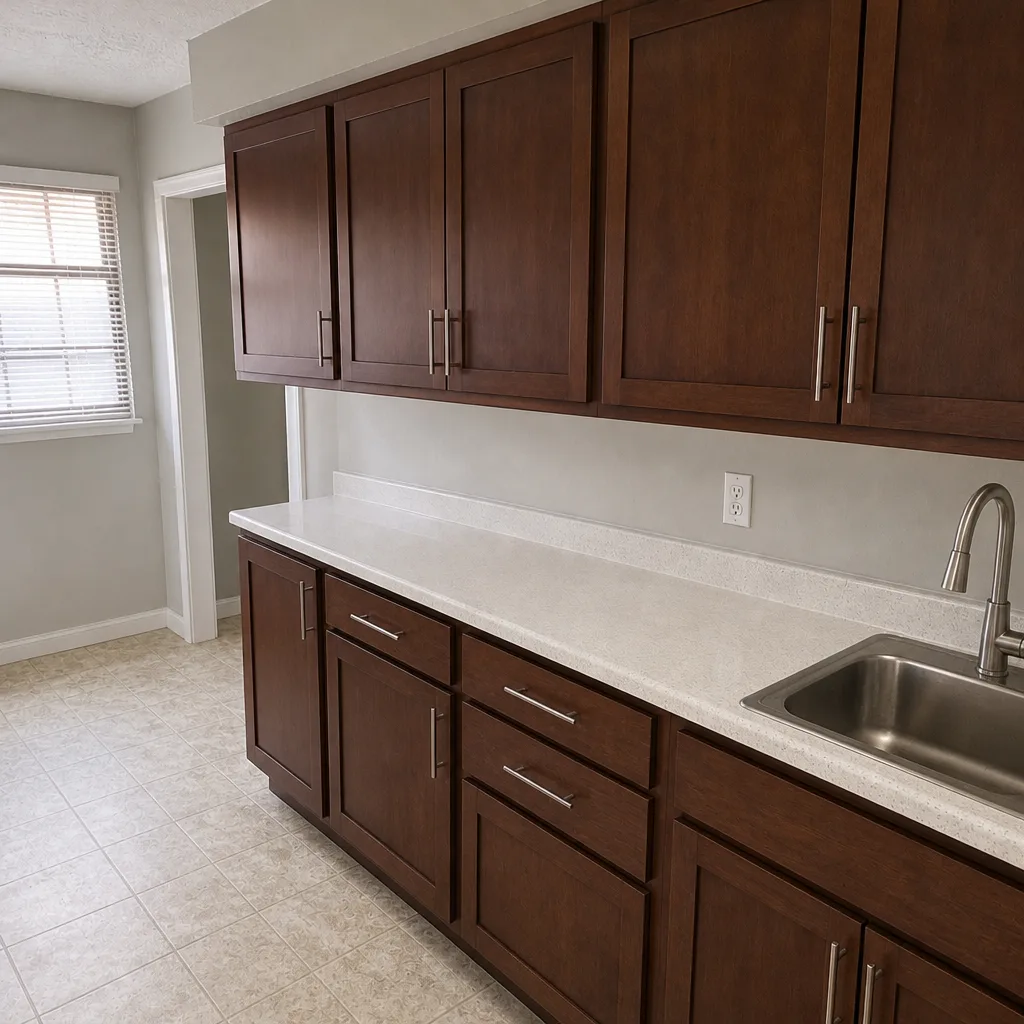
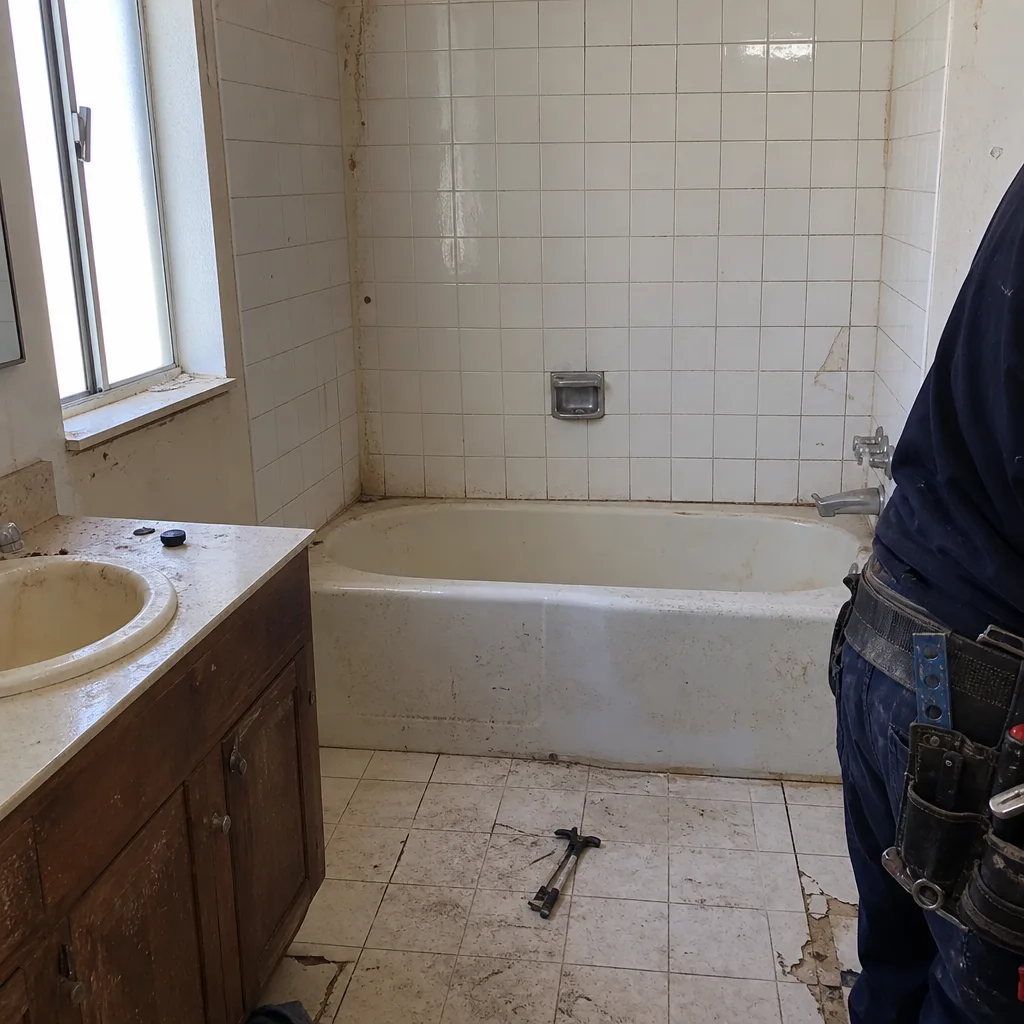
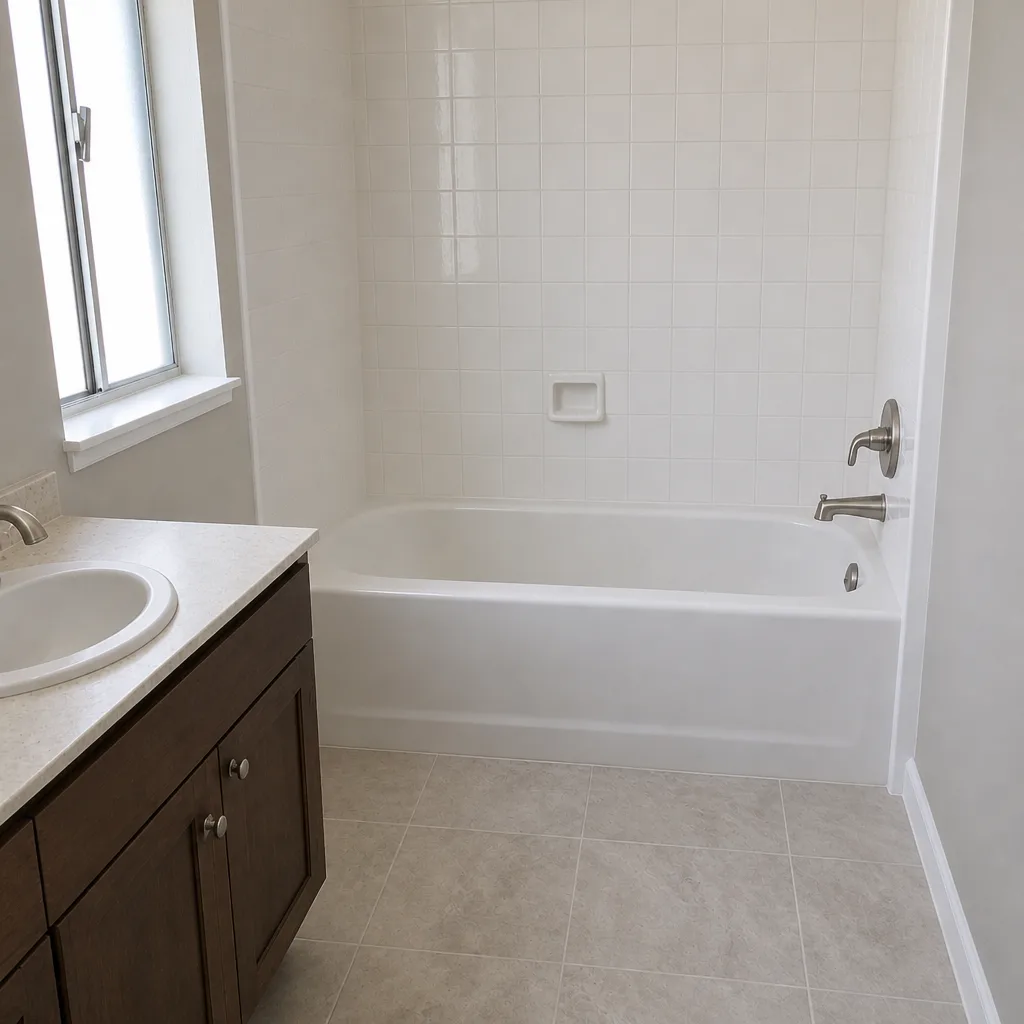
See the difference
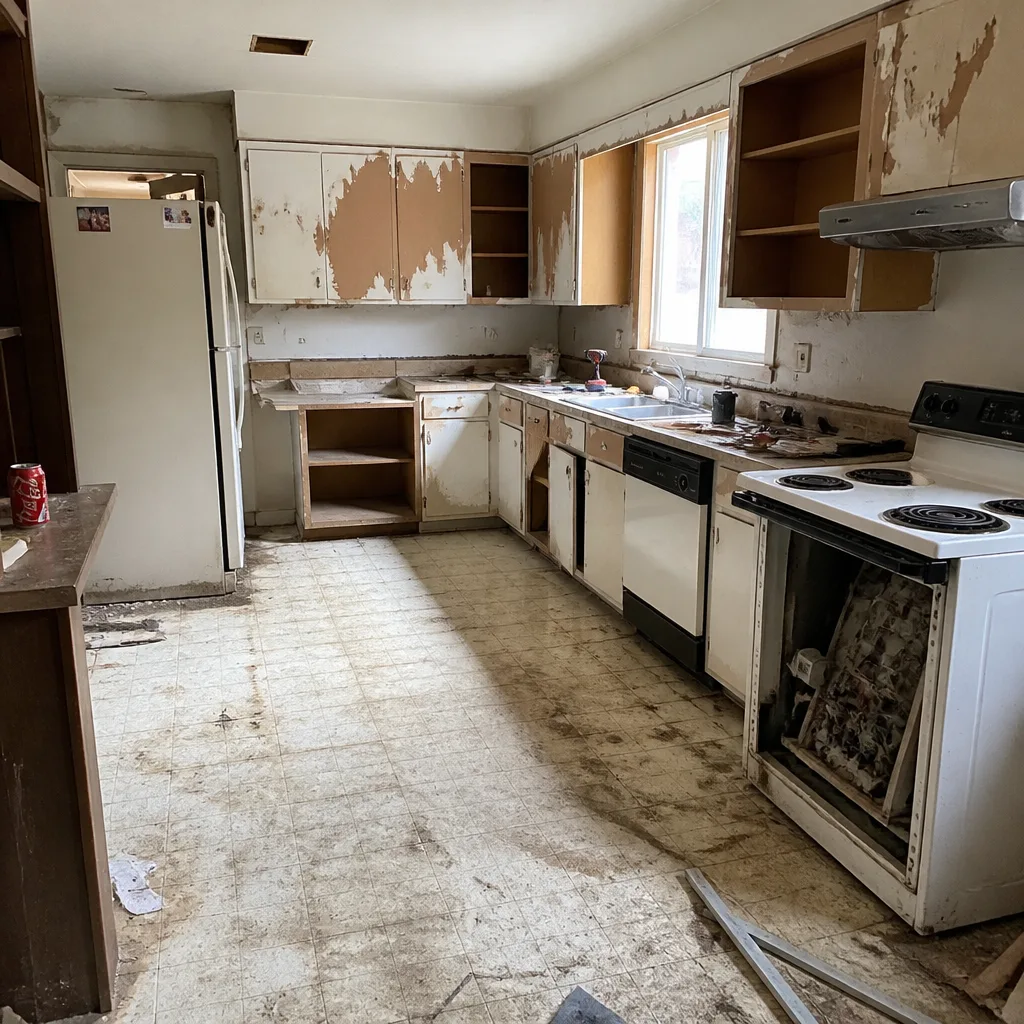 Before
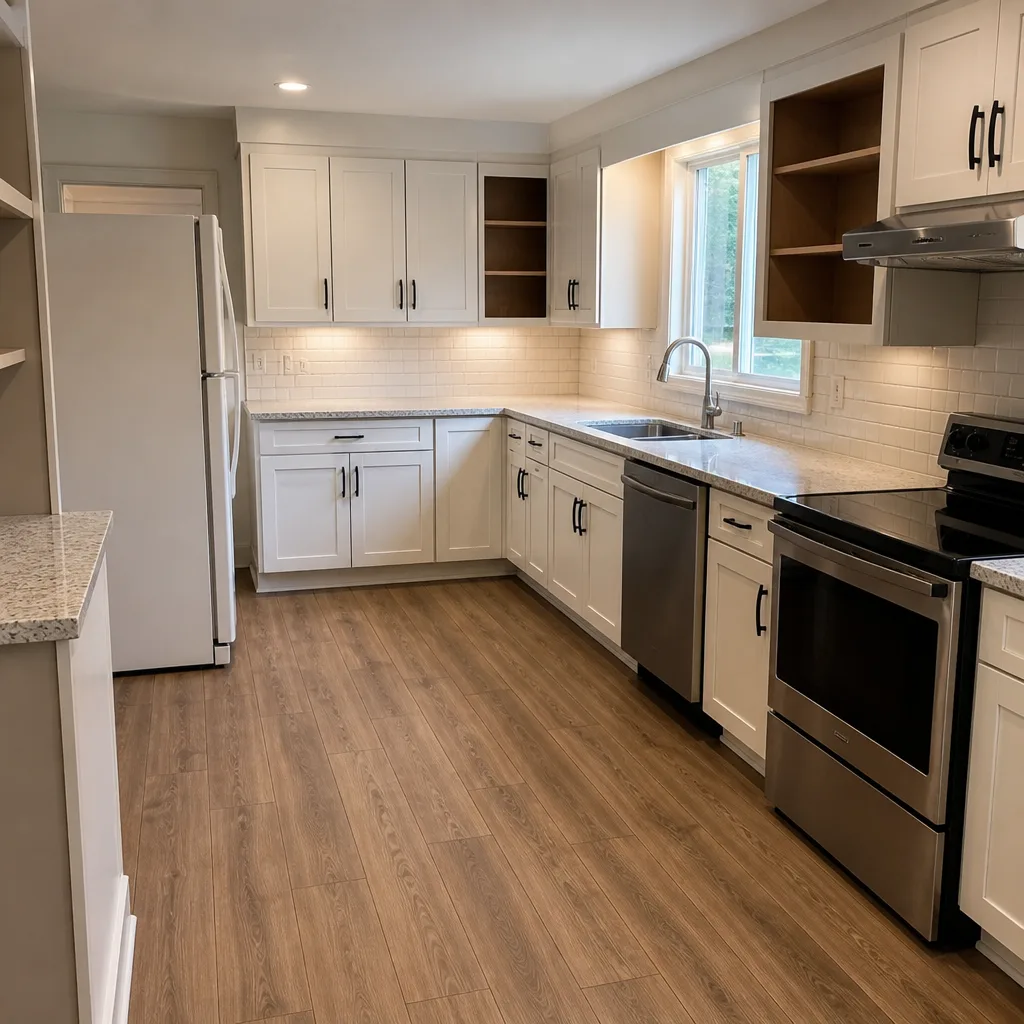 After
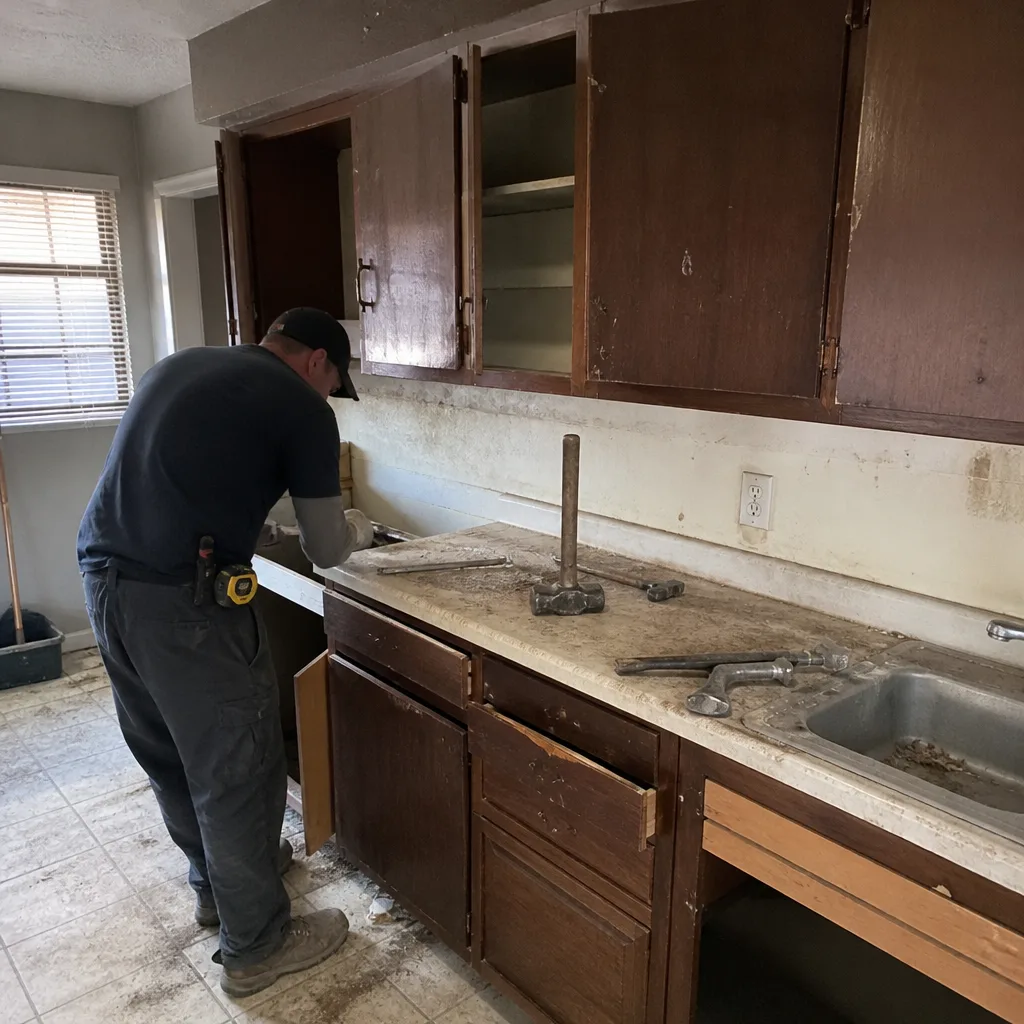 Before
 After
 Before
 After
When to Call a Professional
Call a professional the moment you see any of the following: a contractor who won’t put a fixed price in writing, one who pushes to start before permits are pulled, one who can’t produce a written change order process, or one who has already invoiced you ahead of an agreed milestone. These are not negotiation points. They’re disqualifiers. Kitchen remodeling touches plumbing, electrical, structure, and ventilation, often at the same time. The trades involved are not the place to gamble. If you’re pricing a Mesquite kitchen and want a written bid you can actually read along with a real guarantee and a live person answering the phone, Bradford Remodeling Mesquite offers free estimates in Mesquite – call (844) 761-8665. We’ll walk through a written price, the contingency structure, and the permit process in the same conversation.
Frequently Asked Questions

Yes. A fixed written price is the baseline commitment in any credible kitchen remodeling contract. A contractor who won’t put one in writing is reserving the right to move the number later, and that’s the single most common cause of post-signing disputes. Get a written price before demo day – or find another contractor. Call (844) 761-8665 for a free estimate with a written price in hand.
Yes, provided the contingency is named and capped in dollars. A line item like “contingency of $2,500 for undocumented wall conditions, itemized and reconciled at close” is normal and protects both parties. What you should never accept is vague language like “additional costs may apply for unforeseen conditions” with no cap and no process. Call (844) 761-8665 if you want a written contract reviewed in plain terms.
You risk having your homeowner’s insurance voided during the project, plus failed inspections later and problems at resale. Unpermitted work during construction is the highest-risk scenario in a kitchen remodel, and it’s the one most homeowners don’t see coming. The fix is straightforward: require permit numbers and inspection schedules in writing before work begins. Call (844) 761-8665 to talk through the permit process for your Mesquite kitchen.
A legitimate change order is written, signed, dated, and priced before the change is performed. It states the change in scope, the dollar amount, and any schedule impact. If the work is already done before you see a document, or if the change is captured only in a text message, it’s not a change order – it’s a dispute waiting to happen. Call (844) 761-8665 for a free estimate that includes a readable change order process.
Most Mesquite kitchen remodels land in a range that depends heavily on cabinet line, surface material, and whether plumbing or electrical is being relocated. Cabinet and counter material selection is the biggest swing factor, followed by fixture and appliance choices. We won’t quote a number without seeing the job and putting a written price in front of you. Call (844) 761-8665 to schedule your free estimate – you’ll get a written number, not a ballpark.
It covers a full year after project completion. If the work fails inside that window, we come back and correct it at no charge. No interpretation, no exclusions buried in a paragraph. It’s a written guarantee on every completed project. Ask for the terms in writing, whatever contractor you’re considering. Call (844) 761-8665 for a free estimate and we’ll walk you through the guarantee before you sign anything.
The Bottom Line
The most useful remodeling warning signs appear before demo, in the first conversation. A fixed written price, a named contingency, permits pulled and inspections scheduled, a real change order process, and a written workmanship guarantee covering a full year. If those five are in place, the job is well on its way to being squared away. If any one of them is missing, that missing piece is your risk, not theirs. Auditing the first conversation is the cheapest remodel work you’ll ever do. And when the project expands into a bathroom or a whole house, the same standard applies across the board. For a broader set of project types, see our General Contractor in Mesquite and Bathroom Remodeling in Mesquite pages – same discipline, same written price, same guarantee.
Bradford Remodeling Mesquite is a member of the Garrison Partners family, established in 2004, and independently owned and operated under The Garrison Standard. Our technicians have up to 22 years of experience, and every completed project carries the 365-Day Done Right Promise in writing. Live person answers the phone, 24/7. Call (844) 761-8665 to schedule your free estimate in Mesquite – you’ll get a written price, a clear scope, and a real guarantee before a single tool comes out.
Written by the team at Bradford Remodeling Mesquite.