Last updated November 18, 2026








Free written scope consultation - allowances, timeline, and change-order rules on paper before a single trade is scheduled
General Contractor Maintenance Schedule: What to Do and When
Your contractor’s one-year workmanship warranty starts the day they hand you the keys. Here’s the part nobody tells you: most of what that warranty covers won’t show up until month 10. By then, if you haven’t been documenting anything, you’re arguing from memory against a punch list that closed months ago. We’ve watched homeowners in Mesquite lose a legitimate claim over a failing shower pan because they had no dated photo of the crack when it was still a hairline. This guide is the owner’s manual your contractor should have handed you at close – what to check, when to check it, and how to tell a defect from ordinary wear in a desert climate.
Quick Answer
After a remodel, run a structured inspection at 30, 60, and 90 days, then shift to seasonal checks twice a year. In Mesquite’s desert climate, prioritize caulk joints, stucco and exterior cracks, and HVAC duct seals, which fail faster here than in temperate zones. Photograph and date everything so a warranty claim stays viable for the full year.
Styles & brands we work with
- Kitchen remodeling
- Bathroom remodeling
- Home additions & ADU
- Roofing
- Windows & doors
- Driveway & pavers
- Fence
Table of Contents
- The 30-60-90 Day Post-Completion Inspection
- Framing and Drywall: What Settling Looks Like and What It Doesn’t
- Tile and Plumbing: Catching the Slow Failures
- Why Mesquite’s Desert Climate Accelerates Certain Failures
- What to Document to Keep a Warranty Claim Viable
- Seasonal vs. Annual Maintenance by System
- Defect or Owner Maintenance? How to Tell
- When to Call a Professional
The 30-60-90 Day Post-Completion Inspection
New construction and remodels move. Materials expand and contract, framing dries out, sealants cure. The first 90 days are when the building tells you how it’s settling, and that’s exactly when you want eyes on it. Here’s the checklist by trade.
Day 30 – rough systems and structure.
- Walk every wall and ceiling in the remodeled area with a raking light (a flashlight held parallel to the surface). Look for hairline cracks at drywall seams and corners. Small shrinkage cracks are normal at 30 days.
- Open and close every door and window the crew installed or reframed. They should latch without forcing. Sticking now means the opening is out of square or the framing is still moving.
- Check under every sink for moisture. Run a dry paper towel along the supply lines and P-trap connections, then check the cabinet floor for new staining after a few days of use.
- Look at tile grout lines in the shower and floor. Any grout that’s already cracking or pulling away from the tile edge is worth a photo and a note.
Day 60 – finishes and mechanicals. Re-check those drywall seams. By now, real settling shows up as cracks wider than a hairline or cracks at door and window corners that keep growing. Test the HVAC: run the system and feel for air leaking at register seams and duct joints. Check caulk at tub and shower edges and around exterior windows.
Day 90 – the full sweep. Repeat the Day 30 list top to bottom. Anything you flagged at 30 and 60 that’s worse at 90 is a pattern, not a fluke, and it belongs in a written report to your contractor. For a broader list of what a finished project should look like at close, our General Contractor in Mesquite page walks through the handoff.
Framing and Drywall: What Settling Looks Like and What It Doesn’t
Every new wall settles. That’s not a defect. The question is how much and where. In our experience, a properly built wall shows small cosmetic cracks in the first year and then stops moving. A wall with a real framing problem keeps moving.
Normal settling:
- Hairline cracks shorter than a few inches at drywall seams
- Nail pops – small bumps where the fastener pushed through the paint
- Tiny cracks at inside corners where two walls meet
Worth a written report:
- Cracks wider than a credit card edge, or any crack that’s grown between inspections
- Diagonal cracks running from a door or window corner toward the ceiling
- Doors that latched fine at Day 30 and now bind or won’t close
- Visible bowing in a wall, or a floor that feels springy underfoot in a spot that was solid
Photograph nail pops and cracks with a tape measure or coin in frame for scale, and note the date. Those photos are your proof if the issue is still active at month 10.
Tile and Plumbing: Catching the Slow Failures
Tile and plumbing fail slowly, and by the time you see the damage, the cause is months old. Here’s what to check and when.
Tile checklist:
- Tap each floor tile with a knuckle. A hollow sound means the tile didn’t bond fully to the substrate (the surface it’s set on). Note any hollow tiles – they’ll eventually crack or loosen.
- Check grout at the shower floor and wall joints every 60 days for the first year. Grout that crumbles or pulls away leaves the substrate exposed to water.
- Look at the caulk line where tile meets the tub or shower pan. It should flex, not crack. Cracked caulk there is a water-intrusion path, not a cosmetic issue.
- Check the exterior edge of any tiled shower for efflorescence – a white, powdery staining that signals moisture moving through.
Plumbing checklist: Check under sinks monthly for the first six months. Watch for slow drains, a toilet that rocks at the base, or water staining on the ceiling below an upstairs bath. A toilet that rocks means a failed wax ring, and that’s a leak waiting to rot the subfloor. For bathroom-specific failure points, see our Bathroom Remodeling in Mesquite page. Anything that involves opening a wall to trace a leak is professional territory.
Why Mesquite’s Desert Climate Accelerates Certain Failures
Mesquite sits in the Virgin River valley at roughly 1,600 feet, and the swing between a July afternoon and a January night can run 40 degrees or more. That daily and seasonal movement stresses building materials in ways homeowners from coastal or temperate climates don’t expect. Three failure points come up again and again here.
Caulk joints. Exterior caulk around windows, doors, and stucco penetrations takes a beating from UV and heat. A joint that would last three years in a mild climate can dry, crack, and pull loose in Mesquite in 12 to 18 months. Check exterior caulk every spring and fall. Interior caulk at tubs and sinks dries out faster here too.
Stucco cracks. Stucco is rigid, and the ground under a house in Mesquite can shift as it dries and rehydrates seasonally. Hairline stucco cracks on exterior walls are common and usually cosmetic, but a crack that’s widened or shows staining is a path for water and needs sealing. Inspect exterior walls after the first hot stretch each spring.
HVAC duct seals. Attic ductwork in Mesquite reaches extreme temperatures. Mastic and foil tape at duct joints degrade faster under that heat, and a small seal failure bleeds cooled air into a 140-degree attic. Check duct joints at register boots and in the attic annually. If rooms cool unevenly, suspect a duct seal before you suspect the unit.
Hardscaping behaves the same way. Paver joints sand out faster under heat cycling, and we’ve seen Bradford Remodeling Mesquite home projects where a paver walk settled within two summers because the base wasn’t compacted against the local soil. Whether you use Techo-Bloc, Cambridge Pavers, or Oldcastle units, the base prep matters more than the surface brand.
What to Document to Keep a Warranty Claim Viable
A warranty is only as good as the paper behind it. When a problem surfaces at month 10, the contractor asks one question: when did this start, and what did you do about it? Here’s how to have an answer.
- Photograph everything with a date. Most phone cameras stamp the date automatically. If yours doesn’t, put a note in the photo or keep a plain notebook with dates. Photograph the issue next to something for scale – a coin, a tape measure, a hand.
- Keep a simple maintenance log. One page, running list: date, what you saw, what you did. This is the single most useful document you can hand your contractor.
- Save the closeout package. Written scope, signed written guarantee, product spec sheets and manufacturer warranties, and any inspection records. Store them together in one folder – physical or digital.
- Report issues in writing, not by phone. An email or text with a photo and date creates a record. A phone call doesn’t. Report the first sign of a pattern, not the catastrophe.
- Don’t DIY an issue that’s under warranty. If you try to fix a covered defect yourself and the fix fails, you’ve handed the contractor a reason to decline. Photograph it, report it, wait.
The 365-Day Done Right Promise works the same way: if the work fails inside the year, we return and correct it at no charge. The claim depends on a homeowner who kept the record. That written guarantee, and the written price behind it, is the whole point of The Garrison Standard – trust you can hold in your hand, not a promise you have to remember.
Seasonal vs. Annual Maintenance by System
Split your list into two buckets: things that need a check twice a year, and things that need one deep inspection annually. Here’s how we organize it.
Twice a year (spring and fall):
- Caulk at exterior windows, doors, and trim – inspect and re-caulk where cracked
- Stucco and exterior wall cracks – seal anything that’s widening or staining
- Caulk at interior tubs, showers, and sinks
- HVAC duct joints and register boots – check seals, look for air leaks
- Paver and hardscape joints – top off joint sand, check for settlement
Annually:
- Structural sweep – all drywall seams, door and window operation, floor feel
- Roofline inspection from the ground with binoculars: look for lifted or missing shingles, flashing gaps, granule loss. GAF and CertainTeed shingles have published lifespans, but the local sun and thermal cycling are the real clock.
- Tile and grout deep check in showers and wet areas
- Water heater and appliance shutoff valves – test that they turn, then turn them back
- Cabinetry hardware, drawers, and door alignment – especially in kitchens with KraftMaid or Wellborn boxes, where soft-close hinges need occasional adjustment
For kitchen-specific upkeep, our Kitchen Remodeling in Mesquite page covers the finish surfaces and fixtures that need the most attention.
Defect or Owner Maintenance? How to Tell
This is the question that decides whether you call the contractor or the handyman. The line isn’t always obvious, but a few rules of thumb help.
Likely a defect (contractor’s responsibility during warranty):
- A failure that appears within the first year with no owner action behind it – a shower pan that leaks, a tile that lifts, a door that never latched right
- The same failure recurring in the same spot after a repair
- Something installed against manufacturer spec – the spec sheet is your reference
- Water intrusion at a point the crew sealed or flashed
Likely owner maintenance:
- Caulk that dried and cracked because it wasn’t re-sealed on schedule
- Grout erosion from cleaning products or neglect in a wet area
- Paint fading or chalking from sun exposure
- Damage from a clogged gutter, a missed HVAC filter change, or a leak the homeowner didn’t report
The honest answer is sometimes “both.” If you’re unsure, send the dated photo and the log entry to your contractor and ask. A contractor working under a written guarantee should tell you plainly which side of the line it falls on. If a developing issue is under warranty, don’t wait for month 11 to report it.
Common Mistakes to Avoid
- Waiting until something breaks to inspect. The 30-60-90 window exists so you catch a pattern while it’s still small. A crack you photograph at Day 60 is evidence; the same crack at month 10 is an argument.
- Skipping exterior caulk because “it looks fine.” In Mesquite’s heat, exterior caulk fails from the inside out. By the time it looks bad, water’s been getting in.
- Letting a small grout crack sit through a shower season. One cracked grout joint in a shower floor is a direct path to the substrate. It’s the cheapest repair on this list and the most expensive to skip.
- Fixing a covered issue yourself. A homeowner repair on warranty work gives the contractor a reason to decline. Report first, fix later.
- Keeping maintenance records in your head. Memory doesn’t hold a date. A one-page log and dated photos do.
- Ignoring a toilet that rocks or a door that binds. Both are early signals – a failed wax ring or a moving frame – that get expensive if ignored through a summer.
- Assuming desert means low maintenance. Low rain doesn’t mean low stress. UV, heat cycling, and seasonal soil movement keep exterior systems working harder here than in mild climates.
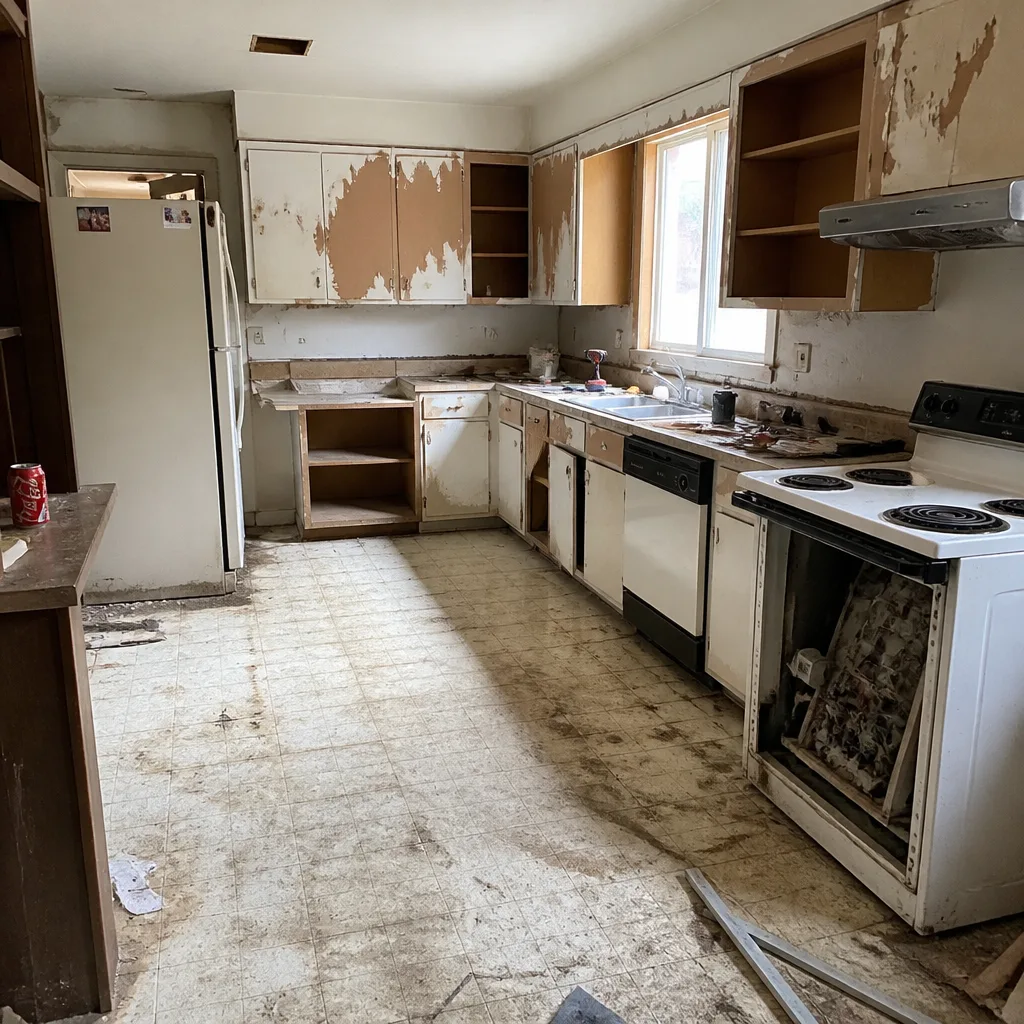
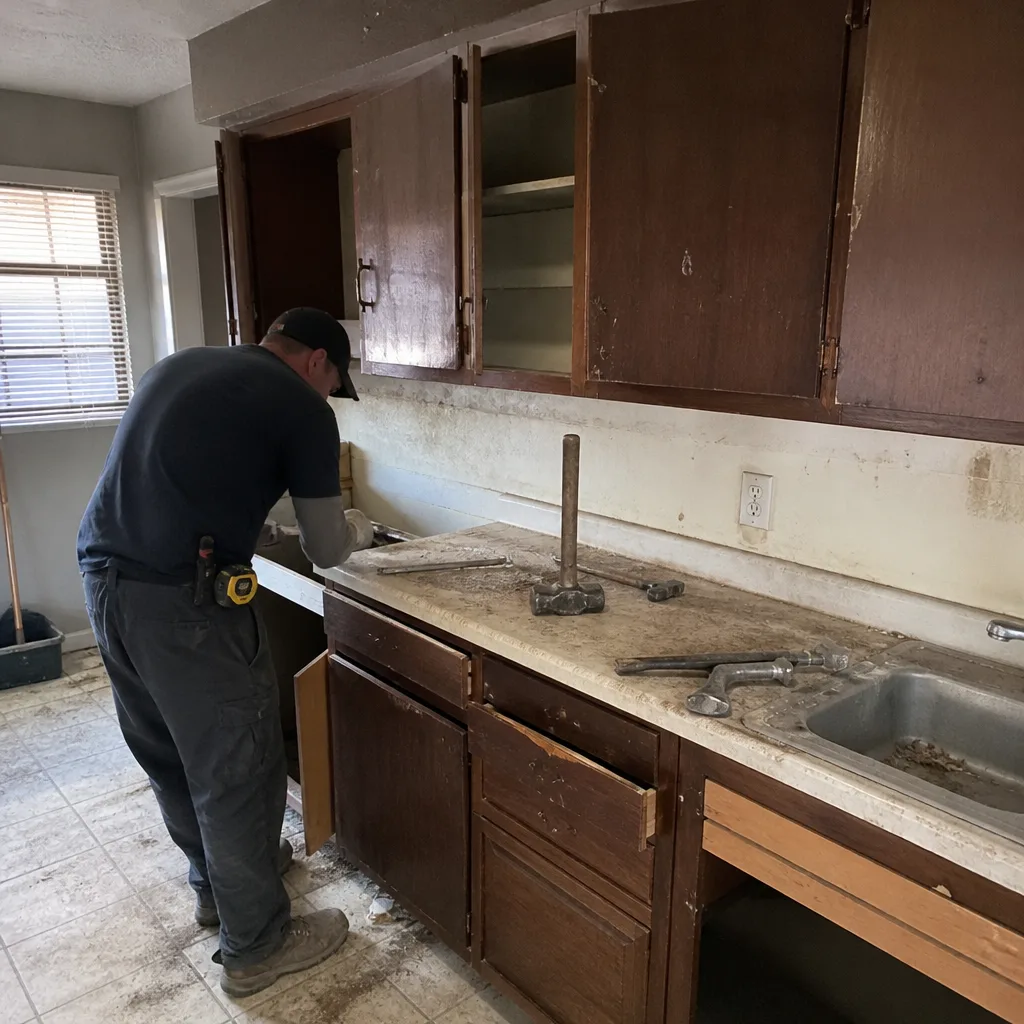
See the difference
 Before
 After
 Before
 After
 Before
 After
When to Call a Professional
Some of this schedule is homeowner work: photographing, caulking, changing filters. Some of it isn’t. Call a professional for anything involving water inside a wall, a shower pan that leaks, a crack that keeps growing, a duct seal you can’t reach safely, or a roofline issue you can’t inspect from the ground. Gas lines, electrical panel work, and structural repairs are always professional territory – don’t test them yourself. If a developing issue might be a defect still under your contractor’s guarantee, report it in writing first, then bring in the trade. Bradford Remodeling Mesquite gives free estimates in Mesquite and can walk your list with you. Call (844) 761-8665.
Frequently Asked Questions

Thirty days after completion is the right first checkpoint. By then, framing has dried and settled, sealants have cured, and early movement shows up as hairline cracks and sticking doors. The 30-day inspection catches the small stuff before it becomes a warranty argument.
One year is the common standard. Bradford Remodeling backs every completed project with the 365-Day Done Right Promise: if the work fails inside that year, we return and correct it at no charge. The key is documenting issues as they appear, because a claim depends on a dated record.
Yes. The heat and the day-to-night temperature swing in Mesquite stress exterior caulk, stucco, and HVAC duct seals faster than in temperate climates. Exterior caulk that might last three years elsewhere can fail in 12 to 18 months here, so plan on spring and fall exterior checks.
Photograph the issue with a date, next to something for scale, and keep a written log of when you first saw it and what you did. Also keep your closeout package: written scope, signed guarantee, and product spec sheets. That record is what makes a claim defensible later.
Caulking, filter changes, and photo documentation are reasonable homeowner work. Anything involving water inside a wall, a shower pan, a growing structural crack, electrical, gas, or an unreachable duct or roofline issue should go to a professional. When in doubt, report the issue to your contractor first if it’s under warranty.
If it’s a workmanship defect still inside the warranty window, yes – that’s exactly what the guarantee covers. The catch is that you have to report it in writing with dates before the window closes. A dated photo and log entry at month 10 beats a phone call at month 13.
The Bottom Line
A completed remodel is a handoff, not a finish line. The work your general contractor leaves behind – framing, plumbing, electrical, roofline – needs a schedule, and in Mesquite’s desert climate it needs one tuned to heat cycling, UV, and seasonal ground movement. Run the 30-60-90 inspections, photograph and date everything, split your list into spring/fall exterior checks and an annual structural sweep, and report any developing issue in writing while the warranty is still live. Do that, and a year from now you’ll have a record instead of a repair bill. Bradford Remodeling Mesquite gives free estimates and puts every price in writing before work starts: call (844) 761-8665.
Written by the team at Bradford Remodeling Mesquite.