Last updated November 18, 2026








Free written scope consultation - allowances, timeline, and change-order rules on paper before a single trade is scheduled
General Contractor Warning Signs Every Homeowner Should Know
By the time a contractor ghosts you, you’ve already missed five earlier warning signs, and most of them were in the paperwork, not the construction. The bid that never quite named a material. The deposit that ate 40% of the total before a single wall came down. The subcontractor whose name never made it onto the contract. None of those feel like emergencies at the time. They feel like normal friction, so you sign, and then you’re three weeks in with half your money spent and a schedule that keeps sliding. This guide walks through the signals we watch for on jobs around Mesquite, NV, so you can catch them before demo day instead of after.
Quick Answer
The warning signs of a bad contractor usually show up in writing before they show up on the job site. A vague scope of work, a front-loaded payment schedule, a refusal to name subcontractors on the contract, and a permit history that doesn’t match what they tell you are all stronger indicators than a high price. If you see two or more of these together, slow down and get a written, line-item bid from someone else before you sign anything.
Styles & brands we work with
- Kitchen remodeling
- Bathroom remodeling
- Home additions & ADU
- Roofing
- Windows & doors
- Driveway & pavers
- Fence
Table of Contents
- Why a vague scope of work is a bigger red flag than a high price
- Draw schedule red flags: front-loaded payments
- The permit pull test: verifying a permit actually exists
- Subcontractor signals: who’s actually doing the work
- Reading Nevada State Contractors Board complaint history
- Communication patterns that predict a job going sideways
- Material specifications and the brands behind them
- The close-out punch list and the written guarantee
Why a Vague Scope of Work Is a Bigger Red Flag Than a High Price
A high bid tells you the contractor knows what the job costs. A vague bid tells you they don’t, which means the number is going to move later. When a homeowner in Mesquite hands us a competing bid and asks why ours is higher, the useful comparison isn’t the bottom line. It’s what’s written above it. If the other bid says “install new flooring per plan” with no square footage, no substrate prep, no baseboard detail, and no brand, that’s not a bid. That’s a placeholder.
Here’s how to read a bid line by line and spot what’s missing:
- Look for quantities. Every line should state a measurement: square feet of tile, linear feet of cabinetry, count of fixtures. No quantity means no fixed price.
- Check for named materials. A line that says “premium cabinets” is an empty promise. A line that says KraftMaid or Wellborn with a door style and finish is traceable. Same for Cambria or Caesarstone surfaces, Kohler or Moen fixtures.
- Find the prep work. Demolition, hauling, substrate repair, and wall patching should appear as separate lines or be explicitly included. Missing prep is the most common source of change orders.
- Confirm what’s excluded. A good bid states what it does not cover. Exclusions are fine; silent gaps are not.
- Ask for the price in writing before work starts. A number that only lives in a text message isn’t a commitment.
Specificity is the whole game. When our team writes a bid, every line is meant to survive being read out loud a month later without a homeowner asking “what does that mean?”
Draw Schedule Red Flags: Front-Loaded Payments
Payment schedules are where most homeowners get financially exposed, and almost nobody reads them carefully before signing. A front-loaded schedule asks for a large deposit before any material arrives, then keeps the next payment just ahead of the work. By the time a job is 30% complete, you’ve already paid 60%. That’s how a homeowner ends up underwater on a project that stalls.
What a fair draw schedule looks like on a Mesquite kitchen or whole-home remodel:
- Deposit: modest, tied to material ordering, not to the contractor’s working capital.
- Rough-in payment: due after framing, electrical, and plumbing rough-in pass inspection, not before.
- Mid-job draw: tied to visible milestones like drywall hung and finished, or cabinetry set.
- Final payment: held until punch list is cleared and you have a signed written guarantee in hand.
Ask this question before you sign: “If the work stops today, how much of my money is gone versus how much value is in my house?” If the answer makes you uncomfortable, the schedule is wrong. In Mesquite, where summer heat pushes crews to early morning starts and slows exterior work in July and August, we’ve seen bad schedules blamed on weather when the real problem was money already spent. A written price and a milestone-based draw schedule keep that from happening.
The Permit Pull Test: Verifying a Permit Actually Exists
Anyone can say “we’ll pull permits.” Verifying it takes about ten minutes and no special access. Before demolition begins, ask your contractor for the permit number and the name attached to it. Then check it against the local building authority’s records.
- Request the permit number in writing as part of your contract, before any work starts.
- Verify the license number on the permit matches the contractor’s license, not a borrowed one.
- Confirm the scope on the permit matches the scope on your contract. Structural, electrical, plumbing, and gas work should all be reflected.
- Ask for the inspection schedule so you know when rough-in and final inspections are due.
- Keep a copy of the approved permit and the final inspection sign-off in your project file.
In our experience, a contractor who hesitates on any of those five steps is telling you something. Permits protect you, not just the contractor. Unpermitted work can follow the house for years, complicating resale and, in some cases, invalidating insurance claims. Structural work without a permit is a serious issue, and so is electrical or gas work. If a contractor offers to skip the permit “to save time,” that’s the conversation to end politely and quickly.
Subcontractor Signals: Who’s Actually Doing the Work
A general contractor coordinates trades. That’s the job. Plumbers, electricians, tile setters, cabinet installers, drywall crews: the GC manages all of them. Which means the subs are a huge part of your project’s quality, and you should know who they are before they show up.
Signals that a GC’s sub coverage is thin or unverified:
- The GC can’t name the subs on your project when you ask directly.
- Sub names are never written into the contract or the schedule.
- The GC describes subs as “my guys” but won’t specify whether those people are employees, licensed subs, or day labor.
- Subcontractor certificates of insurance are never offered, only promised.
- Trade licenses for specialized work (electrical, plumbing) can’t be produced on request.
The best practice is simple: ask for the sub list in writing, and ask for proof of insurance from each trade doing licensed work. Every trade name should be traceable, every certificate on file before that trade shows up. Newer subdivisions around Mesquite have seen steady remodeling activity, and the crews working there change often. Getting the names in writing protects you if something goes wrong and someone gets hurt on your property. For a bigger overview of how a by-the-book General Contractor in Mesquite handles sub coordination, that page walks through the sequencing.
Reading Nevada State Contractors Board Complaint History
Nevada keeps complaint records on licensed contractors, and they’re public. Going to the Nevada State Contractors Board website and looking up a license number takes a few minutes. What you find is more useful than whether the license is active.
How to read the history:
- Check license status first. Active, in good standing, with the correct classification for your scope of work.
- Read the complaint record, not just the count. A single complaint from five years ago on a job type that doesn’t match yours is different from a pattern of complaints in the same category.
- Look at “resolved” complaints carefully. A resolved complaint means the issue closed, not that it ended well for the homeowner. Read what the resolution was.
- Note the complaint type. Non-payment to subs, abandonment mid-job, and workmanship failures tell you different things about risk.
- Cross-check dates against what the contractor told you. If a contractor claims a clean record but the board shows otherwise, that’s your answer.
We recommend this lookup on every contractor you consider, including us. A contractor with nothing to hide will not mind you asking.
Communication Patterns That Predict a Job Going Sideways
The way a contractor answers the phone during the bid phase usually predicts how they’ll answer during the job. If scheduling the estimate takes four voicemails and the follow-up is a text three days later, expect that rhythm to continue once the work starts. The warning signs show up early, in how the conversation runs.
- Nobody answers, ever. Voicemail rolls straight to a callback queue that never calls back.
- Text-only communication. Fine for quick updates, but not for scope changes or price adjustments.
- Verbal answers to written questions. If you ask for something in writing and get a phone call instead, that’s a sign.
- Vague schedule commitments. “Sometime in the next few weeks” is not a schedule.
The other pattern worth flagging: the contractor who shows up at your door asking for the next draw before the milestone is done. For homeowners in Mesquite who’ve been burned before, one live person answering the phone 24 hours a day, and a written scope document updated whenever anything changes, is the difference between a job that runs and one that drifts.
Material Specifications and the Brands Behind Them
“Builder-grade” sounds fine until you’re three years in and the cabinet doors are sagging. Material specification is one of the most neglected parts of a bid, and also one of the easiest to verify. Ask for brand names and model lines on every material line, then look them up. Reputable manufacturers publish specs and warranties; that documentation is what backs the contractor’s own guarantee later.
On kitchen work, cabinetry and countertop are the biggest line items. KraftMaid and Wellborn both publish door style and finish warranties; Cambria and Caesarstone publish surface warranties; Kohler and Moen publish fixture warranties. On exterior work, GAF, James Hardie, and Therma-Tru all publish manufacturer documentation that stands on its own. On railing and fencing, brands like Ameristar and ActiveYards have spec sheets worth reviewing. If a bid lists a material with no brand, that’s not specification. That’s a guess.
For a deeper dive on how cabinetry and surface brands shape a project, the Kitchen Remodeling in Mesquite page covers the material overlay that we use, and the Bathroom Remodeling in Mesquite page walks through fixture and waterproofing requirements.
The Close-Out Punch List and the Written Guarantee
The end of a job is where most of the friction lives. This is where a contractor who’s been fine for six weeks suddenly gets slow, and where a homeowner discovers that “we’ll come back for that” never actually means anything. The test is simple: at close-out, do you have a written punch list, a signed guarantee, and a clear understanding of what’s covered?
- Walk the job room by room with the contractor and write down every incomplete item.
- Set a specific completion date for each punch list item in the document.
- Receive the written guarantee before the final payment is released.
- Verify the site is clean and all debris hauled away.
- Keep the guarantee in a safe place alongside your contract, permit, and final inspection sign-off.
The guarantee term matters. Some contractors advertise workmanship warranties but hand you nothing in writing. Others hand you something with a six-month term. Our 365-Day Done Right Promise is a full written year on every completed project. If a repair or remodel fails inside that window, we return and correct the work at no charge. That’s the standard we work to on every Bradford Remodeling Mesquite home project, and it’s the standard every Garrison Partners location is held to. It’s also the term we put in writing before a single tool comes out.
Common Mistakes to Avoid
- Signing on price alone. A low bid on a vague scope is not a low bid; it’s an unknown. Compare the line items, not the totals.
- Accepting a verbal “good enough” contract. If the scope, schedule, and draw schedule aren’t written and signed, they’re not real.
- Paying too much up front. A large deposit before materials are ordered puts you at risk. Tie every payment to a completed milestone.
- Skipping the permit verification. Never start a structural, electrical, plumbing, or gas job without a permit pulled under the contractor’s license.
- Not asking for subcontractor insurance. Every licensed trade on your project needs a certificate of insurance on file before they show up.
- Trusting one follow-up on the punch list. Set completion dates for every item in writing, and don’t release the final payment until the list clears.
- Ignoring desert-climate specifications. Mesquite summers push materials harder than most of Nevada. Roofing, exterior paint, and HVAC specs matter more here than in milder climates; ask for the spec that accounts for it.
See the difference
 Before
 After
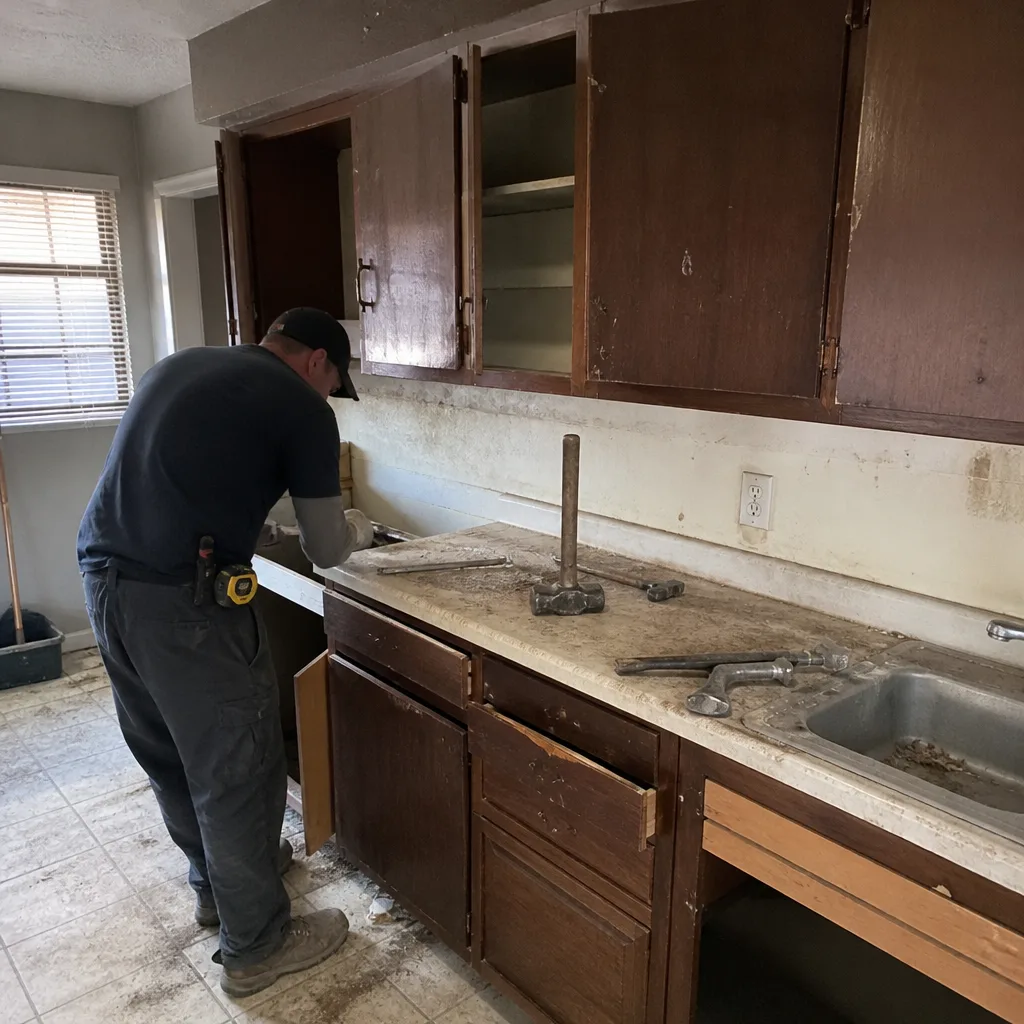 Before
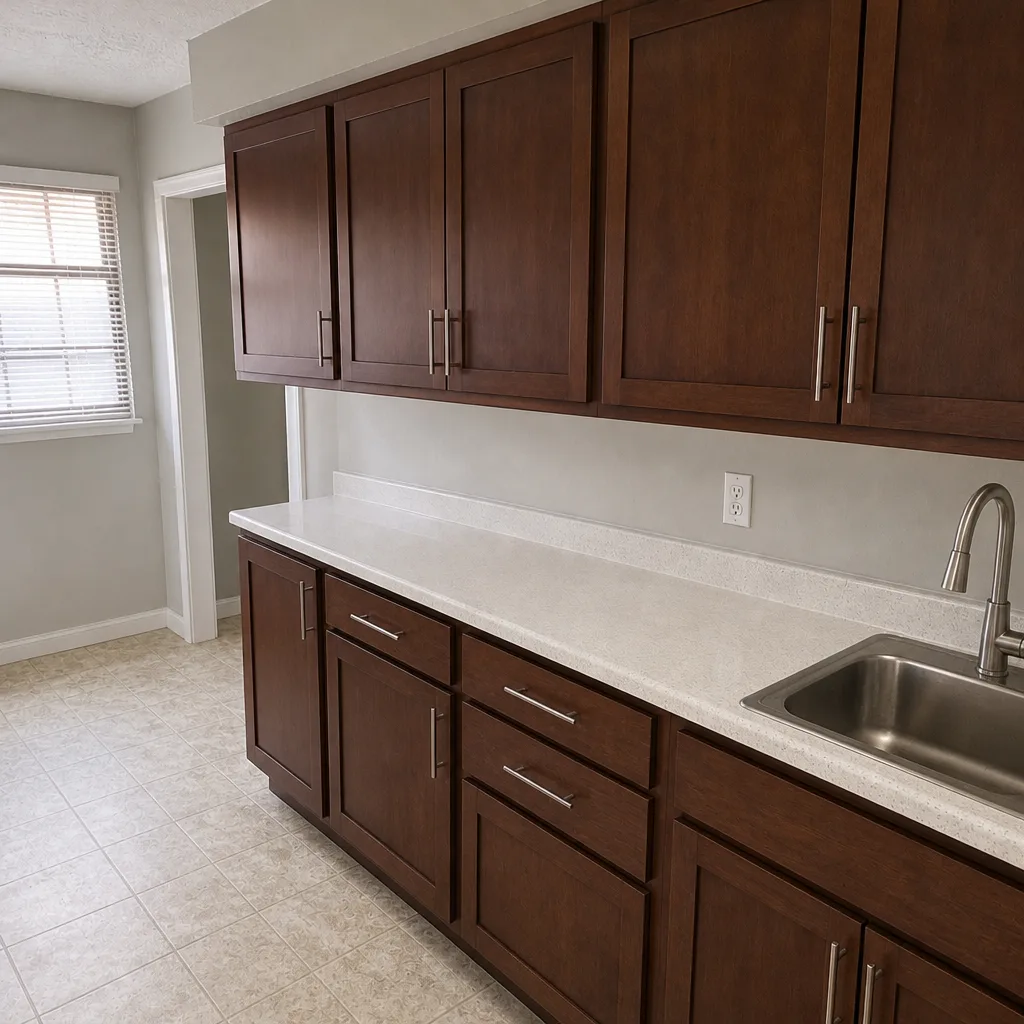 After
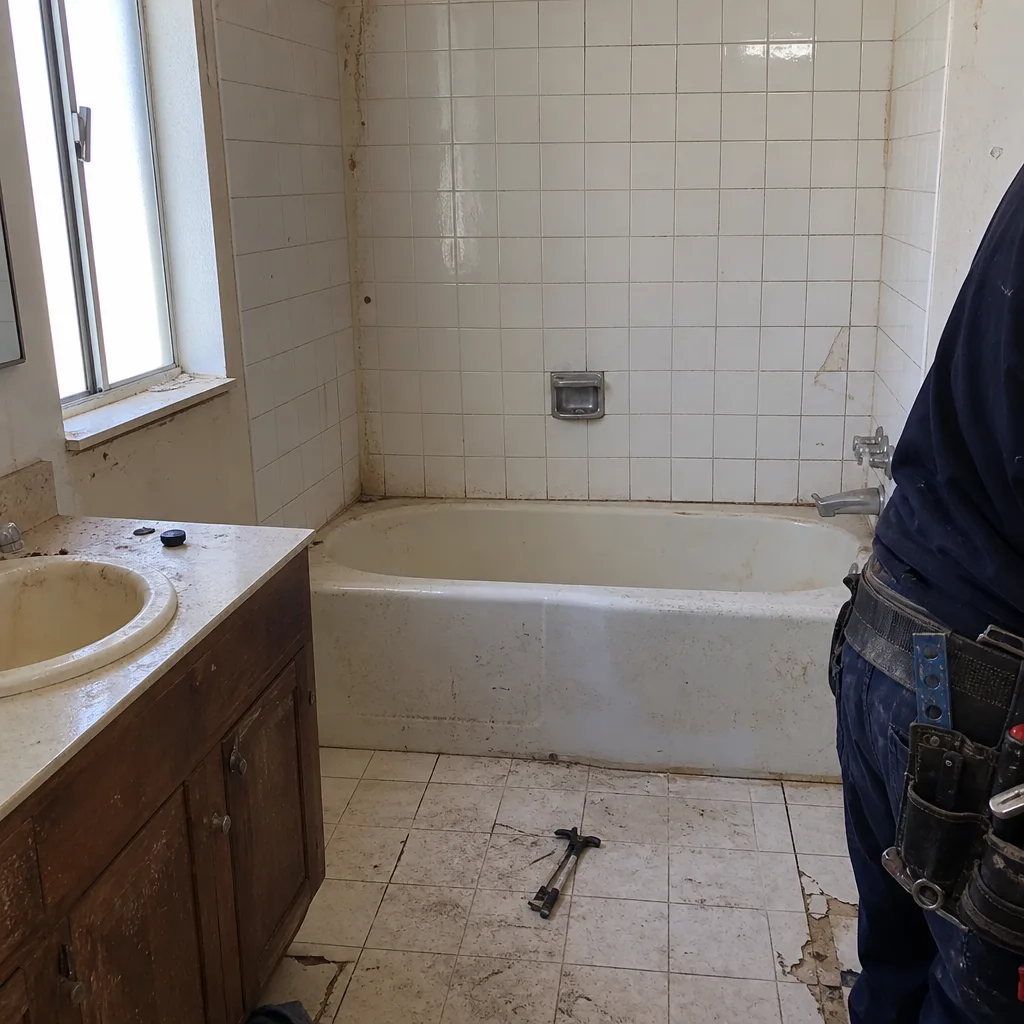 Before
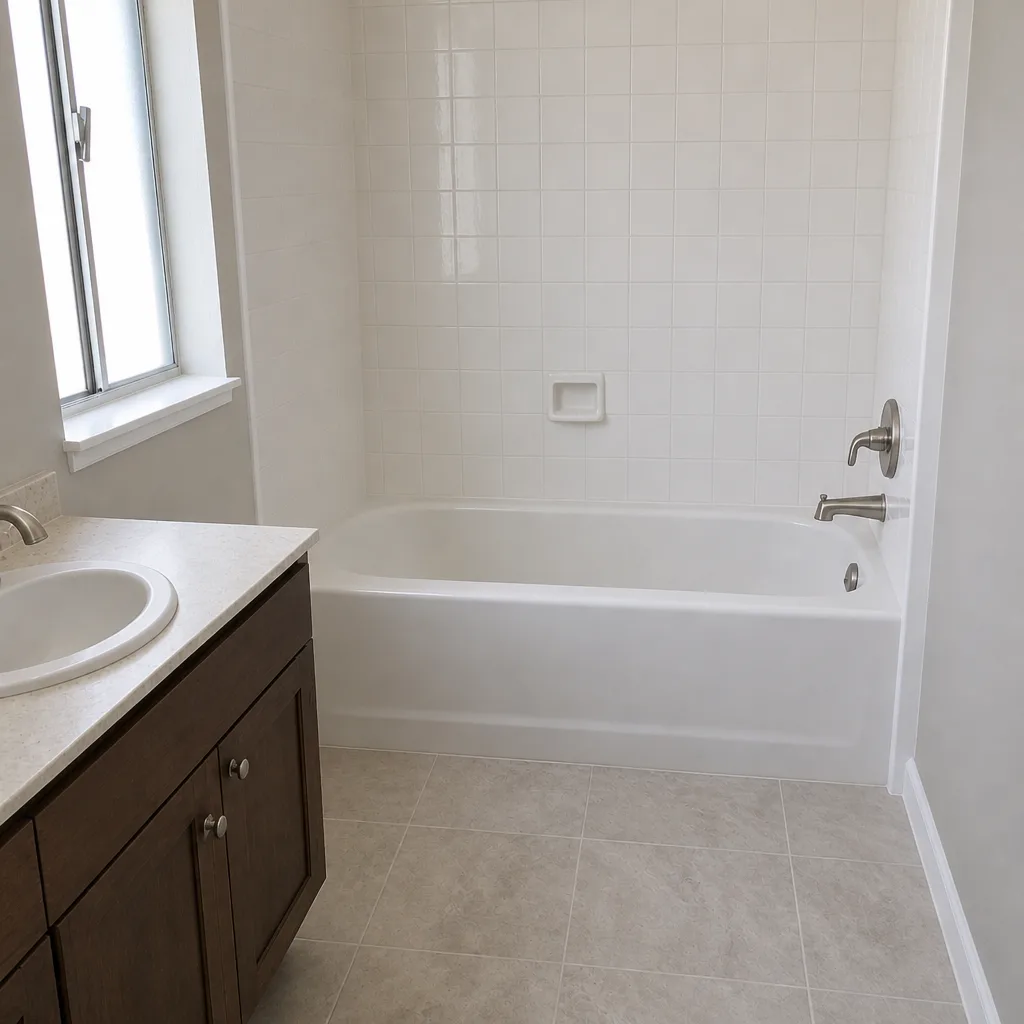 After
When to Call a Professional
If you’ve already signed with a contractor and the first warning sign has surfaced, stop paying until you understand where the money went. If a permit hasn’t been pulled and demo is scheduled, pause the job. If subcontractors are on site without insurance certificates, ask for them in writing before they continue. If a job has stalled and the contractor has more of your money than your house has value in it, that’s the conversation to have before the situation gets worse.
Bradford Remodeling Mesquite offers free estimates in Mesquite, with a written price before any work starts and a 365-Day Done Right Promise on every completed project. Call (844) 761-8665 to schedule your free estimate, and keep this guide handy when you’re reviewing bids. A live person answers the phone 24 hours a day, so if you’re mid-project and reading this at midnight, that’s fine.
Frequently Asked Questions

A vague written scope of work is the biggest warning sign, because it’s the root of most change orders and most disputes. A bid without quantities, brand names, and explicit inclusions and exclusions gives the contractor room to reprice once work begins. Compare bids line by line, not by bottom-line totals.
In our experience, a reasonable deposit is tied to material ordering, not to the contractor’s working capital, and it should be followed by a milestone-based draw schedule rather than a large front-loaded payment. The specific number should be in your written contract before you sign. Call (844) 761-8665 for an exact quote on a Mesquite project: estimates are free.
Ask the contractor for the permit number in writing, then check it against the local building authority’s records and confirm the license number on the permit matches the contractor’s license. Request the inspection schedule and keep a copy of the approved permit and final sign-off. If a contractor can’t produce the permit number before demo, don’t start the job.
Yes. The Nevada State Contractors Board publishes license status and complaint history, and anyone can search by license number. Read the complaint details, not just the count, and pay attention to “resolved” complaints, since resolved doesn’t always mean the homeowner ended up satisfied.
The 365-Day Done Right Promise covers the work we perform for a full year after project completion. If a repair or remodel we completed fails within that window, we return and correct it at no charge. The term and scope are documented in writing before the project starts, and you keep the signed guarantee after close-out. Ask any contractor you interview to put their guarantee in writing with a specific term.
No. A high price with detailed line items, named materials, and a clear schedule is a legitimate bid. A low price with a vague scope is the riskier bid because it leaves room to expand later. The real comparison is spec-for-spec, not number-for-number on the front page.
The Bottom Line
The contractor problems that hurt most are the ones you could have caught in the paperwork. Vague scopes, front-loaded draws, unverified permits, unnamed subs, and complaint histories that don’t match the sales pitch are all visible before demo day if you look. Verify the license and permit before you sign. Hold final payment until you have a signed guarantee in hand. And treat a written price that doesn’t move as the baseline, not a favor. That’s The Garrison Standard, and it’s what every job we run in Mesquite is held to.
Call (844) 761-8665 for a free estimate with a written price before any work starts. Bradford Remodeling Mesquite is here when you’re ready to compare bids against something real.
Written by the team at Bradford Remodeling Mesquite.