Last updated November 18, 2026




Free written scope consultation - allowances, timeline, and change-order rules on paper before a single trade is scheduled
Choosing the Right Construction Brand: A Buyer’s Guide for Mesquite
Most remodeling contractors in Mesquite don’t have a brand. They have a name, a truck, and a Facebook page with nine photos from a kitchen they did three years ago. That’s not a knock on small operators, it’s just what the market looks like here. The buyer’s real question isn’t which brand to choose. It’s how to tell which operator has built a process that protects you the way a real brand would.
That reframe matters in a city where the contractor pool is small and everyone seems to know everyone. Polished marketing is scarce, so you can’t rank candidates on the quality of their website. You have to rank them on something harder: what’s in writing. This guide walks through the guarantee language, contract terms, permit history, and bid-comparison questions that separate a disciplined operator from a guy with good intentions and a Google Voice number.
Quick Answer
To choose a remodeling contractor in Mesquite, evaluate the paperwork before the portfolio: a written price before work starts, a written warranty that specifies scope and claim process, a contract with a payment schedule tied to milestones, and evidence of permit-pulling history. In a small market, the contractor whose process is documented is almost always the safer hire, regardless of how their website looks.
Styles & brands we work with
- Kitchen remodeling
- Bathroom remodeling
- Home additions & ADU
- Roofing
- Windows & doors
- Driveway & pavers
- Fence
Table of Contents
- What a written guarantee must actually say
- How to judge a small contractor’s operational maturity
- The four warranty questions to ask before signing
- Why Mesquite referral lists are often circular
- How to compare bids that differ by $12,000
- Mesquite-specific construction realities to test a contractor on
- Red flags in the first conversation
- Common mistakes to avoid
What a Written Guarantee Must Actually Specify
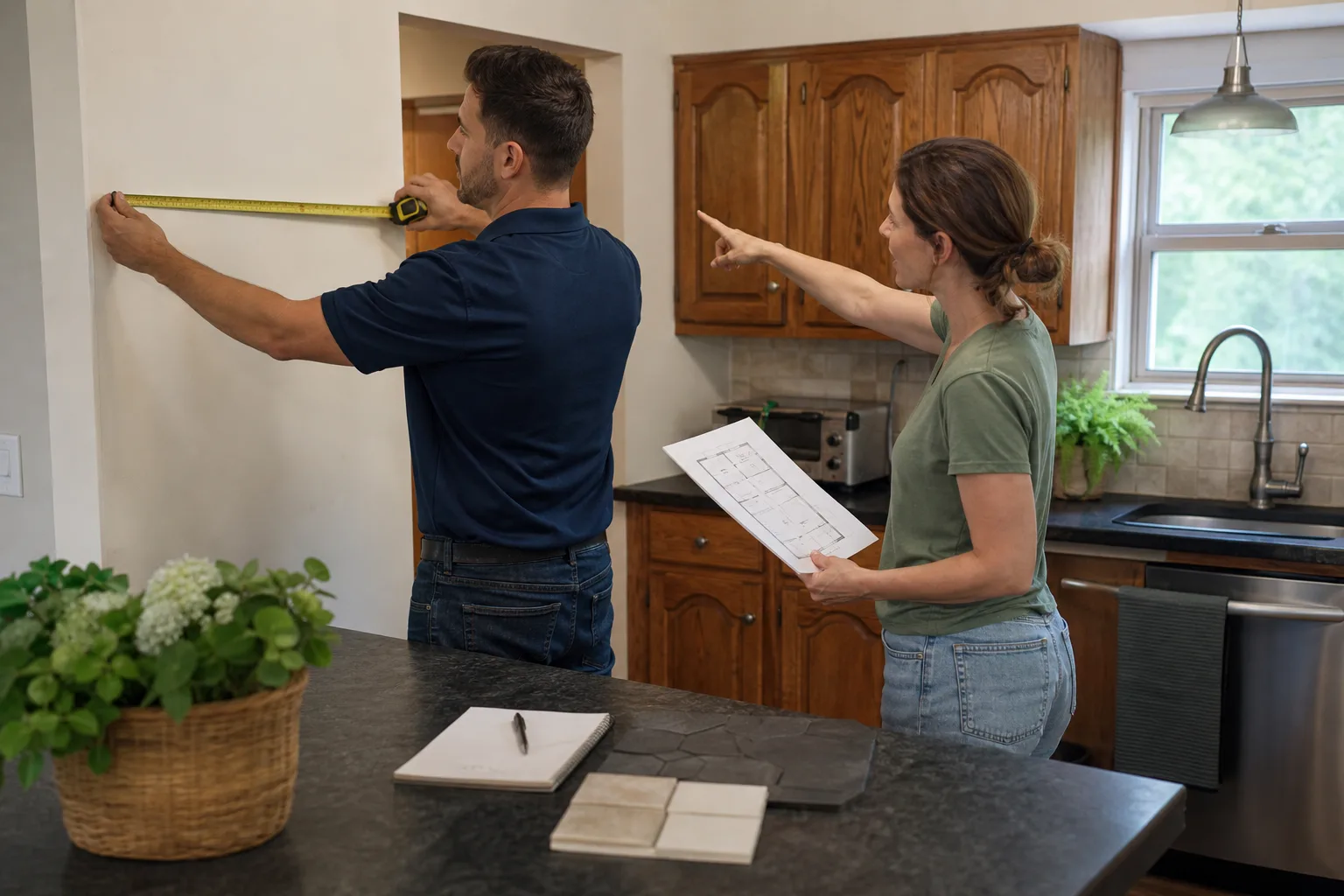
“Satisfaction guaranteed” is a marketing phrase, not a warranty. It tells you nothing about what happens when the grout cracks six months after a bathroom remodel or the cabinet doors start sagging off their hinges. A guarantee with teeth names the scope, the timeline, the payment terms, the change order process, and the remedy if the work fails. All five, in writing, before the first tool comes out.
Here’s what a meaningful pre-work guarantee document should cover:
- Scope. A line-item list of what’s included and, just as important, what’s excluded. “Kitchen remodel” means nothing. “Remove and replace 32 linear feet of base cabinetry, install KraftMaid Sedona door style in Husk finish, rough-in for new disposal, patch and paint to match” means something.
- Timeline. Start date, substantial completion date, and how weather or material delays are handled. Mesquite summers push exterior work into early mornings, and a contractor who hasn’t accounted for 110-degree afternoons in July hasn’t thought through your schedule.
- Payment schedule. Tied to milestones, not to a calendar. A deposit, then draws at rough-in, drywall, and final. Never a large lump sum upfront.
- Change order process. How a mid-project change gets priced, approved, and documented. In writing, every time, before the work continues.
- Warranty terms. What’s covered, for how long, who performs the repair, and how you file a claim. One year is the common floor for workmanship. Products carry their own manufacturer warranties, which is why a documented brand roster matters.
We’ve seen too many Mesquite homeowners hand over a deposit against a handshake and a text message. The guarantee language is the difference between having recourse and having a story to tell at the next barbecue.
How to Judge a Small Contractor’s Operational Maturity
A small contractor can absolutely deliver excellent work. What they can’t do, if they’re not organized, is protect you when something goes sideways. Operational maturity is the boring infrastructure behind a good build. You can test for it in an afternoon.
Ask for these four documents or pieces of evidence before you sign anything:
- A written contract with all line items. Not a proposal, not a bid summary, a contract with scope, materials, schedule, payment terms, and both signatures. If the contractor shrugs at the word “contract,” keep shopping.
- An insurance certificate issued to you. General liability and workers’ comp, sent as a certificate of insurance naming you or your property. A contractor who can’t produce one is either uninsured or disorganized. Both are problems.
- A lien waiver process. On any project with subcontractors, you want conditional lien waivers with each draw and a final unconditional waiver at close. This protects you from subcontractor claims if the general contractor’s payments get tangled.
- Permit-pulling history. Ask for the last three permit numbers they pulled in Clark County. Permits are public record. A contractor who has pulled a dozen permits in the past two years is operating in the system. One who hasn’t may work unpermitted, which can complicate resale and insurance.
If a Mesquite contractor can produce all four without a week of hemming, that’s a contractor whose process has been tested. If not, the lack of paperwork tells you what the project will feel like.
The Four Warranty Questions to Ask Before Signing
Warranty language is where small contractors most often go vague. Ask these four questions and write the answers into the contract yourself if they aren’t already there.
1. What exactly is covered? Workmanship, materials, or both? For how long? Workmanship warranties typically run one year. Manufacturer warranties on products like Cambria quartz counters or Kohler fixtures run longer, but they’re specific to the product and to correct installation. Your contractor’s written warranty should clearly say which claims fall under their workmanship coverage and which route to the manufacturer.
2. Who performs the warranty work? The original contractor, the manufacturer’s authorized service tech, or a third party? The answer matters. If your contractor is a sole operator and they’ve retired by month eight, who fixes the crack? A business that works within a framework like The Garrison Standard has defined processes for warranty fulfillment that don’t depend on one person being available.
3. How do you initiate a claim? Phone, email, web form, or all three? What’s the response window? A warranty with no claim process is decoration. Get the specific mechanism in writing.
4. What documentation do you receive at close? At minimum: a signed warranty certificate, a final lien waiver, permit inspection cards or sign-offs, and product warranty registrations. Fold all of this into one folder. It’s what a future buyer will want to see when you sell.
Bradford Remodeling Mesquite backs every completed project with the 365-Day Done Right Promise: if the work fails inside the guarantee window, we return and correct it at no charge. That’s the baseline. The four questions above are what you ask every other contractor to make sure their terms hold up to the same standard.
Why Mesquite Referral Lists Are Often Circular
In a city of roughly 20,000 people, word of mouth is loud. It’s also easily gamed. The neighbor who recommends a contractor may be the contractor’s cousin, or may have had a 4-day backsplash job that isn’t the same as your 6-week whole-home remodel. Referral lists in small markets create the illusion of due diligence, but they often just reproduce the same handful of names.
To break the circle, get a reference that actually resembles your project. Ask these questions:
- What was the scope, in specific terms, of the project they had done? (Bathroom refresh and full kitchen remodel are not comparable.)
- What was the final cost, and how close was it to the written price before work started?
- How many change orders were there, and were they proposed by the contractor or initiated by the homeowner?
- What was the schedule variance, in days?
- Did the contractor come back for anything after close, and how fast?
A reference who had a $6,000 bathroom vanity replacement can’t tell you how the contractor handles a $90,000 whole-home gut. A reference who had a project in your complexity range, with line-item transparency, can. Insist on it. If the contractor can’t produce one, that’s information too.
How to Compare Bids That Differ by $12,000
When a bathroom remodel bid comes in at $34,000 and another at $46,000, the gap is usually scope, materials, or margin. Most homeowners assume the high bid is padded. Sometimes it is. Often it’s the only bid that accounts for what’s actually needed. You can’t tell from the top-line number. You can tell from the line-item comparison.
Do this comparison across two or three bids:
- Line-item match. Compare per-item, not per-project. If one bid has “cabinets $9,400” and another has “cabinetry – KraftMaid $13,800,” the higher bid is specifying a known brand with documented specs. That’s not padding, that’s different material.
- Substrate and prep line items. A contractor who lists “remove existing tile, inspect and replace substrate as needed, allow $800” is telling you they’ve run into this before. A contractor who lists nothing has either assumed the substrate is fine or plans to bill you later.
- Permit line item. If permits aren’t listed as a line item, either they’re not being pulled or the cost is buried in margin. Both are worth asking about.
- Allowances. Large allowances (say, $2,000 for tile) are often the mechanism for a mid-project reprice. Ask what happens if actual selections exceed the allowance, and get the answer in writing.
- Exclusions. What’s not included? A bid without exclusions is a bid without boundaries.
The disciplined move is to ask each contractor to justify their line items in a 15-minute conversation. The one who can walk you through it without irritation is generally the one whose price will hold. Bradford Remodeling provides a written price before any work begins, and it doesn’t move at the door.
Mesquite-Specific Construction Realities to Test a Contractor On
Construction in Mesquite isn’t the same as construction in Las Vegas, and it’s certainly not the same as Phoenix. The climate and building environment here create specific failure patterns that a contractor operating regularly in the area should recognize without prompting.
- Exterior materials and UV. The sun here punishes stucco, paint, and exterior sealant faster than most buyers expect. A contractor specifying exterior work should be ready to talk about UV-rated coatings, James Hardie fiber cement siding expansion joints, and the difference between GAF and CertainTeed shingle lifespans in this heat. If those terms are unfamiliar to them, they may not be doing exterior work in this climate regularly.
- Summer scheduling. Exterior work between June and August is a schedule problem. Contractors with real Mesquite experience schedule early-morning pours, plan roofing around peak heat, and build weather contingencies into the contract.
- Dust and wind. Spring wind events in the Virgin River valley push dust into every gap. Contractors who work here know to sequence rough-ins and finishing work around the wind calendar, and they know how to seal a site so your cabinets don’t get sandblasted before installation.
- Water. Mesquite’s water is hard. Fixtures, water heaters, and finish surfaces all take a beating. A contractor specifying Moen or Kohler fixtures and talking about water treatment compatibility is thinking ahead.
- Permits and inspection cadence. Clark County building department schedules can stretch. A contractor with a permit history knows the local inspection flow and builds realistic timelines around it.
We’ve walked into Mesquite jobs where the previous contractor specified Las Vegas-friendly materials that failed here within two summers. The fix isn’t a product issue. It’s a local-experience issue.
Red Flags in the First Conversation
Some contractor failures are visible before you sign. Watch for these in the first phone call or walkthrough.
- No written price. A contractor who quotes a range verbally and says “we’ll figure out the details later” is telling you how they operate.
- A large deposit request. Fifteen to 30 percent as a starting deposit is normal. Fifty percent or more is a warning sign, especially if the contractor is asking for it before materials are ordered.
- No permit conversation. On any structural, electrical, or plumbing scope, permits matter. A contractor who says “we don’t need permits for this” is either wrong or cutting corners.
- Voicemail-only contact. If you can’t reach a live person during business hours, you’re unlikely to reach them after hours when a pipe bursts mid-remodel.
- No insurance certificate. Ask, wait 48 hours, ask again. If nothing comes, walk.
- Vague references. “Oh, we’ve done tons of work around here” isn’t a reference. It’s a deflection.
- Pressure to sign today. Discounts that expire at midnight are a sales tactic, not a pricing policy. The best contractors give you a written price and let you think about it.
Common Mistakes to Avoid
- Hiring on the strength of a single photo. A beautiful kitchen photo doesn’t tell you whether the electrical was permitted or whether the client was happy at close. Two sentences of validation from a reference in your scope range beats twelve photos.
- Comparing projects instead of line items. The top-line number is a summary of the underlying scope. Compare the underlying scope, or you’re comparing marketing copy.
- Accepting “satisfaction guaranteed” as a warranty. It’s a phrase, not a term. Ask for the actual warranty document. If there isn’t one, that’s the answer.
- Skipping the permit history check. In Mesquite, unpermitted remodels surface at resale and complicate insurance claims. The 15-minute county records search is worth doing.
- Paying the full project cost upfront. A milestone-based payment schedule withholds leverage you’ll want if something slips.
- Assuming a referral is a reference. A referral from a neighbor recommends the person. A reference from a client with a similar scope confirms the process.
- Signing a contract with no completion date. Open-ended timelines rarely serve the homeowner. Get the completion in writing, with the weather and inspection contingency language spelled out.
See the difference
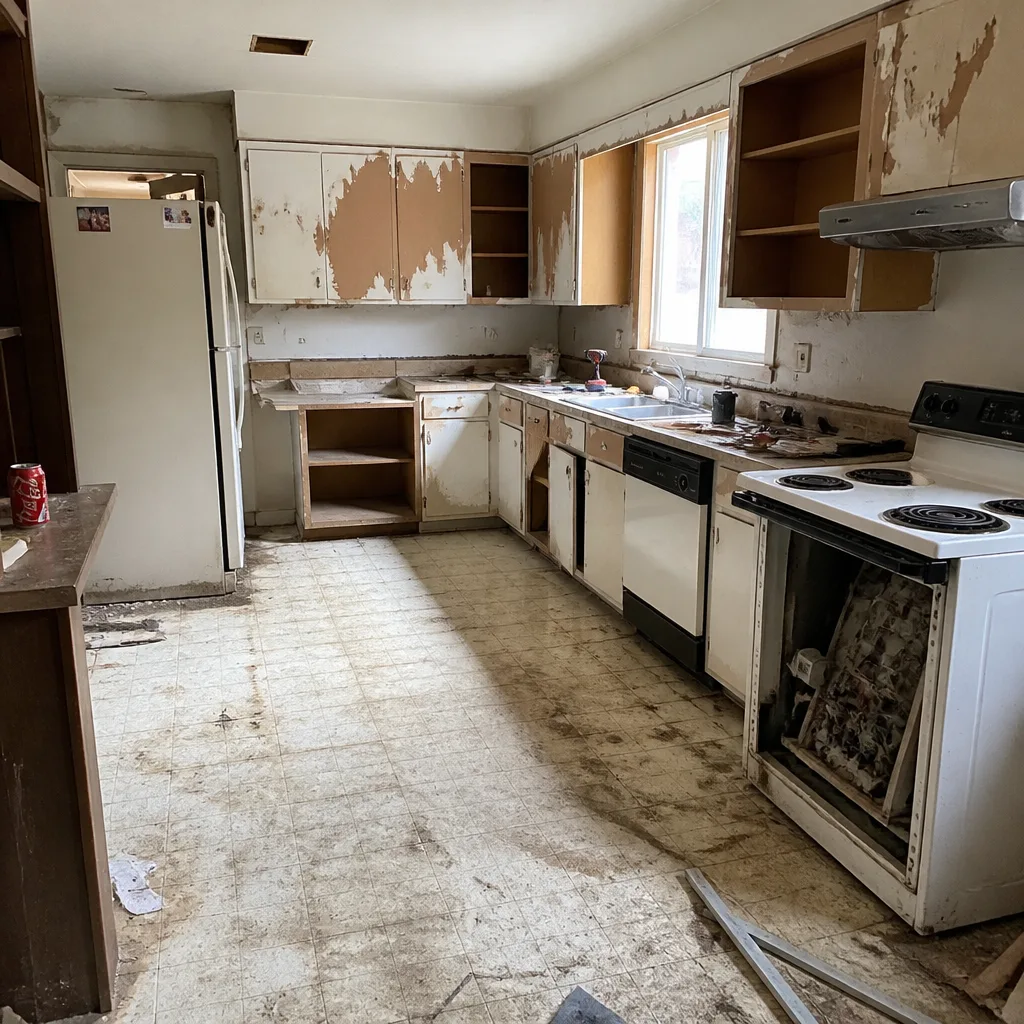 Before
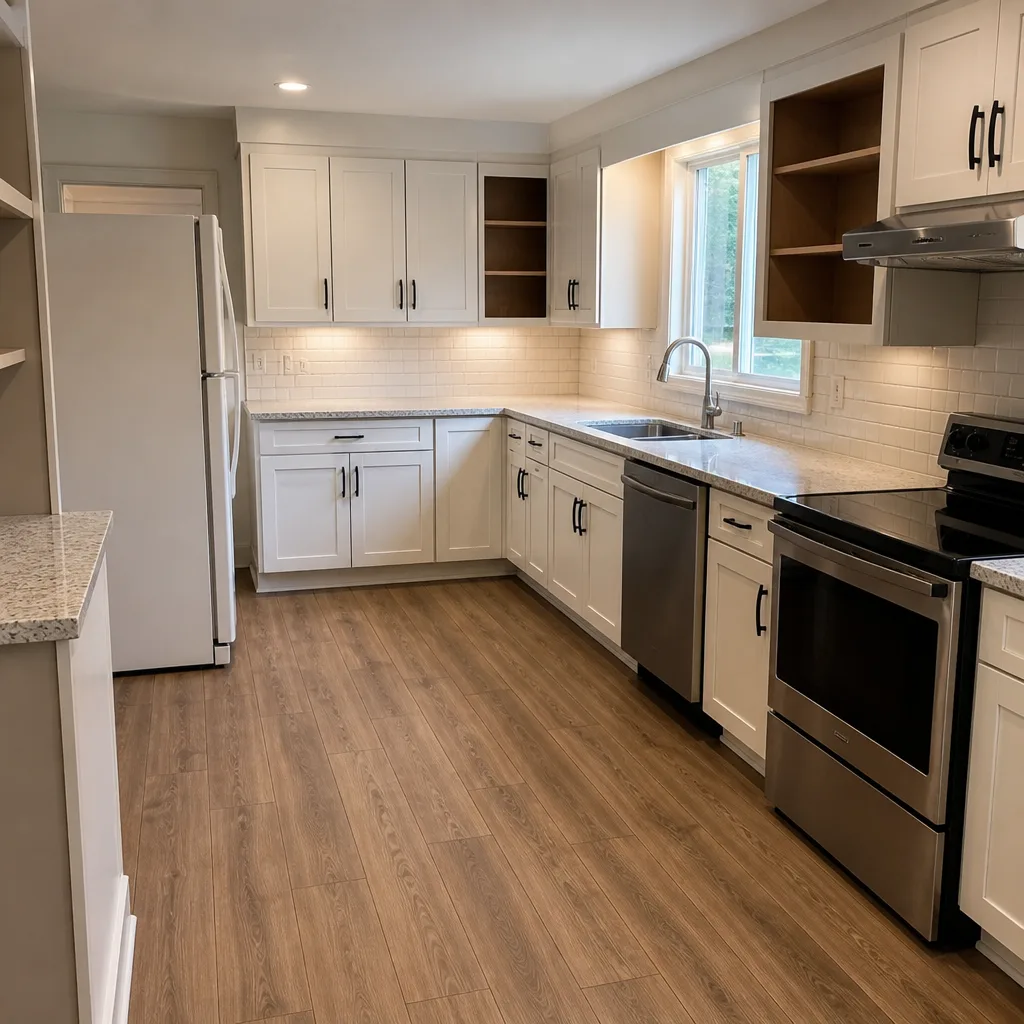 After
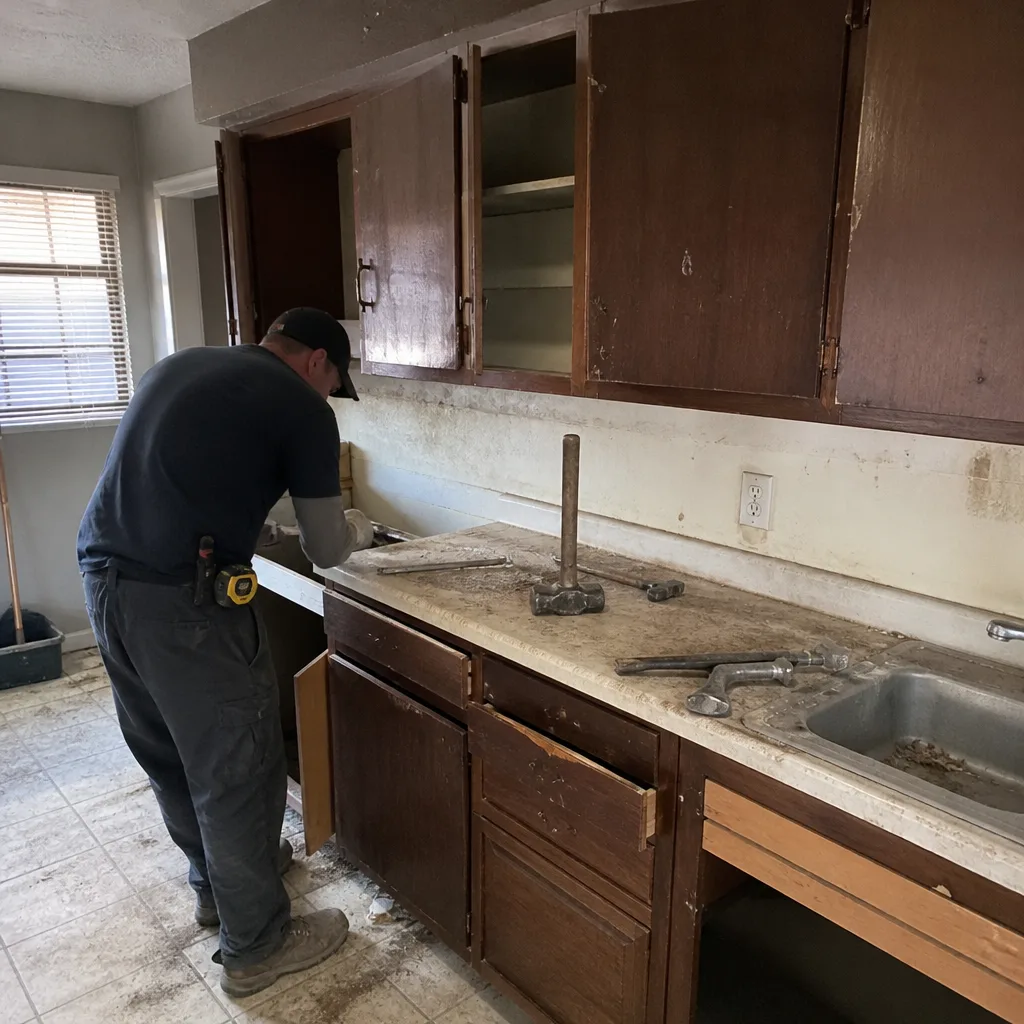 Before
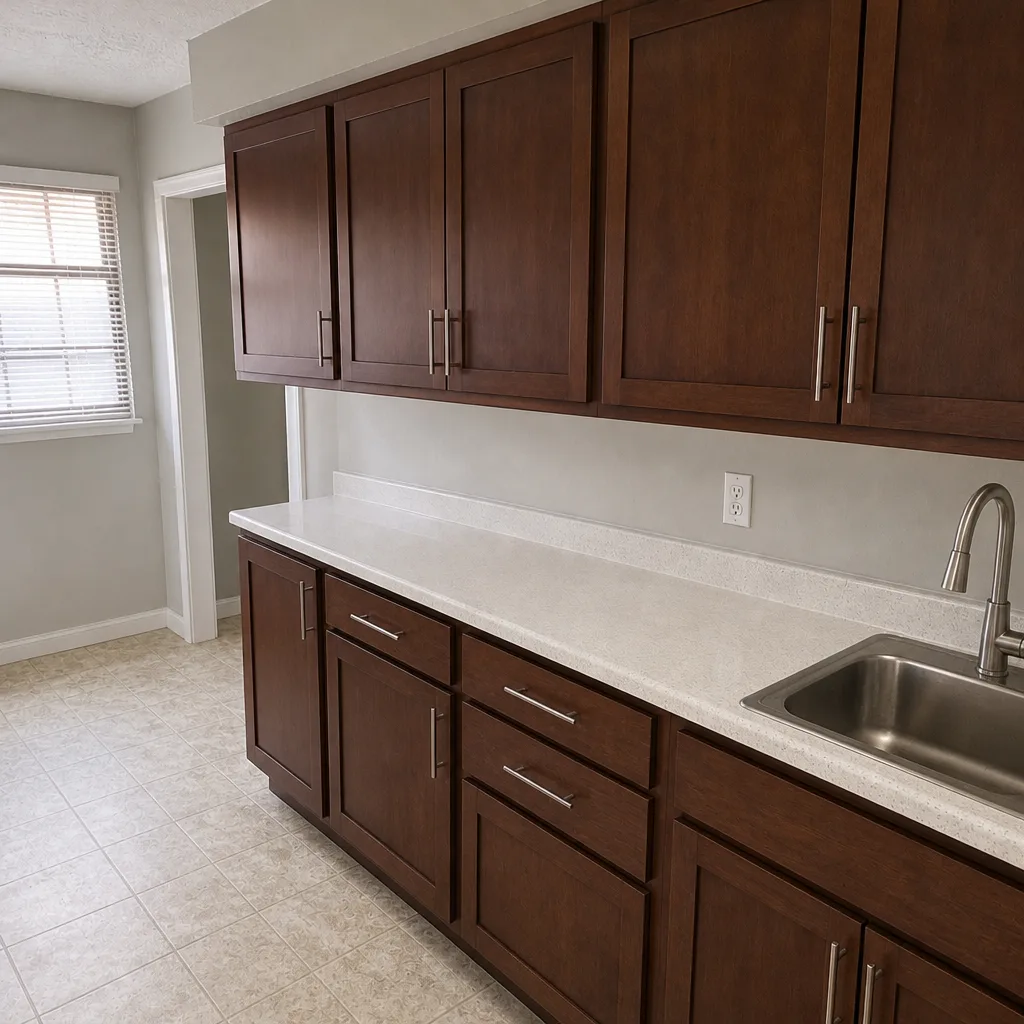 After
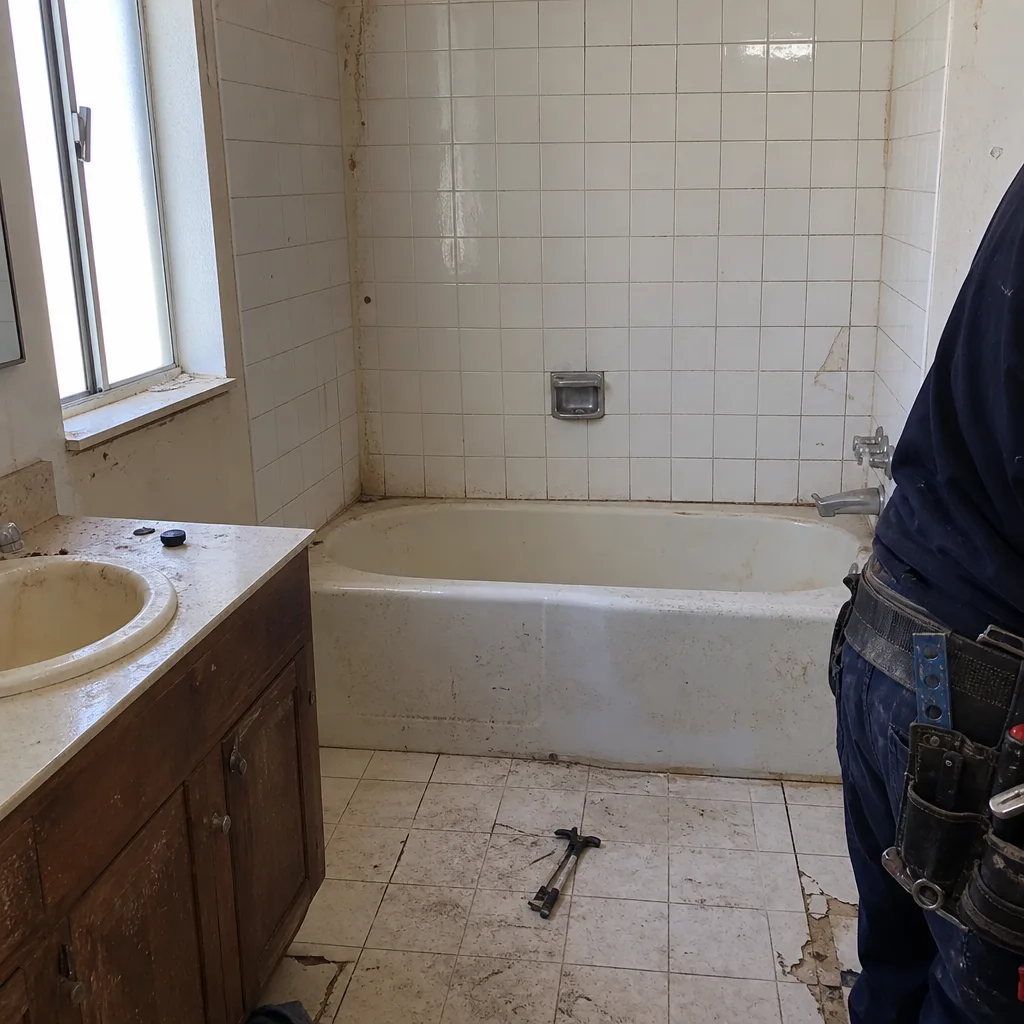 Before
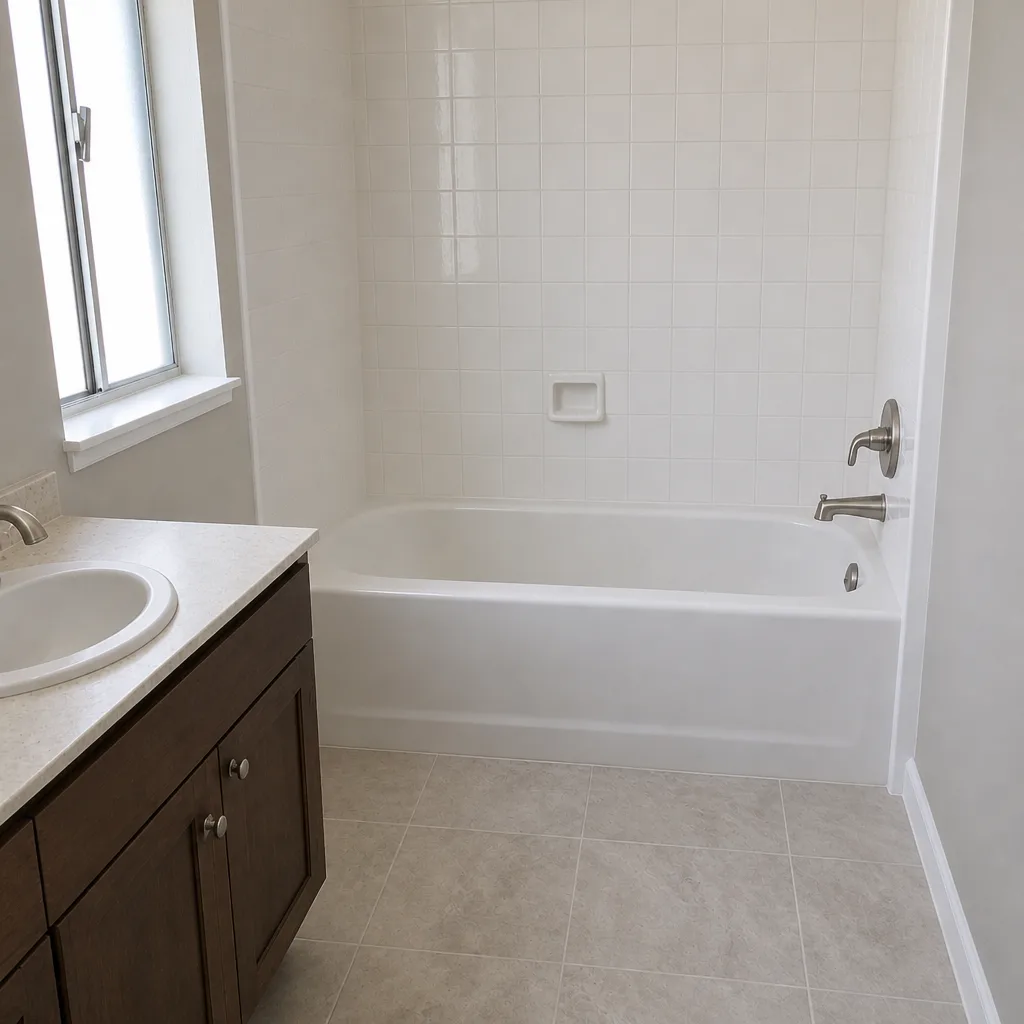 After
When to Call a Professional

Some of this guide is doable alone. Finding permit history in Clark County records is a 15-minute exercise. Requesting insurance certificates is a phone call. Reading a contract’s warranty clause against the questions in this guide is something you can do without a contractor standing over your shoulder.
What isn’t doable alone is a full scope evaluation on a project you haven’t built before, or a fair line-item comparison across bids without knowing what the substrate, rough-in, and finish line items actually look like. If you’re staring at two bids with a $15,000 gap and no clear reason why, that’s when a walk-through from a contractor who can explain the difference is worth the time. Bradford Remodeling Mesquite offers free estimates in Mesquite. Call (844) 761-8665 to schedule one, or start with our general contractor services in Mesquite page for the wider framework.
Frequently Asked Questions
No. “Satisfaction guaranteed” has no defined scope, timeline, or remedy. A meaningful warranty names what’s covered (workmanship, materials, or both), for how long (typically at least one year for workmanship), who performs the repair, and how you initiate a claim in writing. The 365-Day Done Right Promise covers workmanship for a full year after project close: if it fails, we return and correct it at no charge. Ask any other contractor for a comparable document.
Ask for a certificate of insurance naming you or your property, issued by their carrier, and cross-check their permit history through Clark County’s public portal. The certificate is a one-page document any insured contractor can produce within a business day. If it takes a week or never arrives, that’s your answer. Permits are public record, so you don’t need the contractor’s permission to verify their recent permit activity. Call (844) 761-8665 if you’d like help interpreting what you find.
In a city the size of Mesquite, word-of-mouth networks stay small and tend to circulate the same names. That’s not a bad thing, but it means the recommendation on your street may be for a 6-day backsplash, not a 6-week gut remodel. Ask the person referring what the scope, final cost, schedule variance, and post-close warranty service actually looked like. If the scope doesn’t match yours, keep asking until you find a reference that does.
Compare line items, not top-line totals. Look at substrate line items, permit line items, cabinet brand specification, allowance sizes, and exclusions. A higher bid usually reflects either a pre-considered scope or better materials, sometimes both. The contractor who can walk you through each line without defensiveness is generally the one whose price will hold. Call (844) 761-8665 for a free line-item comparison on any bid you’re considering.
Scope (with exclusions), schedule (start, substantial completion, weather contingency), payment schedule (milestone-based, not calendar-based), change order process, warranty terms, and both signatures. Everything else is either supporting documentation or a red flag. If the contract doesn’t have a completion date, an itemized scope, and a warranty clause, you’re signing a promise, not an agreement. Estimates are free, so there’s no reason to sign anything less.
Any remodel that touches electrical, plumbing, structural work, or mechanical systems typically requires a permit through Clark County. Cosmetic work like paint and counter replacement often doesn’t, but “often” isn’t a permit exemption. The permit-pulling history is also a contractor quality signal: a contractor who regularly pulls permits operates inside the system. Ask to see the permit line item in your written quote before work starts.
The Bottom Line
Choosing a remodeling contractor in Mesquite isn’t about picking the flashiest brand. It’s about finding the operator whose process produces the same protections a reputable brand offers as standard practice. That means a written price before work begins, a written warranty with specified scope and claim process, a contract with milestone payments and change order procedures, verifiable permit history, and references that match your project’s complexity. The contractor who can produce all of it without a scuffle is generally the one to hire. The one who can’t is telling you something. Bradford Remodeling Mesquite puts every price and guarantee in writing before a single tool comes out, backs every completed project with the 365-Day Done Right Promise, and answers the phone with a live person. Call (844) 761-8665 for a free estimate, or explore our kitchen remodeling in Mesquite and bathroom remodeling in Mesquite services to see how the process works in practice.
Written by the team at Bradford Remodeling Mesquite.